
Bhagvad Gita Chapter 15
भगवद् गीता अध्याय १५
Bhagvad Gita Chapter 15 - Purushottam Yog
भगवद गीता का अध्याय १५ - पुरुषोत्तम योग
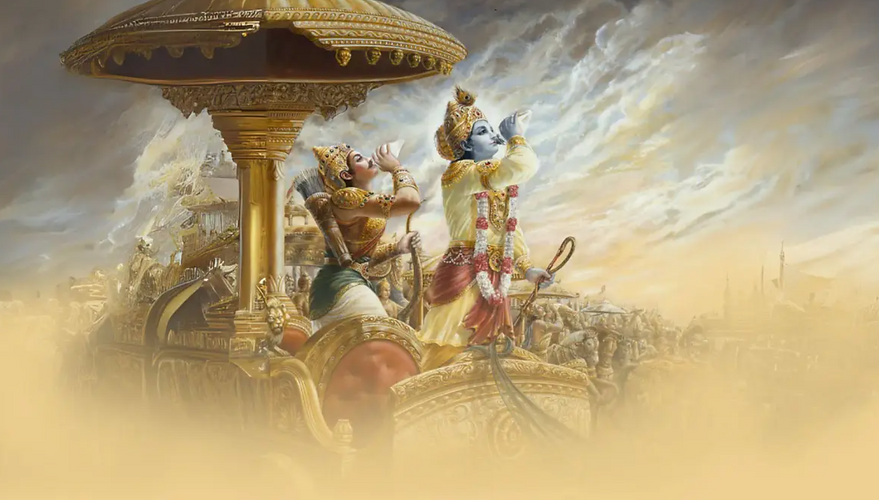
Chapter 15 of the Bhagavad Gita is titled Purushottama Yog or The Yog of the Supreme Divine Personality. In this chapter, Lord Krishna explains the nature of the material and spiritual worlds, highlighting the distinction between the transient, perishable nature of the material world and the eternal, unchanging nature of the spiritual realm.
Lord Krishna begins by describing the material world as an ashvattha tree (the Banyan tree), symbolizing the impermanent, ever-changing nature of the physical universe. He compares the tree to a vast, inverted structure, with its roots in the heavens and branches extending down into the material realm. This metaphor illustrates the entanglement of souls in the cycle of birth, death, and rebirth, symbolizing the attachment to worldly existence and the illusion of permanence. The tree is also a symbol of the complex nature of the material world, where desires, actions, and attachments form the entangled "branches" of life.
However,Lord Krishna reveals that the soul (the Atman) is not bound to this material reality. Beyond the world of sensory experiences, there exists the eternal, unchanging truth—the Supreme Divine, or Purushottama, which is Lord Krishna Himself. He is the ultimate cause of creation, sustenance, and destruction in the universe, and He is beyond the influence of the material gunas. By understanding this distinction, one can free oneself from the bonds of material existence and attain liberation (moksha).
The chapter underscores the importance of spiritual knowledge and devotion, encouraging the seeker to focus on the eternal, unchanging self rather than the fleeting pleasures of the material world. By surrendering to Lord Krishna, the devotee can transcend the cycle of birth and death, attaining the highest state of spiritual realization.
भगवद गीता के अध्याय 15 का शीर्षक पुरुषोत्तम योग या सर्वोच्च दिव्य व्यक्तित्व का योग है। इस अध्याय में, भगवान कृष्ण भौतिक और आध्यात्मिक दुनिया की प्रकृति की व्याख्या करते हैं, भौतिक दुनिया की क्षणभंगुर, नाशवान प्रकृति और आध्यात्मिक क्षेत्र की शाश्वत, अपरिवर्तनीय प्रकृति के बीच अंतर को उजागर करते हैं।
कृष्ण भौतिक दुनिया का वर्णन अश्वत्थ वृक्ष (बरगद का पेड़) के रूप में करते हैं, जो भौतिक ब्रह्मांड की अस्थाई, हमेशा बदलती प्रकृति का प्रतीक है। वह पेड़ की तुलना एक विशाल, उलटी संरचना से करते हैं, जिसकी जड़ें स्वर्ग में हैं और शाखाएँ भौतिक क्षेत्र में नीचे तक फैली हुई हैं। यह रूपक जन्म, मृत्यु और पुनर्जन्म के चक्र में आत्माओं के उलझाव को दर्शाता है, जो सांसारिक अस्तित्व के प्रति आसक्ति और स्थायित्व के भ्रम का प्रतीक है। पेड़ भौतिक दुनिया की जटिल प्रकृति का भी प्रतीक है, जहाँ इच्छाएँ, क्रियाएँ और आसक्ति जीवन की उलझी हुई "शाखाएँ" बनाती हैं।
हालाँकि, कृष्ण बताते हैं कि आत्मा (आत्मा) इस भौतिक वास्तविकता से बंधी नहीं है। संवेदी अनुभवों की दुनिया से परे, शाश्वत, अपरिवर्तनीय सत्य - सर्वोच्च ईश्वर या पुरुषोत्तम, जो स्वयं कृष्ण हैं, विद्यमान हैं। वे ब्रह्मांड में सृजन, पोषण और विनाश के अंतिम कारण हैं, और वे भौतिक गुणों के प्रभाव से परे हैं। इस अंतर को समझकर, व्यक्ति स्वयं को भौतिक अस्तित्व के बंधनों से मुक्त कर सकता है और मुक्ति (मोक्ष) प्राप्त कर सकता है।
यह अध्याय आध्यात्मिक ज्ञान और भक्ति के महत्व को रेखांकित करता है, तथा साधक को भौतिक संसार के क्षणभंगुर सुखों के बजाय शाश्वत, अपरिवर्तनीय आत्म पर ध्यान केंद्रित करने के लिए प्रोत्साहित करता है। कृष्ण के प्रति समर्पण करके, भक्त जन्म और मृत्यु के चक्र से परे जा सकता है, तथा आध्यात्मिक अनुभूति की उच्चतम अवस्था प्राप्त कर सकता है।
श्रीभगवानुवाच |
ऊर्ध्वमूलमध:शाखमश्वत्थं प्राहुरव्ययम् |
छन्दांसि यस्य पर्णानि यस्तं वेद स वेदवित् || 1||
The Supreme Lord said: The tree, with its roots above and branches below, is called the eternal Ashvattha tree. Its leaves are the Vedic hymns. One who knows this tree is the knower of the Vedas.
In this verse, Lord Krishna uses the metaphor of the Ashvattha tree to describe the nature of the material world. The tree has its roots in the heavens (the spiritual realm) and its branches spread in the material world. The Vedic scriptures are compared to the leaves of this tree, indicating that the teachings of the Vedas are rooted in this divine, eternal knowledge that connects the material and spiritual worlds. The idea of the tree being "eternal" suggests that the truth of the self and the cosmos is unchanging, despite the apparent transformations in the material world. By understanding the true nature of this tree—its roots and its branches—one gains knowledge of the universe and the Vedas, which guide us toward spiritual enlightenment and liberation.
भगवान ने कहा: उस अश्वत्थ वृक्ष को अव्यय कहा गया है, जिसके मूल ऊपर और शाखाएँ नीचे हैं। जिसके पत्ते वेदों के छंद हैं। जो इसे जानता है, वही वेदज्ञानी है।
इस श्लोक में भगवान श्री कृष्ण ने संसार के स्वरूप को समझाने के लिए अश्वत्थ वृक्ष का उदाहरण दिया है। इस वृक्ष के मूल (जड़ें) ऊपर यानी आध्यात्मिक क्षेत्र में हैं, और उसकी शाखाएँ नीचे अर्थात भौतिक जगत में फैली हुई हैं। वेदों के छंद उसकी पत्तियों के समान हैं, जो इस सृष्टि के मूल ज्ञान को व्यक्त करते हैं। अश्वत्थ वृक्ष के अव्यय होने का तात्पर्य यह है कि ब्रह्म, आत्मा और ईश्वर का सत्य शाश्वत और अपरिवर्तनीय है, जो भौतिक जगत में दिखाई देने वाली तमाम बदलती स्थितियों के बावजूद स्थिर और अविनाशी रहता है। जो इस वृक्ष का सही रूप से ज्ञान प्राप्त करता है, वह वेदों को समझने वाला ज्ञानी होता है, क्योंकि वेदों का ज्ञान जीवन की सच्चाई और आध्यात्मिक मुक्ति की ओर मार्गदर्शन करता है।
अधश्चोर्ध्वं प्रसृतास्तस्य शाखा गुणप्रवृद्धा विषयप्रवाला: |
अधश्च मूलान्यनुसन्ततानि कर्मानुबन्धीनि मनुष्यलोके || 2||
Below and above, the branches of the tree extend; nourished by the gunas, they spread towards the objects of the senses. The roots, which are the actions of humans, bind the soul to the material world.
In this verse, Lord Krishna explains the further structure of the metaphorical Ashvattha tree. The branches of the tree, extending both upwards and downwards, represent the vastness of the material world and the spiritual domain. These branches are nourished by the three gunas (modes of nature)—sattva (goodness), rajas (passion), and tamas (ignorance). The senses and their objects, such as attachment to worldly pleasures, are represented as the "leaves" of the tree. The roots of this tree represent human actions or karmas, which tie the soul to the cycle of birth and death. This symbolizes how our actions and desires bind us to the material world and how attachment to the senses keeps us in the cycle of samsara (rebirth). The verse emphasizes how human actions shape our spiritual journey.
नीचे और ऊपर इस वृक्ष की शाखाएँ फैली हुई हैं; ये गुणों से पोषित होती हैं और इन्द्रियों के विषयों की ओर फैलती हैं। नीचे इसकी जड़ें कर्मों के बंधनों में बंधी हुई हैं, जो मनुष्यों को भौतिक जगत से जोड़ती हैं।
इस श्लोक में भगवान श्री कृष्ण ने अश्वत्थ वृक्ष के रूप में संसार के अदृश्य रूप को स्पष्ट किया है। इस वृक्ष की शाखाएँ ऊपर और नीचे दोनों ओर फैली हुई हैं, जो भौतिक और आध्यात्मिक दोनों ही जगतों के विस्तार को दर्शाती हैं। यह शाखाएँ गुणों—सत्त्व, रजस और तमस—से पोषित होती हैं, जो हमारे व्यवहार, भावनाएँ और इन्द्रियों के विषयों के प्रति हमारी प्रवृत्तियों को निर्धारित करती हैं। वृक्ष की जड़ें मनुष्यों के कर्मों से जुड़ी हैं, जो जीवन के अच्छे या बुरे कार्यों के परिणाम होते हैं। ये कर्म जड़ें व्यक्ति को भौतिक संसार के बंधनों में बांधती हैं और पुनर्जन्म के चक्र में फंसा देती हैं। इस श्लोक से यह समझ में आता है कि हमारे कर्म और इन्द्रिय विषयों के प्रति हमारी प्रवृत्तियाँ हमें भौतिक संसार में जकड़े रखती हैं।
न रूपमस्येह तथोपलभ्यते नान्तो न चादिर्न च सम्प्रतिष्ठा | अश्वत्थमेनं सुविरूढमूल मसङ्गशस्त्रेण दृढेन छित्त्वा || 3||
तत: पदं तत्परिमार्गितव्यं यस्मिन्गता न निवर्तन्ति भूय: | तमेव चाद्यं पुरुषं प्रपद्ये यत: प्रवृत्ति: प्रसृता पुराणी || 4||
This tree cannot be perceived by the eye here; it has neither beginning nor end, nor any steady position. By cutting this strong and firmly rooted tree with the weapon of detachment,
One must seek that path, which, once followed, never leads back. To that ancient, supreme person, I surrender, from whom the ancient activity arises.
In these verses, Lord Krishna describes the imperishable and elusive nature of the worldly tree—symbolizing the material world. The tree is not bound by any clear starting or ending point, making it impossible for the material senses to truly comprehend it. The branches of the tree, which represent worldly desires and attachments, are ever-expanding. Lord Krishna advises that the only way to break free from the cycle of samsara (the cycle of birth and death) is by cutting the tree with the "weapon of detachment." Detachment is the key to spiritual freedom, where a person renounces attachment to worldly pleasures. In the fourth verse, Lord Krishna emphasizes that the ultimate goal is to reach the supreme being, who is the source of all creation and action. This is the path that leads one to liberation, a journey that does not return to the material world.
इस वृक्ष का रूप यहाँ इन्द्रियों से नहीं देखा जा सकता, इसका न कोई आरंभ है, न कोई अंत, न कोई स्थिर स्थिति है। इसे दृढ़ और उन्नत जड़ों से कटकर त्याग के शस्त्र से नष्ट कर दिया जाता है।
तब उस मार्ग को ढूंढना चाहिए, जिस पर चलते हुए व्यक्ति पुनः संसार में नहीं लौटता। उसी परमपुरुष को मैं शरणागत हूँ, जिनसे यह पुरानी सृष्टि और उसका प्रवृत्तिपथ उत्पन्न हुआ है।
इन श्लोकों में भगवान श्री कृष्ण संसार के अश्वत्थ वृक्ष का वर्णन करते हुए, इसके अत्यंत जटिल और अव्यक्त रूप को स्पष्ट करते हैं। यह वृक्ष कोई स्पष्ट प्रारंभ और अंत नहीं रखता, यानी यह भौतिक संसार स्थायी और सीमित नहीं है। इसके पत्ते और शाखाएँ हमारी इच्छाओं और attachments का प्रतीक हैं। इस वृक्ष से मुक्ति पाने का एकमात्र उपाय है इसे त्याग के शस्त्र से काटना, यानी हम जो भौतिक रूप से जुड़ाव महसूस करते हैं, उससे अलग हो जाना। भगवान श्री कृष्ण यह समझाते हैं कि इस वृक्ष के साथ हमारी कड़ी बंधन है, जिसे केवल "त्याग" और "विरक्ति" से ही तोड़ा जा सकता है। चौथे श्लोक में वे कहते हैं कि इस संसार के चक्र से मुक्त होने का मार्ग केवल परमपुरुष, अर्थात ईश्वर की शरण में जाना है।
निर्मानमोहा जितसङ्गदोषा अध्यात्मनित्या विनिवृत्तकामा: |
द्वन्द्वैर्विमुक्ता: सुखदु:खसंज्ञै र्गच्छन्त्यमूढा: पदमव्ययं तत् || 5||
Free from pride and delusion, overcoming the faults of attachment, constantly engaged in spiritual knowledge, and having renounced all desires, they are free from the dualities of happiness and sorrow. The ignorant ones who are thus freed reach the eternal, unchanging goal.
In this verse, Lord Krishna describes the qualities of those who are able to transcend worldly attachments and dualities. These individuals have overcome pride (which clouds judgment) and delusion (which prevents clarity of thought), and they have rid themselves of the faults of attachment. Their focus is on spiritual practice, and they are dedicated to the pursuit of self-realization. Such people no longer cling to desires and worldly pleasures, as they have learned to renounce them. Freed from the opposites of joy and sorrow, which are the natural results of attachments, they transcend duality. Their state is characterized by inner peace and equanimity. Through this spiritual discipline, they achieve liberation and are able to reach the eternal goal—the unchanging, imperishable truth of the universe, which is beyond the cycle of birth and death.
गर्व और मोह से मुक्त, संलग्नता के दोषों को जीतकर, अध्यात्म में नित्य रूप से संलग्न, और सभी इच्छाओं को त्याग चुके, वे सुख और दु:ख के द्वन्द्वों से मुक्त होकर मूढ़ लोग अव्यय पद की प्राप्ति करते हैं।
इस श्लोक में भगवान श्री कृष्ण उन व्यक्तियों का वर्णन करते हैं जो सांसारिक जुड़ाव और द्वंद्वों से परे होते हैं। इन व्यक्तियों ने अहंकार (जो समझ को भ्रमित करता है) और मोह (जो सत्य से दूर करता है) को जीत लिया है। वे संलग्नता के दोषों से मुक्त हैं और आत्मा के ज्ञान में नित्य रूप से संलग्न रहते हैं। इस तरह के लोग अपनी सभी इच्छाओं और भौतिक सुखों को त्याग चुके होते हैं। वे सुख और दुःख के द्वंद्वों से मुक्त रहते हैं, क्योंकि संसार की समस्याएं और खुशियाँ केवल संलग्नता के परिणामस्वरूप होती हैं। उनका जीवन संतुलित और शांतिपूर्ण होता है। इस आध्यात्मिक अभ्यास के माध्यम से, वे मोक्ष को प्राप्त करते हैं और निरंतर, अविनाशी सत्य तक पहुंचते हैं, जो जन्म और मृत्यु के चक्र से परे है।
न तद्भासयते सूर्यो न शशाङ्को न पावक: |
यद्गत्वा न निवर्तन्ते तद्धाम परमं मम || 6||
The Sun does not shine there, nor the Moon, nor the Fire. Having reached it, they do not return. That is My supreme abode.
In this verse, Lord Krishna describes the nature of His supreme spiritual abode, which is beyond the reach of the physical elements. Unlike the world we know, where light from the Sun, Moon, and fire illuminates everything, His supreme abode is beyond the influence of these elements. The light in His divine realm is not of the material world; it is spiritual and eternal. Once a soul reaches this realm, it is liberated from the cycle of birth and death and does not return to the physical world. This realm is the ultimate destination for those who achieve liberation, and it is characterized by eternal peace, devoid of any suffering or limitations. It is a realm where the soul exists in its purest form, in the presence of the Divine, free from all material influence and suffering.
वहाँ सूर्य नहीं चमकते, न च चंद्रमा, न अग्नि। उस स्थान को प्राप्त करने के बाद कोई वापस नहीं लौटता। वह मेरी परम निवास है।
इस श्लोक में भगवान श्री कृष्ण अपने परम आध्यात्मिक निवास के बारे में बताते हैं, जो भौतिक तत्वों से परे है। हमारे परिचित संसार में सूर्य, चंद्रमा और अग्नि द्वारा जो प्रकाश होता है, वह उनके दिव्य स्थान तक नहीं पहुँचता। भगवान का यह परम धाम केवल भौतिक संसार के प्रकाश से परे है। वहां का प्रकाश आत्मिक और शाश्वत होता है, जो कभी समाप्त नहीं होता। जो व्यक्ति इस दिव्य स्थान को प्राप्त कर लेता है, वह जन्म और मृत्यु के चक्र से मुक्त हो जाता है और फिर कभी लौटता नहीं है। यह स्थान मुक्ति की अवस्था है, जहाँ कोई दुःख या भौतिक बंधन नहीं होते। यह एक ऐसा धाम है जहाँ आत्मा अपने शुद्धतम रूप में भगवान के साथ रहती है, और वहाँ कोई भौतिक प्रभाव या पीड़ा नहीं होती।
ममैवांशो जीवलोके जीवभूत: सनातन: |
मन:षष्ठानीन्द्रियाणि प्रकृतिस्थानि कर्षति || 7||
My eternal fragment, the living being, is situated in the world of life. With the mind as the sixth sense, it drags the senses, which are situated in the material nature.
In this verse, Lord Krishna explains that the soul, which is an eternal fragment of the Divine, is present in every living being. The soul is connected to the material body and the mind, which is the sixth sense. This mind, influenced by the material nature, pulls the senses, which are also bound by nature's qualities. The mind acts as a tool that drives the senses to experience the world. Despite being a divine fragment, the soul is still influenced by the material world, and it is through the mind that the senses are dragged into action. However, the true nature of the soul is beyond the physical body and mind; it is eternal and divine. The mind and senses are connected to the material nature, and the soul is bound by them until it attains liberation and spiritual realization.
मेरा ही अंश जीवों के लोक में स्थित है, जो सनातन है। मन, जो छठा इंद्रिय है, वह प्रकृति में स्थित इंद्रियों को खींचता है।
इस श्लोक में भगवान श्री कृष्ण बताते हैं कि जीवात्मा, जो भगवान का शाश्वत अंश है, वह हर जीव के भीतर स्थित है। जीवात्मा का मन, जो छठी इंद्रिय है, भौतिक प्रकृति से प्रभावित होकर इंद्रियों को कार्य करने के लिए आकर्षित करता है। यह मन इंद्रियों को प्रकृति की गुणों के अनुसार खींचता है और उनसे दुनिया के अनुभव कराता है। हालांकि, जीवात्मा भगवान का अंश है, वह भौतिक शरीर और मन से बंधा हुआ है और इन तत्वों से प्रभावित होता है। मन और इंद्रियां भौतिक प्रकृति से जुड़ी होती हैं, और जीवात्मा इनसे बंधा होता है जब तक कि वह मुक्ति और आत्मज्ञान प्राप्त नहीं कर लेता। आत्मा की असली प्रकृति दिव्य और शाश्वत है, जो भौतिक बंधनों से परे है।
शरीरं यदवाप्नोति यच्चाप्युत्क्रामतीश्वर: |
गृहीत्वैतानि संयाति वायुर्गन्धानिवाशयात् || 8||
The Supreme Lord, after acquiring a body, experiences its pleasures and pains. When it leaves the body, it takes these experiences with it, just as the wind carries fragrance from its source.
In this verse, Lord Krishna explains the nature of the soul's journey through different bodies. Just as the wind carries fragrance from one place to another, the soul, after experiencing the body’s sensations, leaves the body at the time of death and takes all its experiences along with it. The soul's journey is independent of the body it inhabits, and it moves on to another body, just like air moves from one place to another, carrying with it the impressions or experiences that were formed during the previous existence. This indicates that the soul is eternal and continues its journey through various bodies, accumulating experiences and learning lessons along the way. The body, in this sense, is merely a temporary vessel for the soul, which continues to evolve through different lifetimes.
जिस प्रकार वायु गंधों को ले जाकर जहां जाता है, उसी प्रकार शरीर को प्राप्त करने और उससे निकलने पर, आत्मा उन सभी अनुभवों को साथ लेकर चली जाती है।
इस श्लोक में भगवान श्री कृष्ण आत्मा के शरीर से जुड़ी यात्रा को समझाते हैं। जैसे हवा गंधों को एक स्थान से दूसरे स्थान पर लेकर जाती है, वैसे ही आत्मा शरीर के अनुभवों को अपने साथ लेकर जाती है। जब आत्मा एक शरीर को छोड़कर दूसरे शरीर में प्रवेश करती है, तो वह अपने साथ उस शरीर के अनुभवों और इंद्रियात्मक संवेगों को लेकर जाती है। यह बताता है कि आत्मा शाश्वत है और शरीर का परिवर्तन केवल एक प्रक्रिया है। शरीर एक अस्थायी माध्यम है, और आत्मा जीवनभर के अनुभवों को लेकर नए शरीर में प्रवेश करती है। यह श्लोक यह भी दर्शाता है कि आत्मा का सफर अनंत है, और वह विभिन्न जन्मों के माध्यम से अपनी यात्रा जारी रखती है, हर बार कुछ नया सीखते हुए।
श्रोत्रं चक्षु: स्पर्शनं च रसनं घ्राणमेव च |
अधिष्ठाय मनश्चायं विषयानुपसेवते || 9||
The senses of hearing, sight, touch, taste, and smell are controlled by the mind, which then engages with the objects of those senses.
In this verse, Lord Krishna highlights the role of the mind in the sensory experiences of an individual. The five senses—hearing, sight, touch, taste, and smell—are the channels through which we interact with the external world. However, the mind governs these senses, directing them toward particular objects and experiences. The mind is the true controller of sensory perception, and it is through the mind that we form our attachment or detachment to sensory objects. This verse reminds us that while our senses may be active in perceiving the world, it is the mind that chooses how we respond to these perceptions. Therefore, controlling the mind is essential for maintaining control over our sensory experiences and, ultimately, for attaining spiritual progress. The mind's control over the senses is what determines our behavior, desires, and attachments in life.
श्रोत्र, चक्षु, स्पर्श, रसना और घ्राण इन सभी इंद्रियों को मन द्वारा नियंत्रित किया जाता है, और मन इन इंद्रियातिरेक वस्तुओं के साथ संबंध बनाता है।
इस श्लोक में भगवान श्री कृष्ण बताते हैं कि हमारी इंद्रियां, जैसे श्रोत्र, चक्षु, स्पर्श, रसना और घ्राण, केवल बाहरी दुनिया से जानकारी प्राप्त करने के उपकरण हैं, लेकिन इन सभी का नियंत्रण मन के पास है। मन इन इंद्रियों को संचालित करता है और यह निर्धारित करता है कि हम किन वस्तुओं या अनुभवों के प्रति आकर्षित होंगे। हमारे द्वारा जो भी बोध, संवेदनाएँ या इच्छाएँ उत्पन्न होती हैं, वे सभी मन के नियंत्रण में होती हैं। इसलिए यह श्लोक यह समझाने का प्रयास करता है कि इंद्रियाँ केवल उन भौतिक वस्तुओं को ग्रहण करने का माध्यम हैं, लेकिन असल में मन ही इन अनुभवों को जोड़ता है और उनसे जुड़ी भावनाएँ और संवेदनाएँ उत्पन्न करता है। आत्मिक उन्नति के लिए, मन पर नियंत्रण पाना अत्यंत आवश्यक है, क्योंकि वही हमारे कर्मों और इच्छाओं को दिशा देता है।
उत्क्रामन्तं स्थितं वापि भुञ्जानं वा गुणान्वितम् |
विमूढा नानुपश्यन्ति पश्यन्ति ज्ञानचक्षुष: || 10||
Those who are deluded cannot perceive the Supreme Soul, whether it is departing, staying, or enjoying in the body, when it is influenced by the qualities (gunas). Only those with the eye of wisdom can see it.
In this verse, Lord Krishna explains that the Supreme Soul (Atman) is not easily perceptible to the deluded person. Whether the soul is leaving the body, residing in it, or engaging with the qualities (gunas) of nature, the ordinary person, whose perception is clouded by ignorance, cannot perceive the truth. The ignorant individual identifies with the body and its activities, failing to recognize the presence of the eternal soul within. On the other hand, those who have developed spiritual wisdom and possess the "eye of knowledge" can perceive the soul's true nature. Such people see beyond the illusion of the material world and understand the soul’s transcendental reality. This verse encourages the development of spiritual awareness to transcend the temporary nature of the physical world and realize the eternal existence of the soul.
ज लोग मोहित होते हैं, वे गुणों से प्रभावित शरीर में स्थित आत्मा को न तो जाते हुए, न स्थित होते हुए, और न ही भोग करते हुए देख पाते हैं। केवल जो ज्ञान की दृष्टि रखते हैं, वही उसे देख सकते हैं।
इस श्लोक में भगवान श्री कृष्ण बताते हैं कि जो व्यक्ति अज्ञानता से ग्रसित होते हैं, वे आत्मा की वास्तविकता को पहचानने में असमर्थ होते हैं। चाहे आत्मा शरीर से निकल रही हो, उसमें स्थित हो, या गुणों के प्रभाव में भोग कर रही हो, ऐसे व्यक्ति इन्हें समझ नहीं पाते। वे केवल भौतिक रूप से शरीर और उसकी गतिविधियों के साथ जुड़ा हुआ महसूस करते हैं, और आत्मा के दिव्य और स्थायी स्वरूप को पहचान नहीं पाते। दूसरी ओर, जो व्यक्ति ज्ञान की दृष्टि से युक्त होते हैं, वे आत्मा को उसके असली रूप में देख पाते हैं। इस श्लोक के माध्यम से भगवान कृष्ण यह संदेश देते हैं कि केवल आध्यात्मिक जागरूकता और ज्ञान की दृष्टि ही व्यक्ति को आत्मा की वास्तविकता और उसके शाश्वत अस्तित्व को समझने में मदद कर सकती है।
यतन्तो योगिनश्चैनं पश्यन्त्यात्मन्यवस्थितम् |
यतन्तोऽप्यकृतात्मानो नैनं पश्यन्त्यचेतस: || 11||
The yogis, striving with effort, perceive the soul abiding in their own selves. But those who are not self-controlled and have no spiritual awareness do not see the soul, even when they are striving.
In this verse, Lord Krishna explains the difference between the perception of the soul by yogis and those who are not spiritually advanced. The yogis, who have mastered their senses and minds, strive to perceive the soul, which resides in their inner being. Through deep meditation and self-discipline, they connect with the soul, seeing its presence within. On the other hand, those who are not self-controlled or do not engage in spiritual practice fail to perceive the soul. Despite their efforts, their consciousness remains clouded, and they are unable to recognize the inner self. This verse highlights the importance of self-control, spiritual awareness, and meditation in perceiving the true nature of the soul, emphasizing that mere physical effort without spiritual discipline is insufficient to experience the soul's presence.
योगीजन, जो आत्मसंयम और प्रयास करते हैं, आत्मा को अपने भीतर स्थित देख पाते हैं। परंतु जो लोग आत्मसंयम से वंचित और चेतनाशून्य होते हैं, वे आत्मा को नहीं देख पाते, भले ही वे प्रयास कर रहे हों।
इस श्लोक में भगवान श्री कृष्ण यह बताते हैं कि आत्मा के दर्शन में योगियों और अयोग्य व्यक्तियों के बीच क्या अंतर है। जो योगी अपने मन और इन्द्रियों पर नियंत्रण रखते हुए आत्मा के प्रति प्रयास करते हैं, वे आत्मा को अपने भीतर स्थित देख पाते हैं। ये योगी ध्यान और साधना के माध्यम से आत्मा से जुड़ते हैं और उसकी वास्तविकता का अनुभव करते हैं। जबकि जो लोग आत्मसंयम और आध्यात्मिक जागरूकता से वंचित होते हैं, वे आत्मा का अनुभव नहीं कर पाते, चाहे वे कितनी भी मेहनत करें। इस श्लोक के माध्यम से भगवान कृष्ण यह बताते हैं कि आत्मा के अनुभव के लिए केवल शारीरिक प्रयास नहीं, बल्कि आत्मसंयम, ध्यान और आध्यात्मिक अभ्यास की आवश्यकता होती है।
यदादित्यगतं तेजो जगद्भासयतेऽखिलम् |
यच्चन्द्रमसि यच्चाग्नौ तत्तेजो विद्धि मामकम् || 12||
The light which is in the sun, which illuminates the entire world, and that which is in the moon and in the fire, know that light to be My own.
In this verse, Lord Krishna reveals His omnipresence through the natural elements. He describes the radiant energy in the sun, the moon, and the fire as manifestations of His own divine light. The sun’s light, which illuminates the entire world, is an expression of Lord Krishna's brilliance. Similarly, the moon's light and the fire’s glow are also forms of His power. This verse highlights how everything in the universe is connected to the Divine, and nothing exists without the divine energy being present in it. By acknowledging that all sources of light in the world ultimately emanate from Him, Lord Krishna emphasizes His omnipresence and His role as the source of all creation. The verse encourages devotees to perceive the divine presence in all aspects of the natural world.
जो तेज आदित्य में है, जो सम्पूर्ण जगत को प्रकाशित करता है, और जो चन्द्रमा और अग्नि में है, उसे जानो वह तेज मेरे ही रूप में है।
इस श्लोक में भगवान श्री कृष्ण अपने सार्वभौमिक रूप को प्रकट करते हैं। वे सूर्य, चन्द्रमा और अग्नि में विद्यमान प्रकाश को अपने ही दिव्य तेज के रूप में बताते हैं। सूर्य का प्रकाश, जो पूरे जगत को आलोकित करता है, वह भगवान कृष्ण की ब्रह्ममयी ऊर्जा का प्रतीक है। इसी प्रकार, चन्द्रमा का प्रकाश और अग्नि का तेज भी उनके दिव्य रूप का आभास देते हैं। यह श्लोक यह बताता है कि सम्पूर्ण ब्रह्माण्ड में हर चीज भगवान के दिव्य प्रभाव से परिपूरित है, और संसार की कोई भी चीज बिना ईश्वर के प्रकाश के अस्तित्व में नहीं है। भगवान कृष्ण के अनुसार, सभी प्रकाश स्रोतों का आधार उनके ही दिव्य तेज में निहित है, जिससे वे अपनी सर्वव्यापीता और सृष्टि के स्रोत के रूप में अपने दिव्य अस्तित्व को प्रकट करते हैं।
गामाविश्य च भूतानि धारयाम्यहमोजसा |
पुष्णामि चौषधी: सर्वा: सोमो भूत्वा रसात्मक: || 13||
I enter the earth and support all living beings by My power. I nourish all plants and, becoming the moon, I provide the sap of life.
In this verse, Lord Krishna speaks about His role in sustaining all life and nourishing creation. He explains that He enters the earth, which becomes the foundation for all life. By His divine power, He supports all living beings, ensuring that they thrive. Krishna also mentions that He nourishes all plants, implying that He is the essence behind their growth and fertility. Furthermore, He reveals that He becomes the moon, which governs the sap or essence in plants, thus contributing to their life-giving properties. The moon, in Indian tradition, is associated with growth, nourishment, and fertility. By this statement, Krishna highlights His integral role in the cycles of life, from sustaining living beings to nourishing the plants and ensuring the overall harmony of nature.
मैं पृथ्वी में प्रवेश कर सभी प्राणियों को अपनी शक्ति से धारण करता हूँ। मैं सभी औषधियों को पोषित करता हूँ, सोम के रूप में बनकर रसात्मक बनता हूँ।
इस श्लोक में भगवान श्री कृष्ण अपने जीवनदायिनी स्वरूप का वर्णन करते हैं। वे बताते हैं कि वे पृथ्वी में प्रवेश कर सभी प्राणियों को अपनी शक्ति से धारण करते हैं, जिससे जीवित रहने की ऊर्जा मिलती है। वे यह भी कहते हैं कि वे सभी औषधियों को पोषित करते हैं, अर्थात् वे हर पौधे और वनस्पति के जीवन का आधार हैं। इसके अतिरिक्त, कृष्ण ने यह भी कहा कि वे सोम के रूप में बनकर पौधों में रस का संचार करते हैं, जो उनके जीवन की शक्ति और पोषण का स्रोत है। भारतीय परंपरा में सोम चन्द्रमा से जुड़ा हुआ है और पौधों की वृद्धि, उर्वरता तथा पोषण में उसका विशेष स्थान है। इस श्लोक से भगवान कृष्ण के दिव्य प्रभाव को प्रकट किया गया है, जो प्रकृति के सभी चक्रों और जीवन के स्रोत में समाहित है।
अहं वैश्वानरो भूत्वा प्राणिनां देहमाश्रित: |
प्राणापानसमायुक्त: पचाम्यन्नं चतुर्विधम् || 14||
I become the fire of digestion in the bodies of all living beings, and, joined with the prana and apana (the vital breaths), I digest the four types of food.
In this verse, Lord Krishna explains His role in sustaining life through the digestive process. He reveals that He is the digestive fire (Vaishvanara) in all living beings. The digestive fire is essential for the assimilation of food and transformation into energy. Krishna, as Vaishvanara, enters the body and works in conjunction with prana (the life force) and apana (the vital breath), which are responsible for maintaining life and health. By combining these energies, He digests all four types of food — solid, liquid, semi-solid, and those that are consumed as liquids (such as juices or soups). This verse highlights Krishna's omnipresence in all aspects of life, even in the fundamental functions that support the physical body, thus emphasizing His role as the sustainer of all life.
मैं वैश्वानर रूप में बनकर सभी प्राणियों के शरीर में स्थित होता हूँ और प्राण और अपान के साथ मिलकर चार प्रकार के भोजन को पचाता हूँ।
इस श्लोक में भगवान श्री कृष्ण अपने जीवनदायिनी स्वरूप का वर्णन करते हुए बताते हैं कि वे सभी प्राणियों के शरीर में स्थित वैश्वानर अग्नि के रूप में कार्य करते हैं। यह अग्नि पाचन क्रिया के लिए अत्यंत महत्वपूर्ण है, जो भोजन को ऊर्जा में बदलने का कार्य करती है। कृष्ण का यह रूप प्राण (जीवात्मा की ऊर्जा) और अपान (वह ऊर्जा जो शरीर से बाहर निकलती है) के साथ मिलकर कार्य करता है। इन दोनों शक्तियों के सहयोग से वे चार प्रकार के भोजन — ठोस, तरल, अर्धठोस और जो रस रूप में होते हैं — को पचाते हैं। यह श्लोक कृष्ण के समस्त जीवन के सभी पहलुओं में समाहित होने का संदेश देता है, जिसमें वह शारीरिक क्रियाओं से लेकर शरीर के मूलभूत कार्यों तक में सक्रिय रहते हैं।
सर्वस्य चाहं हृदि सन्निविष्टो मत्त: स्मृतिर्ज्ञानमपोहनं च |
वेदैश्च सर्वैरहमेव वेद्यो वेदान्तकृद्वेदविदेव चाहम् || 15||
I am seated in the hearts of all. From Me come memory, knowledge, and forgetfulness. I am the object of knowledge in all the Vedas. I am the author of the Vedanta, and I am the knower of the Vedas as well.
In this verse, Lord Krishna declares His omnipresence and His central role in the spiritual and intellectual aspects of life. He affirms that He resides in the hearts of all beings, meaning that every person's consciousness is influenced by His divine presence. He is the source of memory, knowledge, and forgetfulness, signifying that all cognitive functions are derived from Him. The verse emphasizes Krishna’s intimate connection with the Vedas — the sacred scriptures of knowledge in Hinduism. Krishna states that He is the essence of all Vedic knowledge, the one who created the Vedanta, and the ultimate knower of the Vedas. This teaching highlights Krishna as the ultimate truth behind all learning, wisdom, and spiritual understanding. He is the foundation of all knowledge, whether secular or sacred, and the ultimate guide to self-realization.
मैं सभी के हृदय में स्थित हूँ। मुझसे स्मृति, ज्ञान और भुलावापन आता है। मैं सभी वेदों में ज्ञेय हूँ। मैं वेदांत का कर्ता हूँ और वेदों का जानने वाला भी हूँ।
इस श्लोक में भगवान श्री कृष्ण ने अपनी सर्वव्यापकता और ज्ञान के प्रति अपनी केंद्रीय भूमिका का वर्णन किया है। वे कहते हैं कि मैं सभी जीवों के हृदय में निवास करता हूँ, अर्थात् प्रत्येक व्यक्ति का चेतना मुझसे प्रभावित है। मैं स्मृति, ज्ञान और भूलने की शक्ति का स्रोत हूँ, जिससे यह स्पष्ट होता है कि सभी मानसिक कार्य मुझसे उत्पन्न होते हैं। इस श्लोक में कृष्ण ने वेदों से अपनी गहरी संबंधितता को बताया। वे कहते हैं कि मैं वेदों का ज्ञान हूँ, वेदांत का रचनाकार हूँ और वेदों को जानने वाला भी हूँ। यह श्लोक कृष्ण को सभी प्रकार के ज्ञान का अंतिम स्रोत और सभी धार्मिक और बौद्धिक शिक्षाओं का परम मार्गदर्शक दर्शाता है। वे ही सभी ज्ञान, चाहे वह सांसारिक हो या आध्यात्मिक, के मूल हैं।
द्वाविमौ पुरुषौ लोके क्षरश्चाक्षर एव च |
क्षर: सर्वाणि भूतानि कूटस्थोऽक्षर उच्यते || 16||
There are two types of beings in this world: the perishable (Kṣara) and the imperishable (Akṣara). All beings are perishable, while the supreme being, who is beyond them, is called imperishable.
In this verse, Lord Krishna distinguishes between two kinds of entities in the universe: the perishable and the imperishable. The perishable refers to all material beings, including the physical body, which is subject to birth, death, and decay. Everything in the material world, from plants to animals to humans, is considered perishable (Kṣara). On the other hand, the imperishable refers to the eternal, unchanging aspect of reality — the soul or the Supreme Consciousness. This eternal essence, which transcends all physical limitations and transformations, is referred to as Kootastha or Akshara. It is the ultimate, unchanging reality that persists even after the physical forms cease to exist. This verse emphasizes the distinction between the physical, temporary world and the eternal, spiritual truth that lies beyond it.
इस लोक में दो प्रकार के पुरुष हैं: क्षर (नाशशील) और अक्षर (नाश से परे)। क्षर सभी भूतों में नाशशील हैं, जबकि अक्षर कूटस्थ और अविनाशी होते हैं।
इस श्लोक में भगवान श्री कृष्ण ने संसार में दो प्रकार के पुरुषों का वर्णन किया है: क्षर और अक्षर। क्षर से तात्पर्य उस सभी भौतिक जगत से है जो नाशशील है, जैसे शरीर, पदार्थ, और सभी भूत। ये सभी जन्म, मृत्यु और विकृति के अधीन होते हैं। जबकि अक्षर का अर्थ है अविनाशी, अडिग और शाश्वत। यह वह परम तत्व है जो न तो पैदा होता है और न मरता है — यह आत्मा और परमात्मा का रूप है। कूटस्थ अक्षर का मतलब है वह स्थिर, न बदलने वाला तत्व जो समस्त परिवर्तनशीलता के परे होता है। इस श्लोक में भगवान श्री कृष्ण ने भौतिक और आध्यात्मिक दोनों संसारों के बीच स्पष्ट अंतर किया है, जहां भौतिक दुनिया नाशशील है, वहीं आत्मा और परमात्मा शाश्वत और अविनाशी हैं।
उत्तम: पुरुषस्त्वन्य: परमात्मेत्युदाहृत: |
यो लोकत्रयमाविश्य बिभर्त्यव्यय ईश्वर: || 17||
There is another Supreme Person, who is called the Paramatma (Supreme Soul). He, the imperishable Lord, sustains all the three worlds, pervading them with His divine energy.
In this verse, Lord Krishna describes the supreme being, known as Paramatma or the Supreme Soul, who transcends all material existence. Unlike the individual souls (Jivas) which are subject to birth and death, the Paramatma is eternal and beyond the cycles of creation and destruction. He sustains and governs all the worlds (Lokas), which include the physical world, the astral world, and the divine realms. The Paramatma is omnipresent, pervading every corner of the universe, and holds it together through His divine energy, known as the 'Ishvara' or the supreme controller. The verse highlights the distinction between the perishable beings in the material world and the imperishable Supreme Being who is beyond all limitations. He is the ultimate reality that binds and sustains the entire creation, ensuring its existence through His eternal presence.
एक और उत्तम पुरुष है, जिसे परमात्मा कहा जाता है। वही नाशविहीन ईश्वर तीनों लोकों को अपने दिव्य ऊर्जा से अवश्य ही धारण करता है।
इस श्लोक में भगवान श्री कृष्ण परमात्मा, यानी परम पुरुष, के बारे में बताते हैं। यह परमात्मा नाश से परे, अविनाशी और अनंत है। वह सर्वव्यापक है और समस्त संसारों — पृथ्वी, आकाश और स्वर्ग — को अपनी दिव्य शक्ति से धारण करता है। परमात्मा वह शक्ति है जो समस्त सृष्टि को उत्पन्न करने, उसका पालन करने और उसका संहार करने के कार्यों में संलग्न रहती है। जबकि सभी जीवात्माएँ जन्म और मृत्यु के चक्र में बंधी होती हैं, परमात्मा इन सभी को अपनी अनंत शक्ति से संजीवित करता है। वह सर्वव्यापक है, और उसकी उपस्थिति सम्पूर्ण सृष्टि में व्याप्त है। इस श्लोक में भगवान श्री कृष्ण परमात्मा की अपार शक्ति और उसकी भूमिका को स्पष्ट करते हुए उसे श्रेष्ठ और नित्य निराकार सत्ता के रूप में प्रस्तुत करते हैं।
यस्मात्क्षरमतीतोऽहमक्षरादपि चोत्तम: |
अतोऽस्मि लोके वेदे च प्रथित: पुरुषोत्तम: || 18||
Because I transcend the perishable (kṣhara) and am even higher than the imperishable (akṣhara), I am celebrated in the world and in the Vedas as the Supreme Person (Puruṣottama).
In this verse, Lord Krishna declares His ultimate position as Puruṣottama—the Supreme Person. He differentiates between three realities: the kṣhara (perishable beings, like all living creatures subject to birth and death), the akṣhara (the imperishable soul, the unchanging Self or consciousness), and Himself as uttamaḥ puruṣaḥ—the Supreme beyond both. He transcends the manifest and unmanifest realms. While the kṣhara is bound by material existence and the akṣhara remains as the silent observer, Krishna—as Puruṣottama—encompasses and surpasses both. His nature is beyond duality, unaffected by the gunas (qualities) of nature, and is the source of all. This exalted state is recognized not only by sages and yogis but is also affirmed in the Vedas. Through this teaching, Krishna invites seekers to align with Him directly, beyond intellectual understanding, as the ultimate refuge and reality.
क्योंकि मैं नश्वर से परे हूँ और अविनाशी से भी श्रेष्ठ हूँ, इस कारण संसार में और वेदों में मुझे पुरुषोत्तम के रूप में प्रसिद्ध किया गया है।
इस श्लोक में भगवान श्रीकृष्ण स्वयं को पुरुषोत्तम—अर्थात सर्वोच्च पुरुष—घोषित करते हैं। वे बताते हैं कि वे क्षर (नश्वर प्राणी, जो जन्म और मृत्यु को प्राप्त होते हैं) से परे हैं, और अक्षर (जो नष्ट नहीं होता, आत्मा या ब्रह्म का निराकार स्वरूप) से भी श्रेष्ठ हैं। क्षर संसार में जन्म-मरण के चक्र में बंधा होता है, जबकि अक्षर आत्मा शाश्वत होती है। परंतु श्रीकृष्ण दोनों से परे परम तत्व हैं—जो न केवल सृष्टि के कारण हैं, बल्कि स्वयं भी उससे अछूते हैं। वे संसार की समस्त गतिविधियों के साक्षी होते हुए भी उनसे प्रभावित नहीं होते। यही कारण है कि वेदों और संसार में उन्हें पुरुषोत्तम के रूप में मान्यता प्राप्त है। इस श्लोक के माध्यम से वे अर्जुन और समस्त seekers को आमंत्रित करते हैं कि वे स्वयं को उनसे जोड़ें, जो सभी द्वैत से परे, एकमात्र अंतिम सत्य हैं।
यो मामेवमसम्मूढो जानाति पुरुषोत्तमम् |
स सर्वविद्भजति मां सर्वभावेन भारत || 19||
He who, free from delusion, knows Me as the Supreme Person (Puruṣottama), knows all and worships Me with all his heart, O Bhārata (Arjuna).
In this verse, Lord Krishna emphasizes the transformative power of realizing His supreme nature as Puruṣottama. The one who recognizes Krishna—not merely as a deity but as the ultimate, transcendental reality beyond both the perishable and imperishable—is called asammūḍha (undeluded). Such a person sees through the illusions of the material world and understands the true source of all existence. This clarity of vision is not just intellectual—it inspires devotion from the very core of one’s being. To worship “with all the heart” means to align one’s entire being—thoughts, emotions, actions—with the divine. Such a person is considered sarvavit—a knower of all—because in knowing the ultimate reality, all lesser knowledge becomes integrated. Krishna is not just to be known philosophically but realized internally as one's own essence and ultimate goal.
जो मुझे पुरुषोत्तम के रूप में जानता है और जो मोह से रहित है, वह सम्पूर्ण ज्ञान से युक्त होता है और सम्पूर्ण भाव से मेरी भक्ति करता है, हे भारत (अर्जुन)!
इस श्लोक में भगवान श्रीकृष्ण यह बताते हैं कि जो मनुष्य मोह रहित होकर उन्हें पुरुषोत्तम—अर्थात परम पुरुष, समस्त सृष्टि से परे, नश्वर और अविनाशी तत्वों से ऊपर—रूप में जानता है, वह वास्तव में सब कुछ जानने वाला होता है। ऐसा व्यक्ति केवल बाह्य ज्ञान तक सीमित नहीं रहता, बल्कि आत्मज्ञान के स्तर तक पहुँच जाता है। यहाँ असम्मूढ़ शब्द उस साधक के लिए प्रयोग हुआ है, जो माया के भ्रमों से मुक्त होकर सच्चे ज्ञान को प्राप्त करता है। ऐसा ज्ञानी भक्त केवल जानकारी नहीं रखता, बल्कि अपने संपूर्ण अस्तित्व से, पूरे मन और भावनाओं के साथ ईश्वर की भक्ति करता है। यह भक्ति बाह्य आडंबर नहीं, बल्कि अंतरात्मा से जुड़ी हुई होती है। श्रीकृष्ण का यह वचन हमें निमंत्रण देता है कि हम मोह को त्यागकर उन्हें उनके सर्वोच्च स्वरूप में जानें और पूर्ण समर्पण भाव से उनकी शरण लें।
इति गुह्यतमं शास्त्रमिदमुक्तं मयानघ |
एतद्बुद्ध्वा बुद्धिमान्स्यात्कृतकृत्यश्च भारत || 20||
Thus, this most secret teaching has been declared to you by Me, O sinless one. Knowing this, a person becomes wise and fulfilled in all duties, O Bhārata (Arjuna).
Lord Krishna concludes this chapter by revealing the significance of the knowledge He has imparted. He refers to it as guhyatamam śāstram—the most secret or supreme spiritual teaching. This knowledge is not commonly understood or easily grasped because it pertains to the ultimate nature of existence, the self, and God. By understanding it, a person becomes buddhimān—truly wise—not merely in a worldly sense, but with deep spiritual insight. Such wisdom brings one to a state of kṛtakṛtya—a sense of having fulfilled all of life’s duties and purposes. It implies freedom from inner conflicts, the bondage of karma, and the cycle of birth and death. The teaching is complete, not just in its content but in its ability to lead a seeker to liberation. This verse encourages the reader or listener to reflect deeply, understand sincerely, and live wisely.
इस प्रकार यह परम गोपनीय शास्त्र मैंने तुमसे कहा, हे अघरहित (निर्दोष) अर्जुन। इसे जानकर मनुष्य बुद्धिमान हो जाता है और अपने समस्त कर्तव्यों को पूर्ण कर चुका होता है, हे भारत।
इस अंतिम श्लोक में भगवान श्रीकृष्ण अर्जुन से कहते हैं कि उन्होंने जो ज्ञान अब तक दिया है, वह गुह्यतम अर्थात अत्यंत गोपनीय और श्रेष्ठ शास्त्र है। यह ज्ञान केवल बुद्धि से नहीं, बल्कि आंतरिक जागरूकता और आत्मनिरीक्षण से प्राप्त होता है। अघ शब्द यहाँ उस व्यक्ति के लिए प्रयोग हुआ है जो पापरहित है—अर्थात जिसका मन शुद्ध है, जो सच्चाई की खोज में ईमानदार है। जब कोई इस दिव्य ज्ञान को समझ लेता है, तो वह बुद्धिमान कहलाता है और उसका जीवन उद्देश्यपूर्ण हो जाता है। कृतकृत्य का अर्थ है—जिसने अपने जीवन के सभी कर्तव्यों को पूर्ण कर लिया हो। यह केवल सांसारिक जिम्मेदारियों की पूर्ति नहीं, बल्कि आत्मा की मुक्ति की स्थिति को भी दर्शाता है। श्रीकृष्ण का यह वचन आत्मज्ञान और ईश्वर से एकत्व प्राप्त करने के लिए मार्गदर्शन देता है।
In the conclusion of Chapter 15 of the Bhagavad Gita, Lord Krishna brings together the core teachings of the chapter by emphasizing the ultimate goal of human life—realizing and connecting with the Purushottama, the Supreme Divine Being. He explains that while all beings in the material world are entangled in the cycle of birth and death, liberation (moksha) is possible through true knowledge and unwavering devotion.
Krishna reiterates that the material world is like an impermanent tree rooted in illusion, and the soul must detach from it by cutting through desires and ignorance with the sword of wisdom. Those who gain this knowledge understand the difference between the perishable body, the imperishable soul, and the Supreme Person who is beyond both—the Purushottama. This realization is the highest form of wisdom and leads to eternal freedom.
Krishna also explains that He is the source of all intelligence, memory, and knowledge. He resides in the hearts of all beings and is the light in the sun, the nourishment in the earth, and the sacred syllable Om in the Vedas. Recognizing Him as the Supreme, one goes beyond all delusion and bondage.
The chapter ends with Krishna declaring that one who understands Him as Purushottama—beyond the perishable and imperishable—is truly wise and has fulfilled the purpose of the scriptures. This knowledge is rare and sacred, and those who possess it become spiritually fulfilled and attain liberation.
In essence, Chapter 15 concludes by guiding the seeker toward spiritual maturity, encouraging detachment, devotion, and the pursuit of self-knowledge that leads to union with the Supreme.
भगवद् गीता के अध्याय 15 के समापन में, भगवान कृष्ण मानव जीवन के अंतिम लक्ष्य - पुरुषोत्तम, सर्वोच्च दिव्य सत्ता को प्राप्त करना और उससे जुड़ना - पर जोर देते हुए अध्याय की मुख्य शिक्षाओं को एक साथ लाते हैं। वे बताते हैं कि भौतिक संसार में सभी प्राणी जन्म और मृत्यु के चक्र में उलझे हुए हैं, जबकि मुक्ति (मोक्ष) सच्चे ज्ञान और अटूट भक्ति के माध्यम से संभव है।
कृष्ण दोहराते हैं कि भौतिक संसार भ्रम में निहित एक अस्थाई वृक्ष की तरह है, और आत्मा को ज्ञान की तलवार से इच्छाओं और अज्ञान को काटकर इससे अलग होना चाहिए। जो लोग इस ज्ञान को प्राप्त करते हैं, वे नाशवान शरीर, अविनाशी आत्मा और दोनों से परे परम पुरुष - पुरुषोत्तम के बीच अंतर को समझते हैं। यह बोध ज्ञान का सर्वोच्च रूप है और शाश्वत स्वतंत्रता की ओर ले जाता है।
कृष्ण यह भी बताते हैं कि वे सभी बुद्धि, स्मृति और ज्ञान के स्रोत हैं। वे सभी प्राणियों के हृदय में निवास करते हैं और सूर्य में प्रकाश, पृथ्वी में पोषण और वेदों में पवित्र अक्षर ओम हैं। उन्हें सर्वोच्च के रूप में पहचानकर, व्यक्ति सभी भ्रम और बंधन से परे चला जाता है।
अध्याय का अंत कृष्ण द्वारा यह घोषणा करने के साथ होता है कि जो व्यक्ति उन्हें पुरुषोत्तम के रूप में समझता है - नाशवान और अविनाशी से परे - वह वास्तव में बुद्धिमान है और उसने शास्त्रों के उद्देश्य को पूरा किया है। यह ज्ञान दुर्लभ और पवित्र है, और जो इसे प्राप्त करते हैं वे आध्यात्मिक रूप से पूर्ण हो जाते हैं और मुक्ति प्राप्त करते हैं।
संक्षेप में, अध्याय 15 साधक को आध्यात्मिक परिपक्वता की ओर मार्गदर्शन करके, वैराग्य, भक्ति और आत्म-ज्ञान की खोज को प्रोत्साहित करके समाप्त होता है जो सर्वोच्च के साथ मिलन की ओर ले जाता है।