
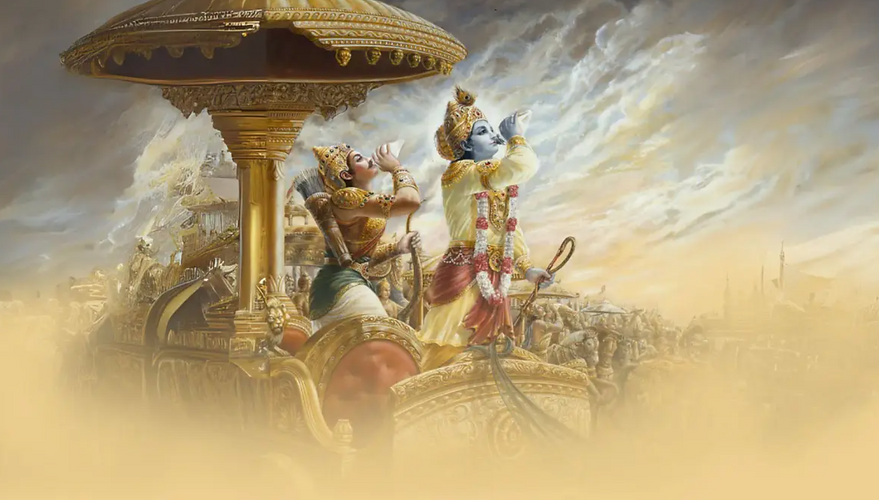
Bhagvad Gita Chapter 14
भगवद् गीता अध्याय १४
Bhagvad Gita Chapter 14 - Gunatraya Vibhaga Yog
भगवद गीता का अध्याय १४ - गुणत्रय विभाग योग
Chapter 14 of the Bhagavad Gita is titled Gunatraya Vibhaga Yog, which means The Yog of the Division of the Three Gunas (Qualities). In this chapter, Shri Krishna explains the three fundamental qualities or gunas—Sattva (purity, harmony), Rajas (passion, activity), and Tamas (ignorance, inertia)—which govern all aspects of material nature and influence human behavior, thought, and consciousness.
Shri Krishna begins by stating that this knowledge is supreme and purifying, and those who understand it can rise above the influence of these gunas and attain liberation (moksh). These three qualities are present in everything in the material world and are constantly interacting and competing for dominance. Every individual is affected by these gunas in varying degrees, shaping their temperament, choices, and spiritual progress.
-
Sattva guna is associated with clarity, wisdom, and tranquility. It binds the soul through attachment to happiness and knowledge.
-
Rajo guna is linked with desire, ambition, and restlessness. It binds by attachment to action and its results.
-
Tamo guna is characterized by darkness, laziness, and delusion. It binds through ignorance and inertia.
Shri Krishna explains that liberation comes from understanding the nature of these gunas and rising above them through spiritual knowledge, devotion, and detachment. One who transcends the gunas is not disturbed by their presence or absence and remains steady in all circumstances.
This chapter offers profound insights into human psychology and behavior and provides a practical framework for self-understanding and inner transformation. It teaches how to identify the dominant guna within oneself and move towards Sattva as a stepping stone toward transcendence and ultimate freedom.
भगवद गीता के अध्याय 14 का शीर्षक गुणत्रय विभाग योग है, जिसका अर्थ है तीन गुणों (गुणों) के विभाजन का योग। इस अध्याय में, भगवान कृष्ण तीन मूलभूत गुणों या गुणों- सत्व (पवित्रता, सद्भाव), रजस (जुनून, गतिविधि) और तम (अज्ञान, जड़ता) की व्याख्या करते हैं - जो भौतिक प्रकृति के सभी पहलुओं को नियंत्रित करते हैं और मानव व्यवहार, विचार और चेतना को प्रभावित करते हैं।
कृष्ण यह कहकर शुरू करते हैं कि यह ज्ञान सर्वोच्च और शुद्ध करने वाला है, और जो इसे समझते हैं वे इन गुणों के प्रभाव से ऊपर उठ सकते हैं और मुक्ति (मोक्ष) प्राप्त कर सकते हैं। ये तीन गुण भौतिक दुनिया की हर चीज़ में मौजूद हैं और लगातार आपस में बातचीत कर रहे हैं और प्रभुत्व के लिए प्रतिस्पर्धा कर रहे हैं। प्रत्येक व्यक्ति इन गुणों से अलग-अलग डिग्री में प्रभावित होता है, जो उनके स्वभाव, विकल्पों और आध्यात्मिक प्रगति को आकार देता है।
सत्व गुण स्पष्टता, ज्ञान और शांति से जुड़ा हुआ है। यह आत्मा को खुशी और ज्ञान के प्रति लगाव के माध्यम से बांधता है।
रजो गुण इच्छा, महत्वाकांक्षा और बेचैनी से जुड़ा हुआ है। यह कर्म और उसके परिणामों के प्रति आसक्ति से बांधता है।
तमो गुण अंधकार, आलस्य और भ्रम से जुड़ा है। यह अज्ञानता और जड़ता से बांधता है।
कृष्ण बताते हैं कि मुक्ति इन गुणों की प्रकृति को समझने और आध्यात्मिक ज्ञान, भक्ति और वैराग्य के माध्यम से उनसे ऊपर उठने से आती है। जो व्यक्ति गुणों से परे होता है, वह उनकी उपस्थिति या अनुपस्थिति से विचलित नहीं होता और सभी परिस्थितियों में स्थिर रहता है। यह अध्याय मानव मनोविज्ञान और व्यवहार में गहन अंतर्दृष्टि प्रदान करता है और आत्म-समझ और आंतरिक परिवर्तन के लिए एक व्यावहारिक रूपरेखा प्रदान करता है। यह सिखाता है कि अपने भीतर प्रमुख गुण की पहचान कैसे करें और सत्व की ओर बढ़ें, जो कि पारलौकिकता और परम स्वतंत्रता की ओर एक कदम है।
श्रीभगवानुवाच |
परं भूय: प्रवक्ष्यामि ज्ञानानां ज्ञानमुत्तमम् |
यज्ज्ञात्वा मुनय: सर्वे परां सिद्धिमितो गता: || 1||
The Blessed Lord said:
I shall again declare the supreme knowledge, the most exalted of all knowledges. Knowing this, all the sages have attained the highest perfection beyond this world.
In this opening verse of Chapter 14, Shri Krishna begins by promising to impart a deeper, more profound knowledge — the supreme among all forms of wisdom. This knowledge is not merely theoretical; it is transformative. Those who have truly understood it, the ancient sages and seers, have moved beyond the limitations of worldly existence and achieved ultimate liberation or perfection. This sets the tone for the chapter, which focuses on the three Gunas (qualities) of nature — Sattva (purity), Rajas (activity), and Tamas (inertia) — and how they bind the soul to the cycle of birth and death. By mastering the knowledge of these Gunas and rising above their influence, one becomes free. Shri Krishna underscores that this isn't just philosophical insight; it's the path to real spiritual emancipation.
श्रीभगवान ने कहा:
मैं फिर से वह परम ज्ञान बताने जा रहा हूँ, जो समस्त ज्ञानों में श्रेष्ठ है। जिसे जानकर सभी मुनि इस संसार से परे परम सिद्धि को प्राप्त हुए हैं।
भगवान श्रीकृष्ण इस श्लोक में अध्याय 14 की शुरुआत करते हुए अर्जुन से कहते हैं कि वे अब पुनः एक ऐसा परम ज्ञान बताएंगे, जो समस्त ज्ञानों में सर्वोत्तम है। यह ज्ञान केवल वैचारिक नहीं है, बल्कि आत्मा को मोक्ष की ओर ले जाने वाला मार्ग है। जिन महर्षियों और तपस्वियों ने इस ज्ञान को आत्मसात किया है, वे संसार के बंधनों से ऊपर उठकर परम सिद्धि—अर्थात् मोक्ष—को प्राप्त कर चुके हैं। यहाँ से भगवान गुणत्रय विभाग योग का आरंभ कर रहे हैं, जिसमें वे प्रकृति के तीन गुणों—सत्त्व, रज और तम—की व्याख्या करेंगे। ये गुण आत्मा को शरीर के चक्र में बाँधते हैं। किन्तु जो इस ज्ञान को जानकर इन गुणों से ऊपर उठ जाता है, वह जन्म-मरण के चक्र से मुक्त होकर ईश्वर की प्राप्ति करता है। इस प्रकार यह ज्ञान आत्मा को उसकी वास्तविक स्थिति तक ले जाता है।
इदं ज्ञानमुपाश्रित्य मम साधर्म्यमागता: |
सर्गेऽपि नोपजायन्ते प्रलये न व्यथन्ति च || 2||
By taking refuge in this knowledge, those who attain a nature like Mine are not born during creation nor do they suffer during dissolution.
Shri Krishna reveals the transformative power of true spiritual knowledge. Those who fully absorb this wisdom transcend the material cycle of creation and destruction. Even when the universe is born or destroyed, such realized souls are unaffected. They have risen above the dualities of existence and now share a divine likeness with God. This verse highlights that liberation is not merely escaping sorrow—it is entering a state of eternal steadiness, unshaken by time or cosmic events. These beings no longer need to take birth or endure death, because they’ve attained unity with the eternal, imperishable Self.
इस ज्ञान को आधार बनाकर जो मेरी सदृश स्थिति को प्राप्त हो जाते हैं, वे न तो सृष्टि के समय जन्म लेते हैं और न ही प्रलय के समय व्यथित होते हैं।
भगवान कहते हैं कि यह ज्ञान साधारण नहीं है—जो इसे पूरी तरह से अपनाता है, वह मेरी ही तरह दिव्य स्वरूप को प्राप्त करता है। ऐसे ज्ञानी आत्मा को न तो सृष्टि में पुनर्जन्म होता है, न ही प्रलय में उसका कोई नुकसान होता है। यह शाश्वत ज्ञान मनुष्य को प्रकृति के चक्रों से परे ले जाता है। जन्म-मरण, सुख-दुख और सृष्टि-प्रलय जैसे चक्र उस आत्मा को नहीं छूते, जिसने इस ज्ञान के माध्यम से ईश्वर से एकत्व प्राप्त कर लिया हो। यह मुक्ति की अवस्था है—पूर्ण स्वतंत्रता।
मम योनिर्महद् ब्रह्म तस्मिन्गर्भं दधाम्यहम् | सम्भव: सर्वभूतानां ततो भवति भारत || 3||
सर्वयोनिषु कौन्तेय मूर्तय: सम्भवन्ति या: | तासां ब्रह्म महद्योनिरहं बीजप्रद: पिता || 4||
My womb is the great Brahman (primordial Nature); in that I place the seed. From that, O Bharata, arises the birth of all beings.
In all wombs, O Kaunteya, forms are born of all species. Of them, Brahman is the great womb, and I am the seed-giving Father.
Shri Krishna explains the process of creation: Prakriti or material nature (called "Mahad Brahma") is the universal womb. Into it, He—the Supreme Being—places the divine seed of consciousness. From the union of spirit and matter arise all living beings. In every form of life, regardless of species or origin, the same divine principle operates. Nature provides the field, but God provides the spark. This makes Him not only the creator but also the father of all beings. It’s a deep vision of unity in diversity—whether plant, animal, or human, all are expressions of the same divine origin.
मेरी योनि महद् ब्रह्म (प्रकृति) है; उसमें मैं बीज रूप से गर्भ स्थापित करता हूँ। भारत, उससे ही सभी प्राणियों का जन्म होता है।
हे कौन्तेय, जितने भी रूप सभी योनियों में उत्पन्न होते हैं, उन सबकी योनि प्रकृति (ब्रह्म) है, और मैं बीज देने वाला पिता हूँ।
यहाँ भगवान सृष्टि की प्रक्रिया बताते हैं—प्रकृति को वे "महद् ब्रह्म" कहते हैं, जो सबका आधार है। उसमें वे चेतना का बीज स्थापित करते हैं, जिससे सभी प्राणी उत्पन्न होते हैं। सभी योनियों—चाहे मनुष्य हों, पशु हों या किसी अन्य रूप में—सबमें वही चेतना कार्य करती है। भगवान बताते हैं कि वे समस्त सृष्टि के पिता हैं, और प्रकृति उनकी माता के समान है। यह दृष्टिकोण समस्त प्राणियों में समानता और दिव्यता को उजागर करता है।
सत्त्वं रजस्तम इति गुणा: प्रकृतिसम्भवा: |
निबध्नन्ति महाबाहो देहे देहिनमव्ययम् || 5||
The qualities of Sattva (goodness), Rajas (passion), and Tamas (ignorance) are born of material nature. O mighty-armed Arjun, these qualities bind the imperishable soul to the body.
Shri Krishna explains that all living beings are influenced by three fundamental qualities that arise from material nature. Sattva is characterized by purity, wisdom, and harmony; Rajas by desire, activity, and restlessness; and Tamas by darkness, ignorance, and inertia. These qualities interact and dominate at different times, shaping human behavior and thought. Though the true self (the soul) is eternal and unchanging, it becomes entangled in the cycle of birth and death because of its identification with the body, which is governed by these Gunas. Freedom lies in recognizing and transcending their influence.
सत्त्व, रज और तम – ये तीनों गुण प्रकृति से उत्पन्न होते हैं। हे महाबाहो! ये गुण अविनाशी आत्मा को शरीर में बाँधते हैं।
भगवान श्रीकृष्ण कहते हैं कि यह सारा संसार इन तीन गुणों के प्रभाव में है। सत्त्व गुण से शांति, ज्ञान और पवित्रता उत्पन्न होती है; रज से इच्छाएँ, लालसा और क्रिया होती है; तम से आलस्य, अज्ञान और मोह होता है। यह त्रिगुणात्मक प्रकृति जीवात्मा को अपने में बाँध लेती है। आत्मा स्वयं शुद्ध और अविनाशी होते हुए भी शरीर के साथ तादात्म्य के कारण इन गुणों के प्रभाव में बंध जाती है। मोक्ष के लिए इन गुणों को समझकर उनके परे जाना आवश्यक है।
तत्र सत्त्वं निर्मलत्वात्प्रकाशकमनामयम् |
सुखसङ्गेन बध्नाति ज्ञानसङ्गेन चानघ || 6||
Sattva, being pure, is illuminating and free from disease (defects). Yet it binds the soul, O sinless one, by attachment to happiness and attachment to knowledge.
Sattva is the quality of clarity, harmony, and purity. It brings light, wisdom, and health. While it appears virtuous and uplifting, Shri Krishna reveals that even Sattva binds the soul—albeit subtly. It does so through attachment to pleasure and the satisfaction derived from knowledge and goodness. This form of bondage is gentle but still keeps the soul entangled in the cycle of rebirth. To reach liberation, one must ultimately transcend even the attachment to Sattva and rest in the Self beyond all three Gunas.
सत्त्वगुण निर्मल (शुद्ध) होने के कारण प्रकाशक और रोगरहित होता है। परंतु हे निष्पाप! यह भी सुख के तथा ज्ञान के साथ के कारण जीव को बाँधता है।
सत्त्व गुण सबसे श्रेष्ठ माना गया है क्योंकि यह मन को शुद्ध करता है, ज्ञान की ओर प्रेरित करता है और मानसिक सुख प्रदान करता है। फिर भी भगवान यह बताते हैं कि यह गुण भी बंधन का कारण बनता है। जब कोई सुख और ज्ञान में आसक्ति रखता है, तब वह सत्त्व गुण के प्रभाव में बंध जाता है। इसलिए मोक्ष के लिए केवल सत्त्व में रहना पर्याप्त नहीं है; अंत में सत्त्व से भी ऊपर उठकर निर्विकार अवस्था में स्थित होना आवश्यक है।
रजो रागात्मकं विद्धि तृष्णासङ्गसमुद्भवम् |
तन्निबध्नाति कौन्तेय कर्मसङ्गेन देहिनम् || 7||
Know Rajas to be of the nature of passion, born of craving and attachment. It binds the embodied being, O Kaunteya (Arjun), through attachment to action.
Rajas is the quality of activity, desire, and restlessness. It arises from intense longing and emotional attachment—whether to people, outcomes, or ambitions. Unlike Sattva, which binds gently, Rajas binds through agitation and compulsive doing. A person dominated by Rajas is driven by goals, rewards, and results, constantly entangled in action and its fruits. This Guna fuels ambition and drive, but it also causes anxiety, dissatisfaction, and a never-ending pursuit of more. Even though it leads to material progress, it ultimately keeps the soul trapped in the cycle of birth and rebirth.
रजोगुण को तू राग (आसक्ति) से युक्त जान, जो तृष्णा और मोह (असंग) से उत्पन्न होता है।
हे कौन्तेय! यह जीव को कर्मों में आसक्ति के द्वारा बाँधता है।
रजोगुण मनुष्य को क्रियाशील बनाता है, परंतु यह क्रिया आसक्ति और तृष्णा से प्रेरित होती है। यह व्यक्ति को कर्मों में उलझाए रखता है – वह फल की चिंता करता है, दूसरों से तुलना करता है, और लगातार कुछ प्राप्त करने की दौड़ में लगा रहता है। इसलिए यह गुण भी बंधन का कारण बनता है, यद्यपि बाह्य रूप से वह व्यक्ति सफल और सक्रिय लगता है। मोक्ष के लिए रजोगुण के प्रभाव से भी ऊपर उठना आवश्यक है।
तमस्त्वज्ञानजं विद्धि मोहनं सर्वदेहिनाम् |
प्रमादालस्यनिद्राभिस्तन्निबध्नाति भारत || 8||
Know Tamas to be born of ignorance, and it is the delusion of all beings. It binds them through heedlessness, laziness, and sleep, O Bharata (Arjun).
Tamas is the quality of darkness, inertia, and ignorance. It clouds the intellect, leading to confusion, apathy, and a lack of clarity. Those dominated by Tamas are often driven by lethargy, depression, and procrastination. They avoid action, and their minds are clouded by delusion, leading them to make poor decisions. It also causes a person to be indifferent to spiritual growth, creating obstacles to progress on the path of knowledge and enlightenment. Tamas binds the soul to ignorance and thus perpetuates the cycle of suffering and reincarnation.
तमोगुण को तू अज्ञान से उत्पन्न जान, यह समस्त जीवों को मोह में डालता है।
प्रमाद, आलस्य और निद्रा के कारण यह जीव को बंधन में बाँधता है।
तमोगुण व्यक्ति को आलसी और अप्रभावित बनाता है। यह उसे अपने कर्मों के प्रति लापरवाह बनाता है और उसे सही मार्ग पर चलने से रोकता है। यह अवबोधन, आलस्य और भ्रम की स्थिति उत्पन्न करता है, जिससे वह अपने जीवन के उद्देश्य को भूल जाता है और विकास की दिशा में कोई प्रयास नहीं करता।
सत्त्वं सुखे सञ्जयति रज: कर्मणि भारत |
ज्ञानमावृत्य तु तम: प्रमादे सञ्जयत्युत || 9||
Sattva binds one to happiness, rajas to action, O Bharata.
By covering the knowledge, tamas causes delusion and ignorance.
This verse elaborates on the influence of the three gunas — sattva, rajas, and tamas — on an individual's mind and behavior. Sattva, representing purity and goodness, binds a person to happiness and mental clarity. It leads to wisdom and peace. Rajas, associated with passion and activity, leads to attachment and a constant urge for action and desire. It causes restlessness and a pursuit of worldly goals. Tamas, on the other hand, represents ignorance and inertia. It covers knowledge, leading to delusion, confusion, and negligence. Thus, the verse explains that sattva leads to happiness and clarity, rajas to action and desire, and tamas to ignorance and confusion.
सत्त्व सुख में बांधता है, रजस कर्मों में, ओ भारत।
ज्ञान को आवृत कर, तमः भ्रांति और अज्ञान उत्पन्न करता है।
यह श्लोक तीन गुणों — सत्त्व, रजस और तमस — के प्रभाव को व्यक्ति के मन और व्यवहार पर समझाता है। सत्त्व, जो शुद्धता और अच्छाई का प्रतीक है, व्यक्ति को सुख और मानसिक स्पष्टता में बांधता है। यह ज्ञान और शांति की ओर ले जाता है। रजस, जो जुनून और क्रिया से जुड़ा होता है, व्यक्ति को कर्म और इच्छाओं में बांधता है। यह बेचैनी और सांसारिक लक्ष्यों की ओर प्रवृत्त करता है। तमस, जो अज्ञान और आलस्य का प्रतीक है, ज्ञान को ढक लेता है और भ्रांति, भ्रम और लापरवाही उत्पन्न करता है। इस प्रकार, श्लोक यह बताता है कि सत्त्व सुख और स्पष्टता की ओर, रजस कर्म और इच्छाओं की ओर, और तमस अज्ञान और भ्रम की ओर ले जाता है।
रजस्तमश्चाभिभूय सत्त्वं भवति भारत |
रज: सत्त्वं तमश्चैव तम: सत्त्वं रजस्तथा || 10||
O Bharata, when rajas and tamas are overpowered, sattva prevails. When sattva and tamas are subdued, rajas dominates; and when sattva and rajas are overpowered, tamas becomes prominent.
This verse explains the constant flux and interaction between the three gunas—sattva (goodness, purity), rajas (passion, activity), and tamas (ignorance, inertia). These qualities do not coexist equally at all times. Instead, one becomes dominant depending on the individual's state of mind, environment, actions, and choices. When rajas and tamas are suppressed, sattva manifests more strongly, leading to wisdom, clarity, and peace. When sattva and tamas recede, rajas takes over, driving ambition, desire, and action. If both sattva and rajas are suppressed, tamas rules, bringing about lethargy, confusion, and darkness. This verse urges the seeker to recognize these fluctuations and consciously move toward enhancing sattva for spiritual upliftment, which leads to greater awareness and liberation from the cycle of ignorance and restlessness.
हे भारत! जब रजस और तमस पराजित हो जाते हैं, तब सत्त्व प्रबल होता है। जब सत्त्व और तमस पराजित होते हैं, तब रजस प्रभावी होता है। और जब सत्त्व तथा रजस पराजित होते हैं, तब तमस प्रबल हो जाता है।
यह श्लोक तीन गुणों—सत्त्व, रजस और तमस—के बीच के अदृश्य संघर्ष की ओर ध्यान आकर्षित करता है। ये तीनों गुण हमारी मनोवृत्ति और व्यवहार को प्रभावित करते हैं, लेकिन एक समय पर एक ही गुण प्रमुख रहता है। जब व्यक्ति में रजस (उत्साह, वासना, कर्म-प्रेरणा) और तमस (आलस्य, अज्ञान, प्रमाद) क्षीण हो जाते हैं, तब सत्त्व (ज्ञान, शांति, विवेक) की प्रधानता होती है। इसी प्रकार जब सत्त्व और तमस का प्रभाव कम हो जाता है, तब रजस बढ़ता है। और जब सत्त्व और रजस दब जाते हैं, तब तमस प्रमुख होता है, जिससे व्यक्ति में जड़ता, भ्रम और निष्क्रियता आती है। यह श्लोक हमें यह समझने के लिए प्रेरित करता है कि इन गुणों की पहचान करके, हम आत्म-संयम, सत्संग, साधना, और स्वाध्याय के माध्यम से सत्त्व गुण को बढ़ा सकते हैं, जिससे आध्यात्मिक उन्नति संभव होती है।
सर्वद्वारेषु देहेऽस्मिन्प्रकाश उपजायते | ज्ञानं यदा तदा विद्याद्विवृद्धं सत्त्वमित्युत || 11||
लोभ: प्रवृत्तिरारम्भ: कर्मणामशम: स्पृहा | रजस्येतानि जायन्ते विवृद्धे भरतर्षभ || 12||
अप्रकाशोऽप्रवृत्तिश्च प्रमादो मोह एव च | तमस्येतानि जायन्ते विवृद्धे कुरुनन्दन || 13||
When light of knowledge shines through all the gates (senses) of the body, then one should understand that sattva has increased.
Greed, intense activity, initiation of works, restlessness, and longing — these arise when rajas is dominant.
Darkness, inactivity, negligence, and delusion — these are born when tamas increases, O joy of the Kuru lineage.
These three verses describe how the predominance of each guna (sattva, rajas, tamas) manifests in human behavior and consciousness. When sattva is dominant, clarity, wisdom, and spiritual insight naturally arise, illuminating the individual like light pouring through open windows. This is a state of harmony and elevated awareness. When rajas takes over, it brings restlessness, ambition, excessive activity, and dissatisfaction — signs of a mind driven by desires and ego. These tendencies, while energetic, often lead to bondage through attachment and overexertion. When tamas is strong, the mind becomes clouded with ignorance, laziness, confusion, and apathy. Actions are avoided or done without awareness, leading to delusion and inaction. These verses serve as a diagnostic guide, helping the seeker observe which guna is currently active, and shift intentionally towards sattva through mindful living, inner discipline, and spiritual practice.
जब इस शरीर के सभी द्वारों (इंद्रियों) से ज्ञान का प्रकाश उत्पन्न होता है, तब समझो कि सत्त्व की वृद्धि हुई है।
लोभ, अत्यधिक क्रियाशीलता, कार्यों की शुरुआत, अशांति और इच्छाओं की तीव्रता — ये रजोगुण की वृद्धि से उत्पन्न होते हैं।
अंधकार, निष्क्रियता, प्रमाद और मोह — ये सब तमोगुण की वृद्धि के लक्षण हैं, हे कुरुनन्दन!
इन श्लोकों में भगवान श्रीकृष्ण तीनों गुणों के प्रभाव और उनके लक्षणों को स्पष्ट करते हैं। जब सत्त्व गुण बढ़ता है, तब व्यक्ति के शरीर की सभी इंद्रियाँ ज्ञान के प्रकाश से भर जाती हैं — उसे सत्य, धर्म और विवेक का स्पष्ट अनुभव होता है। यह स्थिति शांति, संतुलन और आत्मज्ञान का संकेत देती है। दूसरी ओर, जब रजोगुण प्रभावी होता है, तब मनुष्य में लोभ, अधिक कार्य की प्रवृत्ति, अस्थिरता और इच्छाओं की भरमार हो जाती है — यह स्थिति कर्म में उलझाव और मानसिक अशांति की ओर ले जाती है। जब तमोगुण प्रबल होता है, तब व्यक्ति का विवेक ढक जाता है; वह प्रमादी, आलसी और मोहग्रस्त हो जाता है। इन गुणों की पहचान करके साधक को सत्त्व की ओर बढ़ना चाहिए, जिससे आत्मिक विकास और मुक्ति का मार्ग प्रशस्त हो सके।
यदा सत्त्वे प्रवृद्धे तु प्रलयं याति देहभृत् | तदोत्तमविदां लोकानमलान्प्रतिपद्यते || 14||
रजसि प्रलयं गत्वा कर्मसङ्गिषु जायते | तथा प्रलीनस्तमसि मूढयोनिषु जायते || 15||
When a person dies during the predominance of sattva, they attain the pure higher realms of the wise.
Dying under the influence of rajas, one is reborn among those attached to action.
Similarly, one who dies in tamas is reborn in deluded and lower forms of life.
These verses explain how the state of one's inner qualities (gunas) at the time of death influences the soul’s next birth. If a person dies while sattva is dominant, it means their consciousness is clear, peaceful, and pure. Such a person transcends to higher, luminous realms — realms inhabited by the wise, evolved beings. This is a reward for a life lived in clarity, goodness, and spiritual alignment. In contrast, one dominated by rajas at death — filled with desires, ambition, and attachment to work — is reborn in environments where action, restlessness, and competition prevail. Finally, a person who dies in the state of tamas, clouded by ignorance, laziness, or delusion, is born into lower or duller life forms, or conditions of darkness and suffering. These verses emphasize that the quality of our inner nature shapes not just this life but also what comes after — motivating a seeker to cultivate sattva.
जब किसी व्यक्ति की मृत्यु सत्त्व की प्रधानता में होती है, तब वह पवित्र और श्रेष्ठ लोकों को प्राप्त होता है, जहाँ ज्ञानियों का वास होता है।
यदि मृत्यु रजोगुण की स्थिति में होती है, तो वह कर्म में लिप्त लोगों के बीच पुनर्जन्म लेता है।
और यदि मृत्यु तमोगुण की अवस्था में होती है, तो वह अज्ञानयुक्त, नीच योनियों में जन्म लेता है।
इन श्लोकों में भगवान श्रीकृष्ण मृत्यु के समय की चेतना और उसके फलस्वरूप अगले जन्म का वर्णन करते हैं। यदि मृत्यु के समय व्यक्ति में सत्त्व गुण की प्रधानता होती है — अर्थात् वह शांत, ज्ञानी और निर्मल चित्त वाला होता है — तो उसकी आत्मा उच्च, दिव्य लोकों की ओर जाती है, जहाँ तपस्वियों और आत्मज्ञानी पुरुषों का वास होता है। यह स्थिति आत्मिक उन्नति की है। लेकिन यदि मृत्यु रजोगुण में होती है, तो वह व्यक्ति कर्मों में लिप्त, सांसारिक प्रवृत्तियों से युक्त लोगों के बीच जन्म लेता है, जहाँ इच्छाओं और प्रतिस्पर्धा का वर्चस्व रहता है। वहीं तमोगुण में मृत्यु होने पर, जब मन मोह, आलस्य, प्रमाद और अज्ञान से ग्रस्त होता है, तो आत्मा नीच योनियों में, अंधकारपूर्ण जीवनों में जन्म लेती है। यह समझ जीवन में गुणों की शुद्धि और सत्त्व की साधना की प्रेरणा देती है।
कर्मण: सुकृतस्याहु: सात्त्विकं निर्मलं फलम् |
रजसस्तु फलं दु:खमज्ञानं तमस: फलम् || 16||
The result of righteous action is said to be pure and sattvic.
The fruit of rajasic action is pain, while ignorance is the result of tamasic action.
This verse explains the outcomes of actions based on the three gunas — sattva (goodness), rajas (passion), and tamas (ignorance). Actions performed in sattva are selfless, pure, and aligned with dharma. Such actions bring about peace, clarity, and inner joy, making the mind tranquil and refined. Rajasic actions, driven by desire, ego, and ambition, may initially seem rewarding, but they eventually lead to stress, conflict, and dissatisfaction. The restless energy of rajas always seeks more, and thus its fruit is ultimately suffering. Tamasic actions, rooted in delusion, laziness, or cruelty, result in ignorance — a state of spiritual darkness, confusion, and bondage. Shri Krishna is not merely speaking of external rewards but emphasizing the inner consequences of our deeds. Thus, one is encouraged to cultivate sattvic tendencies in thought, word, and action to progress spiritually and attain lasting peace.
सुकर्म का फल सात्त्विक और निर्मल होता है।
रजोगुण से प्रेरित कर्मों का फल दुःख होता है,
और तमोगुण से उत्पन्न कर्मों का परिणाम अज्ञान होता है।
इस श्लोक में श्रीकृष्ण कर्मों के फलों को तीन गुणों के आधार पर स्पष्ट करते हैं। जो कर्म सात्त्विक भाव से, शुद्ध नीयत और परमार्थ की भावना से किए जाते हैं, उनका फल निर्मल होता है — अर्थात् आनंददायक, शांति देने वाला और आत्मा को उन्नति की ओर ले जाने वाला। इसके विपरीत, रजोगुण से प्रेरित कर्म — जो कि इच्छा, महत्वाकांक्षा, और स्वार्थ से होते हैं — उनका परिणाम अंततः दुःख होता है। भले ही वे कुछ समय के लिए सफलता दें, परन्तु अंत में अशांति और क्लेश देते हैं। वहीं, तमोगुण से प्रेरित कर्म — जो अज्ञान, आलस्य या हिंसा से होते हैं — उनका फल अंधकारमय होता है। यह अज्ञान व्यक्ति को माया में बाँधता है और मोक्ष से दूर ले जाता है। यह श्लोक संकेत करता है कि अपने कर्मों की प्रवृत्ति को समझकर व्यक्ति को सात्त्विक जीवन अपनाना चाहिए।
सत्त्वात्सञ्जायते ज्ञानं रजसो लोभ एव च |
प्रमादमोहौ तमसो भवतोऽज्ञानमेव च || 17||
From sattva arises knowledge; from rajas arises greed.
From tamas arise heedlessness and delusion — indeed, ignorance itself.
This verse clearly links each of the three gunas with their mental and spiritual consequences. Sattva is associated with clarity and light; thus, from it arises true knowledge — the ability to discern reality, act with wisdom, and perceive the Self. Rajas, being restless and desire-driven, leads to greed — an insatiable craving for more, whether it be wealth, power, pleasure, or recognition. This greed clouds judgment and binds the soul in constant striving. Tamas, rooted in darkness and inertia, results in delusion and heedlessness — a state where one is disconnected from truth and lacks awareness. This leads to ignorance, which is the root of all suffering and bondage in spiritual life. The Gita encourages the cultivation of sattva for inner illumination and urges one to rise beyond the influence of rajas and tamas to experience liberation and peace.
सत्त्वगुण से ज्ञान उत्पन्न होता है;
रजोगुण से लोभ जन्म लेता है;
तमोगुण से प्रमाद, मोह और अज्ञान उत्पन्न होते हैं।
इस श्लोक में श्रीकृष्ण तीनों गुणों से उत्पन्न मानसिक और आध्यात्मिक अवस्थाओं को स्पष्ट करते हैं। सत्त्वगुण, जो शुद्धता और संतुलन का प्रतीक है, उससे ज्ञान उत्पन्न होता है — ऐसा ज्ञान जो आत्मा की पहचान कराता है और सही निर्णय की क्षमता देता है। रजोगुण, जो चंचलता, इच्छाओं और कर्म में प्रवृत्ति से जुड़ा है, उससे लोभ उत्पन्न होता है। यह लोभ व्यक्ति को कभी संतुष्ट नहीं होने देता और भटकाव का कारण बनता है। तमोगुण से उत्पन्न होते हैं प्रमाद (लापरवाही), मोह (भ्रम), और अज्ञान — जो आत्मा को माया के बंधन में जकड़ लेते हैं। ये गुण व्यक्ति को नीचे की ओर ले जाते हैं और आध्यात्मिक अंधकार में डाल देते हैं। गीता का यह उपदेश संकेत करता है कि व्यक्ति को सत्त्वगुण को बढ़ावा देना चाहिए और रजस तथा तमस से ऊपर उठने का प्रयास करना चाहिए ताकि आत्मज्ञान और मोक्ष प्राप्त किया जा सके।
ऊर्ध्वं गच्छन्ति सत्त्वस्था मध्ये तिष्ठन्ति राजसा: |
जघन्यगुणवृत्तिस्था अधो गच्छन्ति तामसा: || 18||
Those established in sattva rise upwards;
those in rajas remain in the middle;
and those who dwell in the lowest tendencies of tamas descend downward.
This verse describes the spiritual trajectories of beings influenced by the three gunas. Individuals dominated by sattva are inclined toward purity, knowledge, and harmony. As a result, their consciousness ascends — they evolve spiritually and move closer to liberation. Those ruled by rajas are driven by desire, ambition, and action. They remain entangled in the material world — neither rising significantly nor falling drastically — their progress is mixed and fluctuating. The tamasic individuals, overwhelmed by darkness, laziness, ignorance, and delusion, regress spiritually. Their choices and actions bind them to lower states of consciousness and even lower forms of rebirth. The Gita offers this classification not to judge but to help seekers introspect and strive for inner growth. By cultivating sattva and transcending both rajas and tamas, one can steadily ascend toward self-realization and ultimate freedom.
सत्त्वगुण में स्थित व्यक्ति ऊपर की ओर जाते हैं,
रजोगुण वाले बीच में स्थित रहते हैं,
और तामसिक प्रवृत्तियों में स्थित व्यक्ति नीचे की ओर जाते हैं।
इस श्लोक में श्रीकृष्ण तीनों गुणों के प्रभाव में रहने वाले व्यक्तियों की गति को स्पष्ट करते हैं। सत्त्वगुण से युक्त व्यक्ति शुद्धता, विवेक और संतुलन में रहते हैं, जिससे वे आध्यात्मिक रूप से ऊपर उठते हैं। उनका मन शांत, विचार ऊँचे और कर्म निष्काम होते हैं, जिससे वे परमगति की ओर बढ़ते हैं। रजोगुण से प्रेरित व्यक्ति कर्मशील तो होते हैं, परंतु वे इच्छाओं, प्रतिस्पर्धा और मोह में फंसे रहते हैं। इसलिए उनकी गति स्थिर नहीं होती — वे न ऊपर उठ पाते हैं, न नीचे गिरते हैं, बल्कि जीवन के मध्य स्तरों पर ही अटके रहते हैं। तामसिक व्यक्ति जो अज्ञान, आलस्य और मोह में डूबे रहते हैं, वे नीचे गिरते हैं — आध्यात्मिक रूप से भी और कर्मों के स्तर पर भी। गीता में यह शिक्षा आत्मनिरीक्षण हेतु है, ताकि हम सत्त्वगुण को अपनाकर आत्मोन्नति की दिशा में अग्रसर हो सकें।
नान्यं गुणेभ्य: कर्तारं यदा द्रष्टानुपश्यति |
गुणेभ्यश्च परं वेत्ति मद्भावं सोऽधिगच्छति || 19||
When the seer perceives no doer other than the gunas (qualities of nature),
and knows the Self as beyond these gunas,
then he attains My divine nature.
This verse reveals a profound insight into action and identity. When a person realizes that all actions in the material world are performed solely by the three gunas — sattva, rajas, and tamas — and not by the true Self, they transcend the illusion of doership. The ego believes “I am doing,” but in reality, it is nature (prakriti) acting through the body and mind under the influence of gunas. When the seeker deeply understands this and recognizes the Self as the unchanging witness beyond these tendencies, liberation becomes possible. Such a realized person is not bound by karma because they no longer identify with the doer. This knowledge leads to union with the Divine, the supreme state of being — Krishna’s own eternal nature. It invites the seeker to detach from the illusion of control and realize the deeper truth of their own Self as pure consciousness.
जब द्रष्टा यह देखता है कि गुणों के अतिरिक्त कोई कर्ता नहीं है,
और वह आत्मा को इन गुणों से परे जान लेता है,
तब वह मेरी दिव्य स्थिति को प्राप्त होता है।
इस श्लोक में श्रीकृष्ण आत्मा और प्रकृति के कार्य-कारण संबंध का रहस्य प्रकट करते हैं। वे कहते हैं कि जब कोई ज्ञानी यह समझता है कि संसार में होने वाले सभी कार्य केवल प्रकृति के तीन गुणों — सत्त्व, रजस और तमस — के द्वारा होते हैं, और आत्मा वास्तव में इन सबसे परे, अकर्ता है, तब वह व्यक्ति दिव्यता को प्राप्त करता है। यह बोध व्यक्ति को कर्म के बंधन से मुक्त करता है, क्योंकि अब वह "मैं करता हूँ" की भ्रांति से मुक्त हो जाता है। वह केवल साक्षी रहता है — देखता है, लेकिन करता नहीं। यह ज्ञान ही मुक्ति की कुंजी है। जब मनुष्य गुणों से ऊपर उठकर आत्मस्वरूप को पहचान लेता है, तब वह ईश्वरस्वरूप — भगवान के वास्तविक स्वरूप — को प्राप्त करता है। यही भगवद्भाव की प्राप्ति है, जो अंतिम लक्ष्य है।
गुणानेतानतीत्य त्रीन्देही देहसमुद्भवान् |
जन्ममृत्युजरादु:खैर्विमुक्तोऽमृतमश्रुते || 20||
When the embodied soul rises above these three gunas,
which originate in the body,
it is freed from birth, death, old age, and sorrow
and attains immortality.
This verse conveys the promise of liberation. The soul, caught in the cycle of birth and death, is bound by the three gunas — sattva (purity), rajas (activity), and tamas (inertia). These gunas shape the body, mind, desires, and actions, and thus keep the soul entangled in the material world. However, when a person transcends these modes — by becoming the witness, by remaining unattached, and by realizing the Self as beyond nature — they are no longer influenced by the fluctuations of the gunas. As a result, the soul is released from the cycles of samsara: birth, aging, suffering, and death. What remains is the experience of amritam — immortality, which is not physical but spiritual — eternal peace and oneness with the Divine. This verse affirms that true freedom is not in changing the gunas but in rising beyond their sway.
जब देही (शरीरधारी आत्मा) इन तीन गुणों को —
जो शरीर से उत्पन्न होते हैं — पार कर लेता है,
तब वह जन्म, मृत्यु, बुढ़ापा और दुखों से मुक्त होकर
अमरत्व को प्राप्त करता है।
यह श्लोक मोक्ष की ओर संकेत करता है। शरीरधारी आत्मा प्रकृति के तीन गुणों — सत्त्व, रजस और तमस — से बंधी होती है। ये गुण ही शरीर, मन, इच्छाओं और कर्मों को संचालित करते हैं, जिससे आत्मा जन्म-मृत्यु के चक्र में फँसी रहती है। परंतु जब साधक इन गुणों को पार कर लेता है — न उन्हें स्वीकार करता है, न उनसे लड़ता है, बस साक्षी बन जाता है — तब वह उनके प्रभाव से मुक्त हो जाता है। यह पारगमन आत्मा को जन्म, बुढ़ापा, मृत्यु और दुख के चक्र से छुटकारा दिलाता है। तब वह अमृतत्व — आध्यात्मिक अमरत्व — को प्राप्त करता है, जो शाश्वत शांति और परमात्मा से एकत्व की स्थिति है। यह मुक्ति केवल अभ्यास या तप से नहीं, बल्कि गुणों से ऊपर उठकर आत्मा की शुद्ध स्वरूप में स्थित होने से मिलती है। यही अंतिम मुक्ति है।
अर्जुन उवाच |
कैर्लिङ्गैस्त्रीन्गुणानेतानतीतो भवति प्रभो |
किमाचार: कथं चैतांस्त्रीन्गुणानतिवर्तते || 21||
Arjun said:
By what signs is a person recognized who has transcended the three gunas, O Lord?
What is their conduct, and how do they go beyond these three modes?
Arjun’s question here is clear and profound. After hearing that one who transcends the three gunas attains immortality, he now seeks practical understanding. He asks Krishna: “How do we recognize such a person?” — in other words, what are the external or behavioral signs of someone who has risen above sattva, rajas, and tamas? Arjun also wants to know: “What is the behavior or lifestyle of such a liberated soul?” And further, “By what means can one transcend these gunas?” This inquiry is rooted in both curiosity and a sincere desire for liberation. It reflects the spiritual seeker’s quest — not just for knowledge, but for the embodiment of that knowledge in life. This sets the stage for Shri Krishna’s detailed reply, in which he describes the qualities of the guna-atita — one who has gone beyond the play of nature and lives in the state of pure consciousness.
अर्जुन ने कहा:
हे प्रभो! उन लक्षणों को कृपया बताइए, जिनसे यह जाना जा सके
कि कोई व्यक्ति इन तीनों गुणों से ऊपर उठ चुका है।
उसका आचरण कैसा होता है? और वह इन तीनों गुणों को कैसे पार करता है?
इस श्लोक में अर्जुन एक अत्यंत महत्वपूर्ण प्रश्न पूछते हैं। भगवान श्रीकृष्ण ने बताया कि जो व्यक्ति तीनों गुणों — सत्त्व, रजस और तमस — से ऊपर उठ जाता है, वह अमरत्व को प्राप्त करता है। अब अर्जुन जानना चाहते हैं कि ऐसा व्यक्ति पहचाना कैसे जाए? उसके लक्षण क्या हैं, उसका व्यवहार कैसा होता है, और वह किन उपायों से इन गुणों को पार करता है? यह प्रश्न एक जिज्ञासु साधक की गहराई को दर्शाता है, जो न केवल ज्ञान चाहता है, बल्कि उस ज्ञान को जीवन में उतारने की भी आकांक्षा रखता है। अर्जुन केवल सैद्धांतिक जानकारी से संतुष्ट नहीं हैं, वे अनुभवजन्य, व्यावहारिक मार्गदर्शन चाहते हैं। यह श्लोक आगे आने वाले ज्ञान के लिए द्वार खोलता है, जिसमें श्रीकृष्ण बताएंगे कि गुणों से ऊपर उठे हुए व्यक्ति की चेतना, दृष्टिकोण और आचरण कैसे होते हैं — और आम व्यक्ति भी उस मार्ग पर कैसे चल सकता है।
श्रीभगवानुवाच |
प्रकाशं च प्रवृत्तिं च मोहमेव च पाण्डव | न द्वेष्टि सम्प्रवृत्तानि न निवृत्तानि काङ् क्षति || 22||
उदासीनवदासीनो गुणैर्यो न विचाल्यते | गुणा वर्तन्त इत्येवं योऽवतिष्ठति नेङ्गते || 23||
The Blessed Lord said:
O Pandava, one who does not hate the activities when they occur, nor desires them when they cease — such a person transcends the three gunas (modes of nature).
He who remains unaffected by the gunas, who does not get disturbed by them, and who knows that the gunas are merely functioning — such a person remains steady and does not move.
In these verses, Shri Krishna explains the nature of someone who has transcended the influence of the three gunas: sattva (goodness), rajas (passion), and tamas (ignorance). Such a person neither despises the activities when they arise nor desires them when they cease. This indicates that they have risen above the dualities of attachment and aversion. The true yogi is unaffected by the play of the gunas, as they remain in a state of detachment and equanimity, fully aware that these qualities are only temporary and ever-changing. Their behavior is unaffected by external circumstances, as they perceive the activities of the world as the functioning of nature, without personal attachment. Such a person stands firm and steady, not swayed by the fluctuations of life. This state of inner balance and wisdom is the sign of spiritual maturity.
श्रीभगवान ने कहा:
हे पाण्डव! जो व्यक्ति कार्यों को होते हुए नहीं द्वेषता, न ही उन्हें बंद होते समय इच्छा करता है, वही तीनों गुणों से ऊपर उठ जाता है।
जो गुणों से अप्रभावित रहते हुए यह जानते हैं कि गुण केवल कार्यरत होते हैं, वे व्यक्ति सदा स्थिर रहते हैं और विचलित नहीं होते।
इन श्लोकों में श्रीकृष्ण बताते हैं कि वह व्यक्ति जो तीनों गुणों के प्रभाव से मुक्त होता है, वह न तो कार्यों के प्रारंभ होते समय द्वेष करता है, न ही उनके रुकने पर लालसा करता है। इसका मतलब यह है कि वह व्यक्ति संसार के द्वैतों जैसे आकर्षण और विकर्षण से ऊपर उठ चुका है। वह व्यक्ति गुणों के प्रभाव से अप्रभावित रहता है, क्योंकि वह यह जानता है कि ये गुण केवल प्रकृति के कार्य हैं और बदलते रहते हैं। इस प्रकार का व्यक्ति जीवन के उतार-चढ़ाव से प्रभावित नहीं होता। वह अपने आंतरिक संतुलन और स्थिरता को बनाए रखता है, क्योंकि उसे यह ज्ञात होता है कि बाहरी घटनाएँ केवल प्रकृति के गुणों का खेल हैं, जिनका उसका आत्मा से कोई लेना-देना नहीं है। इस स्थिति में वह पूर्ण संतुलन और समता की अवस्था में रहता है, जो एक योगी की पहचान है।
समदु:खसुख: स्वस्थ: समलोष्टाश्मकाञ्चन: | तुल्यप्रियाप्रियो धीरस्तुल्यनिन्दात्मसंस्तुति: || 24||
मानापमानयोस्तुल्यस्तुल्यो मित्रारिपक्षयो: | सर्वारम्भपरित्यागी गुणातीत: स उच्यते || 25||
The one who is the same in pain and pleasure, the one who is steady, who remains indifferent to mud, stones, and gold,
Who is equally disposed to both praise and blame, and to friends and enemies,
Who renounces all undertakings, and who has transcended the three gunas, he is called the one who is beyond all qualities.
In these verses,Shri Krishna defines the qualities of a person who has transcended the influence of the three gunas—sattva, rajas, and tamas. Such a person remains unaffected by the dualities of life, like pleasure and pain, or praise and blame. They are unaffected by material wealth or social status, treating gold and mud with equal indifference. They are equally balanced in their approach toward friends and enemies, accepting both with the same demeanor. Moreover, they renounce all attachment to actions and outcomes, fully detached from the results. This state of equanimity comes from a deep spiritual understanding that all dualities are transient and that one’s true nature is beyond these fluctuations. A person who has achieved such a state is described as one who is beyond the three gunas and remains unshaken by life's challenges.
जो व्यक्ति दु:ख और सुख में समान होता है, जो स्थिर होता है, जो कीचड़, पत्थर और सोने में अंतर नहीं करता,
जो स्तुति और निंदा, मित्र और शत्रु में समान दृष्टि रखता है,
जो सभी कार्यों का त्याग करता है और जो तीनों गुणों से परे है, वही गुणातीत कहलाता है।
इन श्लोकों में भगवान श्री कृष्ण उस व्यक्ति के गुणों का वर्णन करते हैं जो तीनों गुणों—सत्त्व, रजस, और तमस—से मुक्त होता है। ऐसा व्यक्ति जीवन के द्वैतों से अप्रभावित रहता है, जैसे सुख-दु:ख, स्तुति-निंदा, या मित्र-शत्रु। वह किसी भी बाह्य चीज़, जैसे सोना या कीचड़, को समान दृष्टि से देखता है। वह हर स्थिति में स्थिर रहता है, न तो किसी की सराहना से अभिमानित होता है, न ही किसी की आलोचना से विचलित होता है। वह सभी कार्यों के परिणामों से detached रहता है और निष्कलंक होता है। इसका कारण है कि वह समझता है कि बाहरी घटनाएँ अस्थायी हैं और उसकी सच्ची प्रकृति इन सभी द्वैतों से परे है। जो इस स्थिति को प्राप्त कर लेता है, वही गुणातीत कहलाता है, और वह जीवन के हर चुनौती का सामना बिना किसी उथल-पुथल के करता है।
मां च योऽव्यभिचारेण भक्तियोगेन सेवते |
स गुणान्समतीत्यैतान्ब्रह्मभूयाय कल्पते || 26||
The one who serves Me with unwavering devotion through the path of Bhakti, transcends all the qualities (gunas) and becomes one with Brahman.
In this verse, Shri Krishna emphasizes the importance of steadfast devotion (Bhakti) in transcending the three gunas—sattva, rajas, and tamas. A person who engages in selfless and consistent devotion to the Divine, without any distractions or fluctuations in their commitment, surpasses the influence of the qualities that govern the material world. Such a person goes beyond the limitations imposed by the physical body and mind, and ultimately attains the highest state of spiritual realization—unity with Brahman. This is a state of being free from the material attachment and dualities of life, where the devotee experiences oneness with the Supreme. Bhakti, in its purest form, allows the devotee to transcend all worldly influences and merge into the eternal and infinite consciousness of Brahman.
जो व्यक्ति मेरे प्रति अव्यभिचारी भक्ति से मेरी सेवा करता है, वह गुणों को पार कर ब्रह्म में विलीन हो जाता है।
इस श्लोक में भगवान श्री कृष्ण भक्ति के महत्व को बताते हैं। जो व्यक्ति अव्यभिचारिणी भक्ति से भगवान की सेवा करता है, वह सत्त्व, रजस और तमस—इन तीन गुणों के प्रभाव से मुक्त हो जाता है। इस व्यक्ति का समर्पण बिना किसी चंचलता के भगवान के प्रति निस्वार्थ होता है। भक्ति के माध्यम से वह व्यक्ति शरीर और मन के बंधनों से पार जाकर ब्रह्म के साथ एकात्मता को प्राप्त करता है। जब किसी व्यक्ति का ध्यान और समर्पण पूर्ण रूप से ईश्वर में होता है, तो वह भौतिक जगत की सीमाओं और द्वैतों से ऊपर उठ जाता है और ब्रह्म के साथ मिल जाता है। यह भक्ति का सर्वोत्तम रूप है, जो साधक को परम शांति और आत्मसाक्षात्कार की ओर ले जाता है।
ब्रह्मणो हि प्रतिष्ठाहममृतस्याव्ययस्य च |
शाश्वतस्य च धर्मस्य सुखस्यैकान्तिकस्य च || 27||
I am the foundation of Brahman, the eternal, imperishable, and the ultimate source of eternal truth, righteousness, and bliss.
In this verse, Shri Krishna reveals His supreme nature as the foundation of all that is eternal and unchanging. He declares that He is the very basis of Brahman, the absolute reality, as well as the unchanging source of immortality and imperishability. He is also the source of eternal righteousness (Dharma), which governs the universe, and the supreme bliss that is beyond all material pleasures. Everything in the universe is sustained by His divine presence and power, including the laws of nature and the principles that lead to ultimate fulfillment and liberation. This verse emphasizes that true peace, joy, and righteousness are rooted in the Divine, and one must understand and realize this connection to experience true happiness and spiritual fulfillment.
मैं ही ब्रह्मा की प्रतिष्ठा हूं, अमृत का, अव्यय का, शाश्वत धर्म का, और आनंद का एकमात्र आधार हूं।
इस श्लोक में भगवान श्री कृष्ण अपने सर्वोच्च स्वरूप का वर्णन करते हैं। वे कहते हैं कि वे ही ब्रह्म की प्रतिष्ठा हैं, अर्थात् वे ही उस निराकार और शाश्वत सत्य के आधार हैं। वे अमृत, अव्यय (अक्षय) और शाश्वत धर्म के स्रोत हैं, जो सृष्टि और ब्रह्माण्ड के संचालन का मार्गदर्शन करते हैं। भगवान कृष्ण यह भी बताते हैं कि वे आनंद के स्रोत हैं, जो किसी भी भौतिक सुख से परे है और जो आत्मा को शांति और परम सुख की ओर अग्रसर करता है। इस श्लोक के माध्यम से भगवान ने यह स्पष्ट किया है कि सत्य, धर्म और आनंद का वास्तविक अनुभव केवल उनके माध्यम से ही प्राप्त किया जा सकता है। ब्रह्म और परमात्मा की साक्षात्कार से ही जीवन का उद्देश्य और आंतरिक सुख मिलता है।
In the concluding part of Chapter 14 of the Bhagavad Gita, Shri Krishna emphasizes the transformative power of transcending the influence of the three gunas—Sattva, Rajas, and Tamas. He explains that while these qualities bind the soul to the material world, it is possible to rise above them by cultivating spiritual wisdom and practicing self-discipline.
Shri Krishna clarifies that individuals who are predominantly governed by Sattva experience purity, clarity, and happiness, and are more inclined toward knowledge and wisdom. Those under the influence of Rajas are driven by desire, ambition, and restlessness, while those dominated by Tamas tend to experience ignorance, inertia, and delusion. The three gunas create different types of behavior and consciousness, affecting the individual's actions, thoughts, and reactions to the world.
Shri Krishna then explains the path to liberation, which involves transcending these gunas. A person who reaches a state beyond the influence of the gunas becomes free from the cycles of birth and death, attaining moksh. Such individuals remain unaffected by the fluctuations of these qualities and stay steady in their spiritual progress, unaffected by worldly pleasures, pain, or distractions.
The chapter concludes with Shri Krishna asserting that those who are devoted to Him with unwavering faith, who rise above the gunas and remain attached to the divine, will ultimately attain liberation. By cultivating qualities like equanimity, humility, and detachment, one can transcend the limitations of material existence and achieve union with the Supreme.
भगवद गीता के अध्याय 14 के अंतिम भाग में, भगवान कृष्ण तीन गुणों-सत्व, रजस और तम के प्रभाव को पार करने की परिवर्तनकारी शक्ति पर जोर देते हैं। वे बताते हैं कि ये गुण आत्मा को भौतिक दुनिया से बांधते हैं, लेकिन आध्यात्मिक ज्ञान की खेती और आत्म-अनुशासन का अभ्यास करके इनसे ऊपर उठना संभव है।
कृष्ण स्पष्ट करते हैं कि जो व्यक्ति मुख्य रूप से सत्व द्वारा शासित होते हैं, वे शुद्धता, स्पष्टता और खुशी का अनुभव करते हैं, और ज्ञान और बुद्धि की ओर अधिक झुकाव रखते हैं। रजस के प्रभाव में रहने वाले लोग इच्छा, महत्वाकांक्षा और बेचैनी से प्रेरित होते हैं, जबकि तम के प्रभाव वाले लोग अज्ञानता, जड़ता और भ्रम का अनुभव करते हैं। तीन गुण अलग-अलग प्रकार के व्यवहार और चेतना का निर्माण करते हैं, जो व्यक्ति के कार्यों, विचारों और दुनिया के प्रति प्रतिक्रियाओं को प्रभावित करते हैं।
इसके बाद कृष्ण मुक्ति का मार्ग बताते हैं, जिसमें इन गुणों से परे जाना शामिल है। एक व्यक्ति जो गुणों के प्रभाव से परे एक अवस्था में पहुँच जाता है, वह जन्म और मृत्यु के चक्र से मुक्त हो जाता है, मोक्ष प्राप्त करता है। ऐसे व्यक्ति इन गुणों के उतार-चढ़ाव से अप्रभावित रहते हैं और सांसारिक सुख, दुख या विकर्षणों से अप्रभावित होकर अपनी आध्यात्मिक प्रगति में स्थिर रहते हैं।
अध्याय का समापन कृष्ण द्वारा इस बात पर जोर देने के साथ होता है कि जो लोग अटूट विश्वास के साथ उनके प्रति समर्पित हैं, जो गुणों से ऊपर उठते हैं और ईश्वर से जुड़े रहते हैं, वे अंततः मुक्ति प्राप्त करेंगे। समता, विनम्रता और वैराग्य जैसे गुणों को विकसित करके, व्यक्ति भौतिक अस्तित्व की सीमाओं को पार कर सकता है और सर्वोच्च के साथ मिलन प्राप्त कर सकता है।