
Bhagvad Gita Chapter 11
भगवद् गीता अध्याय ११
Bhagvad Gita Chapter 11 - Vishwarupa Darshan Yog
भगवद गीता का अध्याय ११ - विश्वरूप दर्शन योग
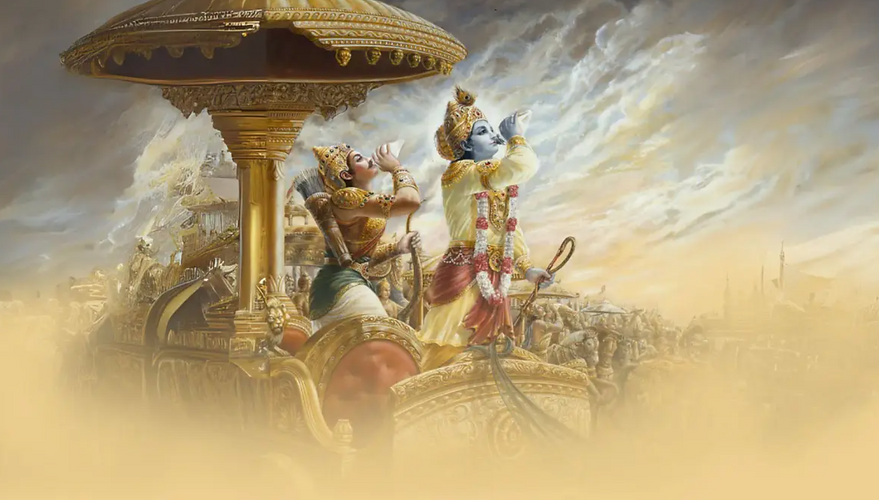
Chapter 11 of the Bhagavad Gita is titled Vishwarupa Darshana Yog or The Yog of the Vision of the Universal Form. This chapter is a pivotal moment in the dialogue between Arjun and Shri Krishna. Up until this point, Arjun has been grappling with confusion, moral dilemmas, and hesitation about going into battle. However, in this chapter, Shri Krishna reveals His divine, universal form to Arjun, providing him with a glimpse of the infinite nature of the divine.
The chapter begins with Arjun expressing his doubts about the necessity of war and seeking clarity from Shri Krishna. In response, Shri Krishna grants Arjun the divine vision to witness the true, unmanifested form of the Supreme Being, transcending the physical limitations of time and space. Arjun sees Krishna's form as the eternal, omnipotent force that encompasses all of creation, destruction, and preservation. It is a vision that shows the interconnectedness of all beings, their past, present, and future, as well as the inevitability of their fate.
Arjun, overwhelmed by the revelation, acknowledges Shri Krishna’s supreme divinity and expresses his surrender. He understands that the battle is part of a greater cosmic plan, and that Shri Krishna’s will must unfold. This chapter highlights themes of divine power, the impermanence of life, and the necessity of surrender to a higher purpose. It also serves to remind humanity of the vastness of the universe and the transcendence of the individual ego.
भगवद गीता के अध्याय 11 का शीर्षक विश्वरूप दर्शन योग या सार्वभौमिक रूप के दर्शन का योग है। यह अध्याय अर्जुन और भगवान कृष्ण के बीच संवाद का एक महत्वपूर्ण क्षण है। इस बिंदु तक, अर्जुन भ्रम, नैतिक दुविधाओं और युद्ध में जाने के बारे में झिझक से जूझ रहा था। हालाँकि, इस अध्याय में, भगवान कृष्ण अर्जुन को अपना दिव्य, सार्वभौमिक रूप दिखाते हैं, जिससे उसे दिव्य की अनंत प्रकृति की एक झलक मिलती है।
अध्याय की शुरुआत अर्जुन द्वारा युद्ध की आवश्यकता के बारे में अपने संदेह व्यक्त करने और कृष्ण से स्पष्टता मांगने से होती है। जवाब में, कृष्ण अर्जुन को समय और स्थान की भौतिक सीमाओं से परे, सर्वोच्च सत्ता के सच्चे, अव्यक्त रूप को देखने के लिए दिव्य दृष्टि प्रदान करते हैं। अर्जुन कृष्ण के रूप को शाश्वत, सर्वशक्तिमान शक्ति के रूप में देखता है जो सृजन, विनाश और संरक्षण को समाहित करता है। यह एक ऐसा दर्शन है जो सभी प्राणियों, उनके अतीत, वर्तमान और भविष्य के साथ-साथ उनके भाग्य की अनिवार्यता के परस्पर संबंध को दर्शाता है।
इस रहस्योद्घाटन से अभिभूत अर्जुन कृष्ण की सर्वोच्च दिव्यता को स्वीकार करता है और अपना समर्पण व्यक्त करता है। वह समझता है कि युद्ध एक बड़ी ब्रह्मांडीय योजना का हिस्सा है, और कृष्ण की इच्छा को प्रकट होना चाहिए। यह अध्याय दिव्य शक्ति, जीवन की नश्वरता और उच्च उद्देश्य के लिए समर्पण की आवश्यकता के विषयों पर प्रकाश डालता है। यह मानवता को ब्रह्मांड की विशालता और व्यक्तिगत अहंकार की उत्कृष्टता की याद दिलाता है।
अर्जुन उवाच |
मदनुग्रहाय परमं गुह्यमध्यात्मसञ्ज्ञितम् |
यत्त्वयोक्तं वचस्तेन मोहोऽयं विगतो मम || 1||
"For the sake of Your grace, O Supreme Lord, You have revealed this most secret knowledge, which is called the knowledge of the Self. Through Your words, this illusion has been dispelled from my mind."
In this verse, Arjun expresses his gratitude to Shri Krishna for revealing to him the highest and most confidential knowledge. He acknowledges that the teachings Shri Krishna has shared are not only sacred but have also helped to remove the confusion and illusion (moha) from his heart. The knowledge of the Self, as imparted by Shri Krishna, has clarified his doubts and set him on the path of wisdom and spiritual awakening.
अर्जुन ने कहा:
"हे परम भगवान, आपकी कृपा से आपने यह परम रहस्यमय ज्ञान, जिसे आत्मज्ञान कहा जाता है, मुझसे साझा किया है। आपके वचनों द्वारा मेरे मन का मोह समाप्त हो गया है।"
इस श्लोक में अर्जुन भगवान श्री कृष्ण का आभार व्यक्त करते हैं कि उन्होंने उसे सर्वोत्तम और गुप्त ज्ञान प्रदान किया है। वह मानते हैं कि जो ज्ञान कृष्ण ने उसे दिया, वह न केवल पवित्र है, बल्कि इसने उसके मन से भ्रम और मोह को भी दूर कर दिया है। कृष्ण द्वारा दिया गया आत्मज्ञान उसके संदेहों को दूर कर उसे ज्ञान और आध्यात्मिक जागरूकता के मार्ग पर ले आया है।
भवाप्ययौ हि भूतानां श्रुतौ विस्तरशो मया |
त्वत्त: कमलपत्राक्ष माहात्म्यमपि चाव्ययम् || 2||
"I have heard from You in detail about the origin and dissolution of all beings, O lotus-eyed one, as well as Your imperishable greatness."
In this verse, Arjun acknowledges that he has received a comprehensive understanding from Shri Krishna about how all living beings come into existence and ultimately dissolve. He also expresses his reverence for Shri Krishna's eternal and unchanging greatness. Calling Shri Krishna “Kamalapatraksha” (lotus-eyed) reflects Arjun’s devotion and recognition of the Lord’s divine beauty and compassion.
"हे कमलनयन! मैंने आपसे समस्त प्राणियों की उत्पत्ति और विनाश के बारे में विस्तार से सुना है, और साथ ही आपके अविनाशी महात्म्य को भी जाना है।"
इस श्लोक में अर्जुन भगवान श्री कृष्ण के ज्ञान के प्रति कृतज्ञता व्यक्त करते हैं। वह कहते हैं कि उन्होंने सृष्टि की उत्पत्ति और अंत के रहस्य को भगवान से विस्तारपूर्वक जाना है। साथ ही वह भगवान की अविनाशी महिमा को भी समझ चुके हैं। "कमलपत्राक्ष" कहकर अर्जुन भगवान की दिव्यता और सौम्यता को सम्मानपूर्वक संबोधित करते हैं।
एवमेतद्यथात्थ त्वमात्मानं परमेश्वर |
द्रष्टुमिच्छामि ते रूपमैश्वरं पुरुषोत्तम || 3||
"Indeed, it is exactly as You have described Yourself, O Supreme Lord. Yet, O Supreme Person, I desire to see Your divine form."
In this verse, Arjun humbly acknowledges that he fully accepts everything Shri Krishna has said about Himself. However, a deep longing arises within him , he now wishes to see that divine, supreme cosmic form of the Lord with his own eyes. This marks the moment where Arjun moves from intellectual understanding to a desire for direct, experiential realization of Shri Krishna's supreme nature.
"निश्चित ही, हे परमेश्वर! आपने अपने को जैसा कहा है, वैसा ही है। परंतु, हे पुरुषोत्तम! मैं आपके उस ऐश्वर्ययुक्त रूप को देखना चाहता हूँ।"
इस श्लोक में अर्जुन भगवान श्री कृष्ण की बातों को पूरी श्रद्धा से स्वीकार करते हैं, लेकिन साथ ही उनके भीतर यह उत्कट इच्छा भी उत्पन्न होती है कि वे भगवान के उस दिव्य, विराट स्वरूप का साक्षात दर्शन करें। यह क्षण एक आंतरिक ज्ञान से प्रत्यक्ष अनुभव की ओर अर्जुन की यात्रा की शुरुआत को दर्शाता है।
मन्यसे यदि तच्छक्यं मया द्रष्टुमिति प्रभो |
योगेश्वर ततो मे त्वं दर्शयात्मानमव्ययम् || 4||
"If You think that I am capable of seeing it, O Lord, O Master of Yog, then please reveal to me Your imperishable form."
In this verse, Arjun humbly submits himself to Shri Krishna’s judgment. Though he desires to see the Lord’s eternal, cosmic form, he places the decision in Shri Krishna’s hands, recognizing that such a vision is not ordinary. By calling Him "Yogeshwara" (Master of Yog), Arjun acknowledges Shri Krishna’s supreme control over divine power and manifestation.
"हे प्रभो! यदि आप समझते हैं कि मैं उसे देखने में सक्षम हूँ, तो हे योगेश्वर! कृपया मुझे अपना अविनाशी रूप दिखाइए।"
इस श्लोक में अर्जुन अपनी इच्छा प्रकट करते हैं, लेकिन साथ ही पूर्ण विनम्रता भी दिखाते हैं। वह भगवान से अनुरोध करते हैं कि यदि वे उन्हें उस दिव्य रूप के दर्शन योग्य समझते हैं, तो कृपया उसे प्रकट करें। "योगेश्वर" कहकर अर्जुन भगवान की योगशक्ति और सर्वशक्तिमत्ता को सम्मानपूर्वक स्वीकार करते हैं।
श्रीभगवानुवाच |
पश्य मे पार्थ रूपाणि शतशोऽथ सहस्रश: |
नानाविधानि दिव्यानि नानावर्णाकृतीनि च || 5||
The Blessed Lord said:
"Behold, O Partha, My forms, hundreds and thousands of them, of various kinds, divine, and of many colors and shapes."
In this verse, Shri Krishna responds to Arjun’s request with graciousness. He invites Arjun to witness His infinite divine forms, not just one, but countless manifestations. These forms are celestial, vibrant, and of unimaginable diversity in shape and color, symbolizing the boundless and all-encompassing nature of the Divine.
श्रीभगवान ने कहा:
"हे पार्थ! मेरे सैकड़ों और हजारों रूपों को देखो, जो विभिन्न प्रकार के, दिव्य, और अनेक रंगों व आकारों वाले हैं।"
इस श्लोक में भगवान श्री कृष्ण अर्जुन की प्रार्थना स्वीकार करते हैं और उसे अपने असंख्य दिव्य रूपों को देखने के लिए आमंत्रित करते हैं। ये रूप अनेक प्रकार के, दिव्य स्वरूपों से युक्त, और विभिन्न रंगों और आकारों में प्रकट होते हैं, जो भगवान की अनंतता और सर्वव्यापकता का प्रतीक हैं।
पश्यादित्यान्वसून् रुद्रानश्विनौ मरुतस्तथा |
बहून्यदृष्टपूर्वाणि पश्याश्चर्याणि भारत || 6||
"Behold the Adityas, the Vasus, the Rudras, the Ashvins, and the Maruts; see, O Bharata, many wonders never seen before."
Here, Shri Krishna continues describing His cosmic form. He tells Arjun to witness the divine beings that dwell within Him, the twelve Adityas, the eight Vasus, the eleven Rudras, the twin Ashvins, and the storm gods (Maruts). These are all powerful celestial forces. Shri Krishna urges Arjun to observe not only these deities but also many other astonishing, never-before-seen forms that reveal the vastness of His divine manifestation.
"हे भारत! आदित्य, वसु, रुद्र, अश्विनीकुमार और मरुतगणों को देखो; और साथ ही बहुत से ऐसे आश्चर्यजनक रूपों को भी देखो जो तुमने पहले कभी नहीं देखे।"
इस श्लोक में भगवान श्री कृष्ण अर्जुन को अपने विराट रूप में स्थित विविध दिव्य शक्तियों और देवताओं को देखने के लिए प्रेरित करते हैं। वे उसे बताते हैं कि उनके इस रूप में संपूर्ण ब्रह्मांड और सभी देव शक्तियाँ समाहित हैं। यह एक ऐसा दिव्य अनुभव है, जिसमें अर्जुन को वह सब देखने को मिलेगा जो सामान्य दृष्टि से संभव नहीं — अनेक अद्भुत और पहले कभी न देखे गए रहस्य।
इहैकस्थं जगत्कृत्स्नं पश्याद्य सचराचरम् |
मम देहे गुडाकेश यच्चान्यद्द्रष्टुमिच्छसि || 7||
"Behold now, O Gudakesha, the entire universe, moving and non-moving, existing here in one place in My body and whatever else you wish to see."
In this verse, Shri Krishna addresses Arjun as Gudakesha (conqueror of sleep), honoring his spiritual readiness. He declares that within His divine form lies the entire cosmos - all beings, whether mobile or immobile. Everything that exists, including anything Arjun might desire to see, is contained within Shri Krishna’s one body. This is a profound invitation to perceive the oneness of all creation within the Divine.
"हे गुडाकेश! इस एक ही स्थान में मेरे शरीर के भीतर संपूर्ण चर-अचर जगत को, और जो कुछ भी तुम देखना चाहते हो, वह सब देखो।"
इस श्लोक में भगवान श्री कृष्ण अर्जुन को "गुडाकेश" कहकर संबोधित करते हैं, जो उसके संयम और जागरूकता को दर्शाता है। वे बताते हैं कि उनका विराट रूप इतना व्यापक है कि उसमें सम्पूर्ण सृष्टि — चर (चल) और अचर (अचल) एक ही स्थान में समाहित है। साथ ही, अर्जुन जो भी देखना चाहे, वह सब इस रूप में सम्मिलित है। यह एक दिव्य आमंत्रण है — सम्पूर्ण ब्रह्मांड को एक रूप में अनुभव करने का।
न तु मां शक्यसे द्रष्टुमनेनैव स्वचक्षुषा |
दिव्यं ददामि ते चक्षु: पश्य मे योगमैश्वरम् || 8||
"But you cannot see Me with your physical eyes alone. Therefore, I give you divine vision; behold My supreme, mystical power."
In this verse, Shri Krishna gently tells Arjun that his ordinary human eyes are not capable of perceiving the divine, cosmic form. To grant him this rare vision,Shri Krishna bestows upon Arjun divine sight, a spiritual eye that can perceive the transcendental. This moment marks a shift from the limited to the limitless, as Shri Krishna prepares Arjun to witness His supreme yogic majesty.
"लेकिन तुम मुझे अपने इन सामान्य नेत्रों से नहीं देख सकते। इसलिए मैं तुम्हें दिव्य दृष्टि प्रदान करता हूँ - अब मेरे योगमय ऐश्वर्य को देखो।"
इस श्लोक में भगवान श्री कृष्ण अर्जुन को बताते हैं कि उनके सामान्य नेत्र इस विराट और दिव्य रूप को देखने में सक्षम नहीं हैं। इसलिए वे उसे दिव्य दृष्टि प्रदान करते हैं, जिससे वह भगवान की अलौकिक, योगशक्ति से युक्त महिमा को देख सके। यह क्षण सांसारिक सीमाओं से परे जाने का है — एक ऐसी दृष्टि प्राप्त करने का जिससे ब्रह्मांड की दिव्यता का अनुभव संभव हो सके।
सञ्जय उवाच |
एवमुक्त्वा ततो राजन्महायोगेश्वरो हरि: |
दर्शयामास पार्थाय परमं रूपमैश्वरम् || 9||
Sanjaya said:
"Having spoken thus, O King, the great Lord of Yog, Hari (Krishna), then revealed to Arjun His supreme, divine form."
In this verse, Sanjaya, the narrator, describes the pivotal moment to King Dhritarashtra. After granting Arjun divine vision, Shri Krishna — the master of all yogic powers — unveils His parama aiśvaryam rūpam, the ultimate majestic and divine cosmic form, which transcends all human imagination.
संजय ने कहा:
"हे राजन्! इस प्रकार कहकर, महायोगेश्वर श्री हरि (कृष्ण) ने पार्थ को अपना परम ऐश्वर्ययुक्त दिव्य रूप दिखाया।"
इस श्लोक में संजय राजा धृतराष्ट्र को वह अद्भुत क्षण वर्णित करते हैं जब भगवान श्रीकृष्ण ने अर्जुन को दिव्य दृष्टि देने के बाद अपना विराट, परम और दिव्य रूप प्रकट किया। यह वह रूप था जो मानव दृष्टि से परे था, जिसमें संपूर्ण ब्रह्मांड समाहित था, और जिसे केवल योगेश्वर ही दिखा सकते थे।
अनेकवक्त्रनयनमनेकाद्भुतदर्शनम् |
अनेकदिव्याभरणं दिव्यानेकोद्यतायुधम् || 10||
दिव्यमाल्याम्बरधरं दिव्यगन्धानुलेपनम् |
सर्वाश्चर्यमयं देवमनन्तं विश्वतोमुखम् || 11||
"With many mouths and eyes, possessing many wondrous forms; adorned with many divine ornaments and holding many uplifted heavenly weapons.
Wearing divine garlands and garments, anointed with celestial fragrances; full of wonders, radiant, infinite, and facing in all directions — that Divine Being."
These verses describe Shri Krishna’s cosmic form as revealed to Arjun. It is vast, majestic, and beyond comprehension. He has countless faces and eyes, adorned with celestial ornaments, and armed with divine weapons. Clothed in heavenly robes, scented with divine perfumes, His form radiates infinite brilliance and marvels in every direction, a vision of the limitless Divine encompassing the entire cosmos.
"अनेकों मुखों और नेत्रों वाला, अनेक अद्भुत रूपों से युक्त; अनेक दिव्य आभूषणों से सुशोभित और अनेक दिव्य आयुधों को धारण किए हुए।
दिव्य मालाएं और वस्त्र पहने हुए, दिव्य सुगंधों से अनुलेपित; संपूर्ण आश्चर्य से भरपूर, अनंत, और चारों दिशाओं में मुख वाला वह दिव्य पुरुष।"
इन श्लोकों में भगवान श्रीकृष्ण के विराट रूप का भव्य वर्णन है। उनके अनगिनत मुख और नेत्र हैं, वे दिव्य शस्त्र-आभूषणों से सुसज्जित हैं, और उनका स्वरूप दिव्य वस्त्रों व सुगंधों से महक रहा है। वे चारों दिशाओं में देख सकते हैं, उनका तेज अपार है, और सम्पूर्ण ब्रह्मांड उनके भीतर समाहित है। यह दर्शन आश्चर्य और भक्ति से भर देता है।
दिवि सूर्यसहस्रस्य भवेद्युगपदुत्थिता |
यदि भा: सदृशी सा स्याद्भासस्तस्य महात्मन: || 12||
"If a thousand suns were to rise in the sky all at once, their brilliance might resemble the splendor of that great Being."
This verse poetically captures the overwhelming radiance of Shri Krishna's cosmic form. Sanjaya, narrating this vision, compares the divine light to a thousand suns rising together, a metaphor to express the indescribable, blinding brilliance of the Lord's true form. It reflects the sheer power, majesty, and divine glory that words struggle to contain.
"यदि आकाश में एक साथ सहस्र सूर्य उदित हो जाएँ, तो उनकी जो प्रभा होगी, वही उस महात्मा के तेज की तुलना में कुछ-कुछ हो सकती है।"
यह श्लोक भगवान श्रीकृष्ण के विराट रूप के दिव्य प्रकाश का वर्णन करता है। संजय इस रूप के तेज की तुलना सहस्र सूर्यों से करते हैं, जो एक साथ उदित हो जाएँ — यह बताने के लिए कि यह तेज सामान्य नहीं, बल्कि अलौकिक और असहनीय रूप से दिव्य है। यह वह दिव्य अनुभव है, जिसे शब्दों से पूर्ण रूप में व्यक्त नहीं किया जा सकता।
तत्रैकस्थं जगत्कृत्स्नं प्रविभक्तमनेकधा |
अपश्यद्देवदेवस्य शरीरे पाण्डवस्तदा || 13||
"There, in the body of the Supreme Lord, Arjun saw the entire universe, divided into countless forms, all unified in one place."
In this verse, Arjun witnesses the entire universe — both the moving and the stationary — fragmented into countless parts, yet all existing within Shri Krishna’s divine body. This vision reveals the interconnectedness of all things within the divine essence of the Lord, illustrating how everything in the universe is part of a greater whole.
"वहाँ भगवान के शरीर में अर्जुन ने समस्त ब्रह्मांड को देखा, जो अनेक रूपों में विभक्त था, लेकिन एक स्थान में समाहित था।"
इस श्लोक में अर्जुन भगवान श्री कृष्ण के शरीर में समग्र सृष्टि को देखता है। वह देखता है कि सारा ब्रह्मांड चाहे वह चल या अचल हो अनगिनत रूपों में बंटा हुआ है, लेकिन फिर भी सभी रूप कृष्ण के दिव्य शरीर में एक स्थान पर समाहित हैं। यह दृश्य बताता है कि समस्त सृष्टि भगवान के विराट रूप का हिस्सा है और सभी वस्तुएं आपस में जुड़ी हुई हैं।
तत: स विस्मयाविष्टो हृष्टरोमा धनञ्जय: |
प्रणम्य शिरसा देवं कृताञ्जलिरभाषत || 14||
"Then, filled with awe and his hair standing on end, Arjun, the son of Dhananjaya, bowed his head to the Lord, with folded hands, and spoke."
In this verse, Arjun is overcome with a sense of wonder and reverence upon witnessing Shri Krishna's divine cosmic form. His hair stands on end due to the intensity of the experience. He humbly bows to Shri Krishna, expressing his awe and devotion with folded hands, ready to speak the words of his heart.
"तत्पश्चात् विस्मय से अभिभूत, अर्जुन के शरीर के रोम खड़े हो गए, और वह धनंजय सिर झुकाकर भगवान के सामने प्रणाम करते हुए, कृतांजलि होकर बोलने लगे।"
इस श्लोक में अर्जुन भगवान श्री कृष्ण के विराट रूप को देखकर अचंभित हो जाते हैं। वह इतनी गहरी श्रद्धा और विस्मय से अभिभूत होते हैं कि उनके रोम-रोम में हलचल होती है। वह सिर झुका कर, हाथ जोड़ कर भगवान को प्रणाम करते हैं और अपनी भावनाएँ व्यक्त करने के लिए शब्दों की तलाश करते हैं।
अर्जुन उवाच |
पश्यामि देवांस्तव देव देहे सर्वांस्तथा भूतविशेषसङ्घान् |
ब्रह्माणमीशं कमलासनस्थ मृषींश्च सर्वानुरगांश्च दिव्यान् || 15||
Arjun said:
"I see all the gods in Your divine body, O Lord, and all the different groups of beings, the sages, the mighty Brahma, seated on the lotus, as well as all the divine serpents."
In this verse, Arjun continues to express his awe and amazement at the divine vision granted to him by Shri Krishna. He sees within Shri Krishna’s cosmic form not only all the gods but also various other celestial beings, sages, the supreme creator Brahma sitting on a lotus, and divine serpents. This imagery emphasizes the all-encompassing nature of Shri Krishna’s divine manifestation, wherein all of creation is united.
अर्जुन ने कहा:
"हे देव! मैं आपके दिव्य शरीर में सभी देवताओं को, और सभी भूतों और विशेष समूहों को, ब्रह्मा को जो कमलासन पर बैठे हैं, तथा सभी दिव्य नागों को देख रहा हूँ।"
इस श्लोक में अर्जुन भगवान श्री कृष्ण के विराट रूप में जो दिव्य दर्शन प्राप्त करते हैं, उसमें वह समस्त देवताओं, ब्रह्मा जो कमल के आसन पर विराजमान हैं, सभी ऋषियों और दिव्य नागों को देखते हैं। यह दर्शन भगवान के विराट रूप की सर्वव्यापीता और समग्र सृष्टि में उनके अस्तित्व को दर्शाता है।
अनेकबाहूदरवक्त्रनेत्रं पश्यामि त्वां सर्वतोऽनन्तरूपम् |
नान्तं न मध्यं न पुनस्तवादिं पश्यामि विश्वेश्वर विश्वरूप || 16||
"I see You with countless arms, bellies, mouths, and eyes, O Lord, and I behold You in all Your infinite forms. I see no beginning, middle, or end to Your form, O Lord of the Universe, with the universal form."
In this verse, Arjun continues to describe the awe-inspiring vision of Shri Krishna’s cosmic form. He sees Shri Krishna with innumerable arms, mouths, eyes, and a multitude of shapes, indicating His infinite nature. Arjun is unable to perceive the beginning, middle, or end of Shri Krishna’s form, highlighting the boundless and eternal nature of the Divine. Shri Krishna’s form is the embodiment of the entire universe.
"हे भगवान! मैं आपको अनगिनत बाहुओं, पेटों, मुखों और नेत्रों से देख रहा हूँ, और मैं आपको आपके अनंत रूपों में देख रहा हूँ। मैं न तो आपका अंत, न मध्य, और न ही कोई प्रारंभ देख पा रहा हूँ, हे विश्वेश्वर! आप विश्व रूप हैं।"
इस श्लोक में अर्जुन भगवान श्री कृष्ण के विराट रूप का विस्तार से वर्णन करते हैं। वह भगवान को अनगिनत बाहुओं, मुखों, पेटों और नेत्रों से परिपूर्ण देख रहे हैं, जो उनके अनंत रूप की अभिव्यक्ति है। अर्जुन को भगवान के रूप का न कोई प्रारंभ, न मध्य, और न ही अंत दिखाई देता है, जिससे यह सिद्ध होता है कि भगवान का रूप अविनाशी और अनंत है। यह रूप सम्पूर्ण ब्रह्मांड का प्रतीक है।
किरीटिनं गदिनं चक्रिणं च तेजोराशिं सर्वतो दीप्तिमन्तम् |
पश्यामि त्वां दुर्निरीक्ष्यं समन्ताद् दीप्तानलार्कद्युतिमप्रमेयम् || 17||
"I see You wearing a crown, holding a mace and a discus, radiating a brilliant light in all directions, difficult to behold, with the brilliance of a thousand suns shining in Your body."
In this verse, Arjun describes Shri Krishna’s divine form further, noting His regal appearance with a crown (kirīṭi), a mace (gadī), and a discus (cakra). Shri Krishna’s form emits an intense, radiant light, so dazzling that it is difficult for Arjun to look at. The glow is compared to the brightness of a thousand suns, signifying Shri Krishna's supreme and overwhelming power and divine glory.
"मैं आपको मुकुटधारी, गदा और चक्रधारी, सर्वत्र दीप्यमान तेज से भरे हुए, अत्यन्त कठिनाई से देखने योग्य, और आपकी देह में हजारों सूर्यों की किरणों के समान उज्ज्वलता से चमकते हुए देख रहा हूँ।"
इस श्लोक में अर्जुन भगवान श्री कृष्ण के विराट रूप का और अधिक वर्णन करते हैं। वह कृष्ण को मुकुट, गदा, और चक्र धारण करते हुए देखते हैं, जिनसे अत्यधिक तेज निकल रहा है। यह तेज इतना प्रचंड है कि उसे देखना अर्जुन के लिए कठिन हो रहा है। उसकी चमक सूर्य के हजारों किरणों के समान है, जो भगवान की असीम शक्ति और दिव्यता का प्रतीक है।
त्वमक्षरं परमं वेदितव्यं त्वमस्य विश्वस्य परं निधानम् |
त्वमव्यय: शाश्वतधर्मगोप्ता सनातनस्त्वं पुरुषो मतो मे || 18||
"You are the imperishable, the ultimate reality to be understood. You are the supreme source and end of this entire universe. You are eternal, the protector of the eternal (sanatan) dharma, and the Supreme Being. I regard You as the ultimate person, O Lord."
In this verse, Arjun acknowledges Shri Krishna's supreme and eternal nature. Shri Krishna is the imperishable essence of the universe, the beginning and end of all creation. He is also the protector of the eternal dharma (righteousness). Arjun acknowledges Shri Krishna as the ultimate being, beyond all material and physical limitations.
"आप अक्षर हैं, परम हैं, जिनका ज्ञान आवश्यक है। आप इस सम्पूर्ण ब्रह्मांड के सर्वोत्तम स्रोत और अंतिम स्थान हैं। आप अव्यय, शाश्वत धर्म के रक्षक, और सनातन पुरुष हैं। मैं आपको सर्वोत्तम पुरुष मानता हूँ, हे भगवान।"
इस श्लोक में अर्जुन भगवान श्री कृष्ण की अपरिमेय और शाश्वत सत्ता को स्वीकार करते हैं। वह यह मानते हैं कि कृष्ण ब्रह्मांड का स्रोत और उसका अंत हैं। वे शाश्वत धर्म के रक्षक और सनातन पुरुष हैं। अर्जुन भगवान श्री कृष्ण को सर्वोच्च पुरुष मानते हैं, जो सभी भौतिक और सांसारिक सीमाओं से परे हैं।
अनादिमध्यान्तमनन्तवीर्य-मनन्तबाहुं शशिसूर्यनेत्रम् |
पश्यामि त्वां दीप्तहुताशवक्त्रं-स्वतेजसा विश्वमिदं तपन्तम् || 19||
"I see You as the eternal, without beginning or end, with infinite strength and countless arms, the moon and the sun for Your eyes. I see You blazing with the fire of destruction, with Your fiery mouth scorching the entire universe with Your radiance."
In this verse, Arjun marvels at Shri Krishna’s cosmic form, describing Him as eternal (without beginning or end), possessing limitless power and countless arms. Shri Krishna’s eyes resemble the moon and sun, and His fiery mouth emits a powerful, destructive energy. This form symbolizes both the creation and the destruction inherent in the cosmic order.
"मैं आपको अनादि, मध्याहीन, अनंत शक्ति और अनगिनत बाहुओं वाले रूप में देख रहा हूँ, जिनकी आँखें चंद्रमा और सूर्य के समान हैं। मैं आपको दीप्ति से भरे हुए हुताश वक़्र से देख रहा हूँ, जो अपने तेज से सम्पूर्ण ब्रह्मांड को जलाते हुए तपते हुए हैं।"
इस श्लोक में अर्जुन भगवान श्री कृष्ण के विराट रूप का वर्णन करते हैं। वह उन्हें अनादि, अनंत शक्ति और अनगिनत बाहुओं वाला रूप देख रहे हैं। कृष्ण की आँखें सूर्य और चंद्रमा के समान हैं, और उनका मुख आग की तरह प्रचंड है, जो अपने तेज से सम्पूर्ण ब्रह्मांड को तपता और जलाता हुआ दिखाई दे रहा है। यह रूप सृष्टि और संहार के दिव्य चक्र का प्रतीक है।
द्यावापृथिव्योरिदमन्तरं हि व्याप्तं त्वयैकेन दिशश्च सर्वा: |
दृष्ट्वाद्भुतं रूपमुग्रं तवेदं लोकत्रयं प्रव्यथितं महात्मन् || 20||
"By You, O great soul, this entire universe, including the heavens and the earth, and all the directions, is pervaded. Upon seeing this terrifying, wondrous form of Yours, all three worlds are in fear."
In this verse, Arjun acknowledges the vastness and omnipresence of Shri Krishna’s divine form. Shri Krishna’s form pervades the entire universe, including the heavens, the earth, and all the directions. The immense and terrifying vision causes fear in all realms - the physical, the celestial, and the divine. This illustrates the awe-inspiring and overpowering nature of Shri Krishna’s true cosmic form.
"हे महात्मन! आपके द्वारा ही यह सम्पूर्ण ब्रह्मांड, आकाश और पृथ्वी सहित, और सभी दिशाएँ व्याप्त हैं। आपका यह अद्भुत, भयंकर रूप देख कर सम्पूर्ण त्रिलोकी भयभीत हो गई है।"
इस श्लोक में अर्जुन भगवान श्री कृष्ण के विराट रूप की व्यापकता का वर्णन करते हैं। वह मानते हैं कि भगवान का रूप समस्त ब्रह्मांड, आकाश, पृथ्वी और सभी दिशाओं में व्याप्त है। कृष्ण का यह अत्यधिक भयंकर और अद्भुत रूप देखकर सम्पूर्ण सृष्टि, अर्थात् तीनों लोक (भू, देव और पाताल), भयभीत हो गए हैं। यह रूप भगवान की अपरिमेय और अनंत शक्ति को दर्शाता है।
अमी हि त्वां सुरसङ्घा विशन्ति केचिद्भीता: प्राञ्जलयो गृणन्ति |
स्वस्तीत्युक्त्वा महर्षिसिद्धसङ्घा: स्तुवन्ति त्वां स्तुतिभि: पुष्कलाभि: || 21||
"All the celestial beings enter into You, some with fear, and with folded hands, they praise You. Saying 'Blessings,' the great sages and perfected beings chant Your praises with abundant hymns."
In this verse, Arjun describes how all the celestial beings, filled with awe and reverence, enter Shri Krishna’s divine form. Some beings approach with fear, while others, with folded hands, sing His praises. The great sages and enlightened souls chant His praises, offering prayers and blessings in gratitude for the divine presence.
"सभी देवता आपके अंदर प्रवेश करते हैं, कुछ भयभीत होकर और प्रणाम करते हुए आपकी स्तुति करते हैं। 'स्वस्ति हो' कहते हुए महर्षि और सिद्ध पुरुष आपके स्तोत्रों से आपकी स्तुति करते हैं।"
इस श्लोक में अर्जुन यह दर्शाते हैं कि समस्त देवता भगवान श्री कृष्ण के विराट रूप में प्रवेश करते हैं। कुछ देवता भय से अभिभूत होकर और प्रणाम करके भगवान की स्तुति करते हैं, जबकि महर्षि और सिद्ध पुरुष हर्षित होकर उनके भव्य स्तोत्रों से भगवान की प्रशंसा करते हैं और उन्हें आशीर्वाद देते हैं।
रुद्रादित्या वसवो ये च साध्या विश्वेऽश्विनौ मरुतश्चोष्मपाश्च |
गन्धर्वयक्षासुरसिद्धसङ्घा वीक्षन्ते त्वां विस्मिताश्चैव सर्वे || 22||
"The Rudras, Ādityas, Vasus, Sādhyas, Viśvedevas, the Ashvins, Maruts, the ancestors, Gandharvas, Yakṣas, Asuras, and Siddhas - all gaze upon You in wonder, astonished and awestruck."
Arjun here names the vast celestial assembly various divine and semi-divine beings from Vedic cosmology, who are beholding Shri Krishna’s universal form. Each group, from gods to sages to mystical beings, is filled with astonishment, overwhelmed by the majesty and vastness of Shri Krishna’s divine manifestation.
"रुद्र, आदित्य, वसु, साध्य, विश्वेदेव, अश्विनीकुमार, मरुत, पितर, गंधर्व, यक्ष, असुर और सिद्धगण सभी आपको विस्मयपूर्वक निहार रहे हैं, और आश्चर्यचकित हैं।"
इस श्लोक में अर्जुन उन समस्त दिव्य प्राणियों का उल्लेख करते हैं जो भगवान के विराट रूप को देखकर स्तब्ध हैं। विभिन्न देवता और रहस्यमय शक्तियाँ , चाहे वे ऋग्वैदिक देव हों या अदृश्य लोकों के वासी सभी कृष्ण के अपार रूप को देखकर चकित और विस्मित हैं। यह दृश्य भगवान की दिव्यता की सार्वभौमिक स्वीकृति को दर्शाता है।
रूपं महत्ते बहुवक्त्रनेत्रं महाबाहो बहुबाहूरुपादम् |
बहूदरं बहुदंष्ट्राकरालं दृष्ट्वा लोका: प्रव्यथितास्तथाहम् || 23||
"Your great form, with many mouths and eyes, O mighty-armed one, with many arms, thighs, and feet, many bellies and fearful tusks seeing this terrifying form, the worlds are trembling, and so am I."
In this verse, Arjun describes the overwhelming vision of Shri Krishna’s universal form, vast and filled with countless faces, limbs, and terrifying features. The sight is so awe-inspiring and fearsome that it causes the entire cosmos to shudder, and even Arjun himself is shaken with fear and wonder.
"हे महाबाहो! आपके इस विशाल रूप को जिसमें अनेक मुख और नेत्र, अनेक भुजाएँ, जंघाएँ, चरण, पेट और भयानक दाँत हैं — देखकर सब लोक भय से कांप रहे हैं, और मैं भी कांप रहा हूँ।"
इस श्लोक में अर्जुन भगवान श्रीकृष्ण के विराट और भयानक रूप का वर्णन करते हैं। उनका यह रूप अत्यंत व्यापक और विकराल है, जिसमें अनगिनत मुख, नेत्र, अंग और विकराल दाँत हैं। इसे देखकर केवल लोक (समस्त प्राणी और देवता) ही नहीं, बल्कि स्वयं अर्जुन भी भय और आश्चर्य से थर्रा उठते हैं।
नभ:स्पृशं दीप्तमनेकवर्णं व्यात्ताननं दीप्तविशालनेत्रम् |
दृष्ट्वा हि त्वां प्रव्यथितान्तरात्मा धृतिं न विन्दामि शमं च विष्णो || 24||
"O Vishnu, seeing You touching the sky, glowing, multicolored, with wide-open mouths and large, blazing eyes, my inner self is trembling. I find neither courage nor peace."
In this verse, Arjun addresses Shri Krishna as Vishnu, expressing his inner turmoil upon witnessing the divine form. The vast, radiant, multicolored appearance with fierce expressions overwhelms him. The enormity and intensity of the vision disturb his inner peace and shake his composure completely.
"हे विष्णु! आकाश को स्पर्श करता हुआ, दीप्तिमान, अनेक रंगों से युक्त, विशाल खुले मुखों और प्रज्वलित विशाल नेत्रों वाला आपका रूप देखकर मेरा अंतरात्मा भय से व्याकुल हो उठा है। मुझे न तो धैर्य मिल रहा है और न ही शांति।"
इस श्लोक में अर्जुन अपने भीतर की घबराहट और भय को व्यक्त करते हैं। भगवान का विराट रूप, जो आकाश तक फैला हुआ है, विविध रंगों से चमक रहा है, और उसके विशाल नेत्र अग्नि की तरह दीप्त हैं — यह सब देख अर्जुन भयभीत हो जाते हैं और उनका मन विचलित हो उठता है।
दंष्ट्राकरालानि च ते मुखानि दृष्ट्वैव कालानलसन्निभानि |
दिशो न जाने न लभे च शर्म प्रसीद देवेश जगन्निवास || 25||
"Seeing Your mouths with terrifying tusks, resembling the fires of destruction, I know not the directions, nor do I find peace. Be gracious, O Lord of the gods, O shelter of the universe!"
Arjun is now overwhelmed by fear. The dreadful vision of Shri Krishna's mouths with fearsome tusks, blazing like the fire of cosmic destruction (kāla-anala), disorients him completely. He loses his sense of direction and inner calm, and humbly pleads for Shri Krishna’s mercy and compassion.
"आपके उन भयानक दाँतों वाले मुखों को देखकर, जो प्रलय की अग्नि के समान प्रतीत होते हैं, मैं दिशाओं को नहीं पहचान पा रहा हूँ और न ही मुझे कोई शांति मिल रही है। हे देवों के ईश्वर! हे जगत के आश्रय! कृपा करें।"
इस श्लोक में अर्जुन भय से व्याकुल होकर भगवान से दया की प्रार्थना करते हैं। वे श्रीकृष्ण के मुखों को प्रलयकाल की अग्नि समान देखते हैं — जो संहार और भय का प्रतीक हैं। इस दृश्य से वे पूरी तरह से व्याकुल हो जाते हैं, दिशाभ्रम हो जाता है और मन में शांति नहीं रह जाती।
अमी च त्वां धृतराष्ट्रस्य पुत्रा: सर्वे सहैवावनिपालसङ्घै: | भीष्मो द्रोण: सूतपुत्रस्तथासौ सहास्मदीयैरपि योधमुख्यै: || 26||
वक्त्राणि ते त्वरमाणा विशन्ति दंष्ट्राकरालानि भयानकानि | केचिद्विलग्ना दशनान्तरेषु सन्दृश्यन्ते चूर्णितैरुत्तमाङ्गै: || 27||
"All the sons of Dhṛitarāṣṭra, along with the multitudes of kings, Bhīṣma, Droṇa, Karṇa, and the foremost warriors of our side also they are all rushing headlong into Your terrifying mouths with dreadful tusks. Some are seen caught between Your teeth, with their heads crushed to powder."
Arjun vividly describes the horrifying vision he sees in Shri Krishna’s cosmic form - great warriors from both sides of the battle, including revered figures like Bhīṣma and Droṇa, are being drawn irresistibly into Shri Krishna’s blazing mouths. Their destruction is brutal and inevitable, revealing the Lord as the force behind all cosmic dissolution.
"धृतराष्ट्र के सभी पुत्र और उनके साथ अनेक राजा, भीष्म, द्रोण, कर्ण और हमारी ओर के भी प्रमुख योद्धा -
वे सभी आपकी उन भयानक दाँतों वाले विकराल मुखों में तेजी से प्रवेश कर रहे हैं। कुछ योद्धा आपके दाँतों के बीच फँसे हुए दिखाई दे रहे हैं, जिनके सिर चूर्ण होकर गिर रहे हैं।"
अर्जुन इस श्लोक में जो दृश्य देख रहे हैं, वह अत्यंत भयानक है। भगवान के विराट रूप में वे देख रहे हैं कि महान योद्धा चाहे वे शत्रु पक्ष के हों या अपनी ही सेना के — सभी विनाश की ओर दौड़ते जा रहे हैं। यह रूप श्रीकृष्ण के काल स्वरूप को दर्शाता है, जहाँ सबका अंत निश्चित है।
यथा नदीनां बहवोऽम्बुवेगा: समुद्रमेवाभिमुखा द्रवन्ति | तथा तवामी नरलोकवीरा विशन्ति वक्त्राण्यभिविज्वलन्ति || 28||
यथा प्रदीप्तं ज्वलनं पतङ्गा विशन्ति नाशाय समृद्धवेगा: | तथैव नाशाय विशन्ति लोका स्तवापि वक्त्राणि समृद्धवेगा: || 29||
"Just as many torrents of rivers flow swiftly toward the ocean,
so do these heroes of the mortal world rush into Your blazing mouths.
And just as moths rush with great speed into a blazing fire to perish,
so also all these worlds are entering Your mouths with great speed for destruction."
Arjun uses powerful metaphors to describe the inevitability and intensity of destruction he witnesses. Just as rivers naturally flow to the ocean and moths dive into fire despite the danger, so too do warriors and beings of the world rush into Shri Krishna’s terrifying cosmic form driven by fate, unaware or helpless before divine will.
"जैसे नदियों की अनेक जलधाराएँ तीव्र वेग से समुद्र की ओर बहती हैं,
वैसे ही ये नरलोक के वीर भी आपके जलते हुए मुखों में प्रवेश कर रहे हैं।
और जैसे पतंगे प्रज्वलित अग्नि में तेज़ी से जाकर नष्ट हो जाते हैं,
उसी प्रकार ये समस्त प्राणी भी आपके मुखों में तीव्र गति से विनाश के लिए प्रवेश कर रहे हैं।"
इन श्लोकों में अर्जुन विराट रूप में भगवान को संहारक रूप में देख रहे हैं। वे उदाहरण देते हैं कि जैसे नदियाँ समुद्र की ओर और पतंगे अग्नि में आकर्षित होते हैं, वैसे ही समस्त योद्धा और प्राणी मृत्यु के मुंह में जा रहे हैं - यह सब प्रभु की लीला और कालरूप का प्रतीक है।
लेलिह्यसे ग्रसमान: समन्ता ल्लोकान्समग्रान्वदनैर्ज्वलद्भि: |
तेजोभिरापूर्य जगत्समग्रं भासस्तवोग्रा: प्रतपन्ति विष्णो || 30||
"You lick up and devour all the worlds from every side with Your flaming mouths.
Filling the entire universe with Your radiance, Your fierce rays are scorching it, O Vishnu."
Arjun, awestruck and terrified, describes Shri Krishna’s cosmic form as consuming everything devouring entire worlds with blazing mouths. His divine light pervades all space, and its intensity burns the entire creation. This verse powerfully conveys Shri Krishna’s role as the cosmic force of dissolution as well as radiance — majestic yet fearsome.
"आप चारों ओर से अपने प्रज्वलित मुखों से समस्त लोकों को चाटते और निगलते जा रहे हैं।
आपकी तेजस्वी प्रभा से संपूर्ण जगत भर गया है, और आपके उग्र प्रकाश से यह तप्त हो रहा है, हे विष्णु।"
यहाँ अर्जुन भगवान के विराट रूप को अत्यंत भयानक रूप में देख रहे हैं। यह रूप न केवल सबको निगल रहा है, बल्कि अपने प्रकाश से सम्पूर्ण सृष्टि को जला रहा है। यह दृश्य भगवान की अपरिमित शक्ति और संहारक रूप का परिचायक है।
आख्याहि मे को भवानुग्ररूपो नमोऽस्तु ते देववर प्रसीद |
विज्ञातुमिच्छामि भवन्तमाद्यं न हि प्रजानामि तव प्रवृत्तिम् || 31||
"Tell me, who are You in this terrifying form? O Divine One, salutations to You! Please be gracious.
I desire to know You the Primordial Being, for I do not understand Your purpose."
Arjun, overwhelmed by fear and awe, pleads for understanding. He bows in reverence and asks Shri Krishna to reveal His true identity and intent behind this fierce cosmic form. Though Arjun has faith, the vastness and intensity of the vision have shaken him deeply.
"कृपया बताइए, आप कौन हैं इस उग्र रूप में? हे देवश्रेष्ठ, आपको मेरा नमस्कार है - कृपा करें।
मैं आपको — आदि पुरुष — जानना चाहता हूँ, क्योंकि आपकी प्रवृत्तियों को मैं नहीं समझ पा रहा हूँ।"
इस श्लोक में अर्जुन भयभीत होकर भगवान से उनकी पहचान और उद्देश्य जानने की प्रार्थना करते हैं। विराट रूप की विभीषिका ने उन्हें हिला दिया है, और अब वे उस रहस्य को समझना चाहते हैं जो इस रूप के पीछे छिपा है।
श्रीभगवानुवाच |
कालोऽस्मि लोकक्षयकृत्प्रवृद्धो लोकान्समाहर्तुमिह प्रवृत्त: |
ऋतेऽपि त्वां न भविष्यन्ति सर्वे येऽवस्थिता: प्रत्यनीकेषु योधा: || 32||
"I am Time, the great destroyer of the worlds, and I have come here to annihilate all people.
Even without you, all the warriors standing in the opposing ranks shall cease to exist."
In this profound revelation, Shri Krishna identifies Himself as Time - the ultimate cosmic force that devours all. He assures Arjun that the destruction of the opposing army is inevitable, already destined by divine will. Arjun is merely an instrument in this grand design, not its originator.
"मैं काल हूँ — संसारों को नष्ट करने वाला, और इस समय इन लोकों के संहार के लिए प्रवृत्त हुआ हूँ।
तुम्हारे बिना भी, ये सभी प्रतिद्वंद्वी योद्धा जो युद्धभूमि में खड़े हैं, नष्ट हो जाएँगे।"
इस श्लोक में भगवान श्रीकृष्ण स्वयं को 'काल' कहते हैं — वह अपरिहार्य शक्ति जो सबका अंत लाती है। वे अर्जुन को बताते हैं कि युद्ध का परिणाम पहले से निश्चित है। यह दिव्य संहार समय की योजना का हिस्सा है; अर्जुन केवल उस योजना को पूरा करने का माध्यम है।
तस्मात्त्वमुत्तिष्ठ यशो लभस्व जित्वा शत्रून्भुङ् क्ष्व राज्यं समृद्धम् |
मयैवैते निहता: पूर्वमेव निमित्तमात्रं भव सव्यसाचिन् || 33||
"Therefore, arise and attain glory! Conquer your enemies and enjoy a prosperous kingdom.
They have already been slain by Me; O skillful archer, you are merely the instrument."
Shri Krishna urges Arjun to rise and fight, not for ego or desire, but as a channel of the divine will. The victory is already decided; Arjun's role is simply to act as the visible agent of that destiny. This shlok beautifully illustrates the concept of karma without attachment doing one's duty as an instrument of the divine.
"इसलिए उठो, यश प्राप्त करो! अपने शत्रुओं को जीतकर समृद्ध राज्य का भोग करो।
ये सब मेरे द्वारा पहले ही मारे जा चुके हैं — हे सव्यसाचि (अर्जुन), तुम केवल एक निमित्त मात्र बनो।"
भगवान श्रीकृष्ण अर्जुन को प्रेरित करते हैं कि वह उठे और अपना धर्म निभाए। युद्ध का परिणाम पहले ही तय है; भगवान ने शत्रुओं का नाश कर दिया है। अर्जुन केवल एक माध्यम है, उसे अहंकार या संकोच नहीं करना चाहिए। यही निष्काम कर्मयोग की गूढ़ता है — कर्म करो, लेकिन फल का बोझ मत लो।
द्रोणं च भीष्मं च जयद्रथं च कर्णं तथान्यानपि योधवीरान् |
मया हतांस्त्वं जहि मा व्यथिष्ठा युध्यस्व जेतासि रणे सपत्नान् || 34||
"Drona, Bhishma, Jayadratha, Karna, and other heroic warriors have already been slain by Me.
So, do not be disturbed. Just fight, you will conquer your enemies in battle."
Shri Krishna reassures Arjun that even the mightiest warriors on the enemy side revered teachers and fierce fighters have already met their end through divine will. Arjun need not hesitate or grieve. His victory is certain; he is simply to play his part with courage and clarity.
"द्रोण, भीष्म, जयद्रथ, कर्ण तथा अन्य महान योद्धा पहले ही मेरे द्वारा मारे जा चुके हैं।
इसलिए तुम शोक मत करो। युद्ध करो — तुम रणभूमि में अपने शत्रुओं को जीतोगे।"
यहाँ भगवान श्रीकृष्ण अर्जुन को आश्वस्त करते हैं कि जिन योद्धाओं से वह भयभीत है, वे सब पहले ही कालचक्र में नष्ट हो चुके हैं। अर्जुन को केवल धर्मानुसार युद्ध करना है। उसे मोह, शोक और भ्रम को त्याग कर अपने कर्तव्य का पालन करना चाहिए — विजय निश्चित है।
सञ्जय उवाच |
एतच्छ्रुत्वा वचनं केशवस्य कृताञ्जलिर्वेपमान: किरीटी |
नमस्कृत्वा भूय एवाह कृष्णं सगद्गदं भीतभीत: प्रणम्य || 35||
"Sanjay said:
Hearing these words of Keshav, the crowned Arjun, trembling and with folded hands,
bowed down again and, terrified, spoke to Shri Krishna in a faltering voice, again prostrating himself."
This verse captures the deep emotional impact of Shri Krishna’s divine revelation. Arjun, overwhelmed by the cosmic vision and Shri Krishna's fierce form as Time, is shaken to his core. His fear, awe, and reverence merge as he bows repeatedly, struggling to speak, humbled before the divine.
"संजय ने कहा:
केशव के ये वचन सुनकर मुकुटधारी अर्जुन काँपते हुए, हाथ जोड़कर फिर से झुका।
डर से कांपते हुए, गद्गद वाणी में उसने फिर से कृष्ण को प्रणाम करते हुए कहा।"
यह श्लोक अर्जुन की मनःस्थिति को दर्शाता है वह कृष्ण के विराट रूप और कालस्वरूप के दर्शन से भयभीत हो जाता है। उसकी बुद्धि, अहंकार, और युद्ध का संकल्प — सब कुछ उस दिव्य प्रभाव में विलीन हो जाता है। अर्जुन अब केवल एक समर्पित भक्त है, जो प्रभु के चरणों में दीन होकर झुकता है।
अर्जुन उवाच |
स्थाने हृषीकेश तव प्रकीर्त्या जगत्प्रहृष्यत्यनुरज्यते च |
रक्षांसि भीतानि दिशो द्रवन्ति सर्वे नमस्यन्ति च सिद्धसङ्घा: || 36||
"Arjun said:
Rightly, O Hrishikesha, the world rejoices and delights in Your glorification.
The demons flee in fear in all directions, and the hosts of perfected beings bow down before You."
Arjun acknowledges the natural order that the entire cosmos responds appropriately to the glory of the Divine. While the righteous find joy and love in Shri Krishna's praise, the wicked and the demonic tremble and flee. The sages and siddhas, recognizing His supreme nature, offer their deepest reverence.
"अर्जुन ने कहा:
हे हृषीकेश! आपके गुणगान से यह जगत् ठीक ही हर्षित होता है और आपसे प्रेम करता है।
भयभीत राक्षस सभी दिशाओं में भागते हैं, और सिद्धों के समुदाय आपको नमस्कार करते हैं।"
यहाँ अर्जुन कृष्ण की दिव्यता को स्वीकारते हुए कहता है कि सृष्टि में जो कुछ भी है चाहे वह दैवी हो या आसुरी वह आपके प्रभाव से अछूता नहीं है। प्रेमी आत्माएँ आपकी महिमा में रमती हैं, जबकि आसुरी शक्तियाँ भयभीत होकर भागती हैं। यह दृश्य विराट रूप की शक्ति और प्रभाव का सजीव चित्रण है।
कस्माच्च ते न नमेरन्महात्मन् गरीयसे ब्रह्मणोऽप्यादिकर्त्रे |
अनन्त देवेश जगन्निवास त्वमक्षरं सदसतत्परं यत् || 37||
"And why should they not bow to You, O Great Soul? You are greater than even Brahma, the original creator.
O Infinite One, O Lord of the gods, O shelter of the universe, You are the imperishable, the being and the non-being, and that which is beyond both."
Arjun expresses his deep reverence, affirming that it is only natural for all beings to worship Shri Krishna. As the origin of even the creator Brahma, Shri Krishna transcends all dualities - He is beyond time, space, existence, and non-existence.
"और हे महात्मा! वे आपको नमस्कार क्यों न करें? आप तो स्वयं ब्रह्मा से भी श्रेष्ठ, आदि कारण हैं।
हे अनन्त, देवों के स्वामी, सम्पूर्ण जगत के आश्रय, आप अविनाशी हैं—सत, असत और उनसे परे भी।"
अर्जुन यहाँ भगवान की महिमा को सर्वोच्च स्थान देते हैं। वे कहते हैं कि जो भी सृष्टि में पूजनीय है, उसकी भी उत्पत्ति आपसे हुई है। आप ही परम सत्य हैं, जो हर वस्तु के पार हैं दृश्य, अदृश्य और अद्वैत।
त्वमादिदेव: पुरुष: पुराणस् त्वमस्य विश्वस्य परं निधानम् |
वेत्तासि वेद्यं च परं च धाम त्वया ततं विश्वमनन्तरूप || 38||
"You are the primal God, the eternal Purusha. You are the supreme refuge of this universe. You are the knower, the knowable, and the supreme abode. O Infinite Form, the universe is pervaded by You!"
Arjun, in deep reverence, addresses Shri Krishna as the original divinity and eternal soul behind all creation. He recognizes Shri Krishna as the source from which the universe has emerged and into which it eventually dissolves. By calling Him the knower and the knowable, Arjun acknowledges Shri Krishna as both the seeker and the sought - the consciousness that understands, and the truth that must be understood. The term "supreme abode" indicates that reaching Shri Krishna is the ultimate goal of every soul. His infinite forms (anantarūpa) fill the entire cosmos, leaving nothing outside His divine presence. In this realization, Arjun surrenders completely, seeing Shri Krishna not just as a friend or charioteer, but as the all-encompassing, eternal Supreme Being.
"आप आदि देव हैं, सनातन पुरुष हैं। आप ही इस सम्पूर्ण सृष्टि के परम आधार हैं। आप ज्ञाता हैं, जानने योग्य हैं और परम धाम हैं। हे अनंत रूपवाले! यह सम्पूर्ण जगत आपसे व्याप्त है।"
अर्जुन इस श्लोक में भगवान श्रीकृष्ण की दिव्यता को पूर्णतः स्वीकार करते हैं। वे उन्हें सृष्टि के मूल स्रोत और सनातन पुरुष के रूप में नमन करते हैं, जो सदा से हैं और सदा रहेंगे। 'ज्ञाता' और 'जानने योग्य' कहकर अर्जुन यह कहते हैं कि श्रीकृष्ण ही चेतना हैं जो अनुभव करती है, और वही सत्य भी हैं जिसे जानना चाहिए। 'परम धाम' कहकर वे यह दर्शाते हैं कि मुक्ति का अंतिम लक्ष्य भी श्रीकृष्ण ही हैं। उनके 'अनंत रूप' सम्पूर्ण ब्रह्मांड में व्याप्त हैं, जिससे स्पष्ट होता है कि कोई भी वस्तु या जीव उनसे अलग नहीं है। इस अनुभव में अर्जुन का अहं पूर्णतः विलीन हो जाता है, और वह श्रीकृष्ण को सर्वव्यापक परमेश्वर रूप में देखता है।
वायुर्यमोऽग्निर्वरुण: शशाङ्क: प्रजापतिस्त्वं प्रपितामहश्च |
नमो नमस्तेऽस्तु सहस्रकृत्व: पुनश्च भूयोऽपि नमो नमस्ते || 39||
"You are Vāyu (the wind god), Yama (the god of death), Agni (the fire god), Varuṇa (the water god), the moon (Shashanka), Prajāpati (lord of creatures), and the great-grandfather (Brahma) too. Salutations to You a thousand times, and again and yet again, salutations to You!"
Arjun is overwhelmed by the cosmic vision of Shri Krishna and continues to offer deep reverence, seeing all divine forces as manifestations of Him. He names various Vedic deities - Vāyu, Yama, Agni, Varuṇa, each representing a powerful aspect of nature and cosmic order. By identifying Shri Krishna with these forces, he affirms that all forms of power, law, and life flow from Him. Calling Shri Krishna "Shashanka" (the moon) signifies His soothing and nourishing aspect, while “Prajāpati” and “Prapitāmaha” elevate Shri Krishna as the creator and even beyond the creator - the source of Brahmā himself. The repeated "namo namaste" shows the intensity of Arjun’s awe and surrender. He is no longer a warrior questioning duty - he is a soul humbled before the infinite.
"आप ही वायु हैं, यम हैं, अग्नि हैं, वरुण हैं, चन्द्रमा हैं, प्रजापति हैं और प्रपितामह ब्रह्मा भी आप ही हैं। आपको हजारों बार नमस्कार है; फिर भी बार-बार नमस्कार है।"
इस श्लोक में अर्जुन श्रीकृष्ण को समस्त देवताओं का स्वरूप मानते हुए बारंबार प्रणाम कर रहे हैं। वे बताते हैं कि समस्त प्राकृतिक और ब्रह्मांडीय शक्तियाँ—वायु, मृत्यु, अग्नि, जल, चन्द्र—सब उन्हीं से उत्पन्न हैं और उन्हीं में विलीन होती हैं। प्रजापति और प्रपितामह के रूप में वे उन्हें सृष्टिकर्ता और स्वयं ब्रह्मा से भी परे मानते हैं। अर्जुन की भावनाएँ इतनी प्रगाढ़ हो जाती हैं कि केवल एक बार प्रणाम पर्याप्त नहीं लगता। उनका "नमो नमस्ते" बार-बार दोहराना उनके आत्म-समर्पण की गहराई और कृष्ण की सर्वव्यापकता की अनुभूति को दर्शाता है। यह श्लोक भक्त और भगवान के मिलन का गहरा और भावुक क्षण है।
नम: पुरस्तादथ पृष्ठतस्ते नमोऽस्तु ते सर्वत एव सर्व |
अनन्तवीर्यामितविक्रमस्त्वं सर्वं समाप्नोषि ततोऽसि सर्व: || 40||
"Salutations to You from the front and the back! Salutations to You from all sides, O all-powerful One! Infinite in strength and boundless in valor, You pervade everything; therefore, You are everything."
Here, Arjun continues his heartfelt reverence for Shri Krishna after witnessing His cosmic form. Realizing that Shri Krishna is not confined by direction, space, or form, Arjun bows to Him from every side — acknowledging His omnipresence. Calling Him Anantavīrya (infinite in power) and Amitavikrama (immeasurable in valor), he recognizes Shri Krishna as the supreme force behind all action, form, and existence. Since Shri Krishna encompasses all creation and transcends it, He is not just in everything - He is everything. This verse reflects a deep philosophical truth: the divine is beyond time, space, and limitation. Arjun is no longer seeing Shri Krishna as a friend or charioteer but as the cosmic reality itself - the source, sustainer, and end of all that exists.
"आपको नमस्कार है आगे से, पीछे से, और चारों ओर से। हे अनंत पराक्रमशाली! आप असीम शक्ति और अपार शौर्य वाले हैं। आप सब कुछ व्याप्त करते हैं, इसलिए आप ही सब कुछ हैं।"
इस श्लोक में अर्जुन श्रीकृष्ण की सर्वव्यापकता और अनंत शक्ति को पूर्ण रूप से स्वीकार करते हैं। वे समझ चुके हैं कि श्रीकृष्ण न केवल सृष्टि के कण-कण में विद्यमान हैं, बल्कि स्वयं संपूर्ण सृष्टि हैं। "पुरस्तात्, पृष्ठतः, सर्वतः" — ये शब्द बताते हैं कि किसी भी दिशा से श्रीकृष्ण को नमन करना व्यर्थ नहीं है, क्योंकि वे हर दिशा में हैं। "अनन्तवीर्य" और "अमितविक्रम" द्वारा वे श्रीकृष्ण की अपार शक्ति और साहस का आदर करते हैं। अर्जुन का यह भाव स्पष्ट करता है कि उनका दृष्टिकोण पूरी तरह बदल चुका है — अब वे अपने सखा को ब्रह्मांडीय चेतना के रूप में देख रहे हैं, जो सर्वत्र है, सर्वशक्तिमान है और सर्वस्व है।
सखेति मत्वा प्रसभं यदुक्तं हे कृष्ण हे यादव हे सखेति | अजानता महिमानं तवेदं मया प्रमादात्प्रणयेन वापि || 41||
यच्चावहासार्थमसत्कृतोऽसि विहारशय्यासनभोजनेषु | एकोऽथवाप्यच्युत तत्समक्षं तत्क्षामये त्वामहमप्रमेयम् || 42||
"O Krishna, O Yadava, O friend! I have spoken harshly to You in a fit of ignorance, thinking of You only as my companion. I did not know the vastness of Your divine power. In my carelessness, I addressed You in playful ways - during our walks, our sitting, or meals — as though You were just an ordinary friend. For all of this, I seek Your forgiveness, O infallible one."
In these verses, Arjun acknowledges his mistake of treating Shri Krishna as an ordinary friend without understanding His true divine nature. He confesses that in his ignorance and intimacy, he had called Shri Krishna by familiar names like "Sakha" (friend), "Yadav," and even spoken to Him in a casual or joking manner, unaware of the immense cosmic power Shri Krishna holds. Arjun's humility shines through as he recognizes that such behavior was a form of inadvertent disrespect, and he now seeks Shri Krishna's forgiveness. This marks Arjun's deep realization of Shri Krishna's divine nature and his own human limitations.
"हे कृष्ण, हे यादव, हे सखा! मैंने अनजाने में कठोर शब्द कहे, आपको केवल अपने सखा के रूप में जानकर। मैं आपकी महानता को नहीं जान पाया। अपनी लापरवाही में, मैंने आपको हंसी-मजाक में और आम मित्र की तरह संबोधित किया। इसके लिए मैं आपको क्षमा मांगता हूँ, हे अच्युत!"
इस श्लोक में अर्जुन अपनी भूल स्वीकार करते हैं, जिसमें उन्होंने श्रीकृष्ण को एक सामान्य मित्र के रूप में देखा और उनसे वैसा ही व्यवहार किया। वे यह समझते हैं कि श्रीकृष्ण की दिव्यता का आभास न होने के कारण वे अनजाने में श्रीकृष्ण के साथ औपचारिकता से बाहर कुछ हंसी-मजाक के शब्द कह गए थे। अर्जुन अपनी भूल को स्वीकार कर, अब श्रीकृष्ण से क्षमा की प्रार्थना करते हैं, जो उनके अद्वितीय दिव्य रूप की गहरी समझ को प्रकट करता है।
पितासि लोकस्य चराचरस्य त्वमस्य पूज्यश्च गुरुर्गरीयान् |
न त्वत्समोऽस्त्यभ्यधिक: कुतोऽन्यो लोकत्रयेऽप्यप्रतिमप्रभाव || 43||
"You are the father of the entire universe, both moving and non-moving. You are the most revered, and You are the greatest teacher. There is no one equal to You, and no one greater. In the three worlds, no one can match Your incomparable power."
In this verse, Arjun expresses his realization of Shri Krishna's supreme position as the creator, sustainer, and teacher of the entire universe. He acknowledges Shri Krishna as the ultimate father of all beings, moving and non-moving, and the most revered figure in the cosmos. By calling Shri Krishna the greatest teacher, Arjun recognizes that there is no one more knowledgeable or powerful than Him. He also emphasizes that Shri Krishna’s power is unparalleled, and no one in the three realms (the physical, celestial, and divine) can match His immense influence. This statement reflects Arjun's deep reverence and awe for Krishna's cosmic and divine form.
"आप पूरे ब्रह्मांड के पिता हैं, जो चर और अचर हैं। आप सबसे पूज्य और सबसे महान गुरु हैं। आपके समान कोई नहीं है, और कोई भी आपसे अधिक महान नहीं है। तीनों लोकों में आपकी प्रभाविता के समान कोई नहीं है।"
इस श्लोक में अर्जुन श्रीकृष्ण को समस्त सृष्टि के पिता के रूप में स्वीकारते हैं। वे श्रीकृष्ण को सबसे बड़े गुरु और पूज्य मानते हैं, जिनके समान कोई नहीं है। अर्जुन यह महसूस करते हैं कि श्रीकृष्ण का प्रभाव और शक्ति ब्रह्मांड के प्रत्येक तत्व पर व्याप्त है और कोई भी उनकी तुलना नहीं कर सकता। यह श्लोक अर्जुन की पूर्ण श्रद्धा और दिव्यता के प्रति जागरूकता को दर्शाता है।
तस्मात्प्रणम्य प्रणिधाय कायं प्रसादये त्वामहमीशमीड्यम् |
पितेव पुत्रस्य सखेव सख्यु: प्रिय: प्रियायार्हसि देव सोढुम् || 44||
"Therefore, bowing down and offering my body, I pray to You, the Lord of the Universe, the most revered One. You are worthy of being worshipped as a father by a son, as a friend by a friend, and as a beloved by the beloved. O God, You are worthy of all honor and respect."
In this verse, Arjun, filled with awe and reverence, humbly bows to Shri Krishna and offers himself entirely, recognizing Shri Krishna as the ultimate Lord. He compares the respect and devotion one shows to Shri Krishna to the natural love and reverence a son has for his father, a friend for his companion, and a lover for the beloved. This highlights Arjun's realization that Shri Krishna is not just his friend, but the Supreme Being deserving of all devotion and respect. Arjun’s humility and submission reflect his deeper understanding of Shri Krishna’s divine nature and his recognition of Shri Krishna’s role as the source of all creation and existence.
"इसलिए, मैं नमन करता हूँ और अपना शरीर समर्पित करता हूँ, आपको, जो समस्त सृष्टि के ईश्वर हैं, पूज्यतम हैं। आप पिता के रूप में पुत्र के लिए, मित्र के रूप में सखा के लिए और प्रिय के रूप में प्रियतम के लिए पूजा जाने योग्य हैं। ओ देव, आप सभी सम्मान और श्रद्धा के योग्य हैं।"
इस श्लोक में अर्जुन पूरी श्रद्धा और विनम्रता के साथ श्रीकृष्ण को नमन करते हैं और अपने आप को पूरी तरह से समर्पित करते हैं। वे श्रीकृष्ण को परम ईश्वर के रूप में पहचानते हैं, जो पिता, सखा, और प्रियतम के रूप में सम्मानित किए जाने योग्य हैं। यह श्लोक अर्जुन की गहरी विनम्रता और श्रीकृष्ण के प्रति अद्वितीय श्रद्धा को दर्शाता है।
अदृष्टपूर्वं हृषितोऽस्मि दृष्ट्वा भयेन च प्रव्यथितं मनो मे |
तदेव मे दर्शय देवरूपं प्रसीद देवेश जगन्निवास || 45||
"I am overjoyed to see what I have never seen before, but my mind is also filled with fear. Please show me Your divine form, O Lord of the Gods, the abode of the universe. Be merciful."
In this verse, Arjun expresses his intense emotions after witnessing Shri Krishna's universal form. The sight fills him with awe and joy because it is something he has never seen before. However, at the same time, he is overwhelmed with fear and his mind is disturbed. The magnificence and terrifying aspect of Shri Krishna's form create a sense of bewilderment in Arjun. He requests Shri Krishna to reveal His original divine form, asking for mercy, as the vision of the universal form has shaken him. Arjun recognizes the enormity of the vision and his own limitations in understanding it fully. This verse reflects Arjun's vulnerability and the intense emotional reaction that arises from witnessing the infinite power of Shri Krishna.
"मैंने जो पहले कभी नहीं देखा, उसे देखकर मैं बहुत प्रसन्न हूँ, लेकिन साथ ही भय और अशांति से मेरा मन व्यथित हो गया है। कृपया मुझे अपना दिव्य रूप दिखाएं, हे देवताओं के देव, समस्त जगत के निवास। कृपया कृपालु हो।"
इस श्लोक में अर्जुन अपने गहरे भावनाओं का प्रकट करते हैं। वह श्रीकृष्ण के विराट रूप को देखकर अत्यंत आनंदित होते हैं, क्योंकि वह दृश्य पहले कभी नहीं देखा था। लेकिन उसी समय, वह भयभीत और आश्चर्यचकित हो जाते हैं, क्योंकि वह रूप इतना विशाल और डरावना है कि उनका मन व्यथित हो जाता है। अर्जुन श्रीकृष्ण से उनके मूल दिव्य रूप का दर्शन करने की प्रार्थना करते हैं, क्योंकि वह इस विराट रूप को पूरी तरह से समझने और सहन करने में असमर्थ हैं। यह श्लोक अर्जुन की भक्ति, डर और आश्चर्य के मिश्रित भावनाओं को दर्शाता है, जो भगवान के असाधारण रूप को देखने से उत्पन्न हुई हैं।
किरीटिनं गदिनं चक्रहस्त मिच्छामि त्वां द्रष्टुमहं तथैव |
तेनैव रूपेण चतुर्भुजेन सहस्रबाहो भव विश्वमूर्ते || 46||
"I wish to see You with a crown, a mace, and a discus in Your hand. O thousand-armed Lord, reveal to me Your universal form with four arms."
In this verse, Arjun expresses his desire to see Shri Krishna in His original, divine, and four-armed form - holding a crown, mace, and discus, symbols of His supreme power and majesty. The specific attributes mentioned, like the crown (indicating His sovereignty), the mace (symbolizing His power), and the discus (representing His control over time and the universe), are all part of Shri Krishna's divine identity. Arjun, recognizing Shri Krishna's supreme nature, wants to see the Lord in His universal form, which is more approachable and understandable to him, as it aligns with his previous experiences of Shri Krishna’s power. By requesting this form, Arjun wishes to witness Shri Krishna's full glory, as he finds the vision of Shri Krishna's universal form overwhelming and difficult to comprehend fully. This highlights Arjun's reverence and longing to connect with Shri Krishna in a more tangible form.
"मैं चाहता हूँ कि आप मुझे अपनी मुकुट, गदा और चक्र के साथ दिखाई दें। हे सहस्रबाहो, मुझे आपका चार भुजाओं वाला रूप दिखाएं।"
इस श्लोक में अर्जुन भगवान श्रीकृष्ण से उनके दिव्य रूप में दर्शन करने की इच्छा व्यक्त करते हैं, जिसमें वह मुकुट, गदा और चक्र पकड़े हुए हों। ये प्रतीक भगवान के अत्यधिक सामर्थ्य, शक्ति और समय तथा ब्रह्मांड पर उनके नियंत्रण का प्रतिनिधित्व करते हैं। अर्जुन, श्रीकृष्ण के परम रूप को देख चुके हैं, लेकिन वह उस रूप में भगवान के दर्शन चाहते हैं जो अधिक सुलभ और समझने योग्य हो, जैसे पहले उन्हें भगवान के रूप में अनुभव हुआ था। इस रूप में भगवान के दर्शन से अर्जुन भगवान के सम्पूर्ण दिव्यता को समझना चाहते हैं। यह श्लोक अर्जुन की श्रद्धा और भगवान के साथ एक गहरे संबंध की इच्छा को दर्शाता है।
श्रीभगवानुवाच |
मया प्रसन्नेन तवार्जुनेदं रूपं परं दर्शितमात्मयोगात् |
तेजोमयं विश्वमनन्तमाद्यं यन्मे त्वदन्येन न दृष्टपूर्वम् || 47|
"The Blessed Lord said: By My divine power, O Arjun, I have shown you this supreme form. This form is radiant, all-encompassing, and without end, a form that was never seen before by anyone other than you."
In this verse, Shri Krishna explains to Arjun that the universal form he is witnessing has been revealed through Shri Krishna’s divine power (yogmaya). The form is described as being filled with radiance and vastness, representing the infinite nature of the Lord. Shri Krishna emphasizes that this supreme vision is a unique experience for Arjun, one that has never been seen by anyone else before. The form represents the ultimate truth of the universe - spanning all of creation, beyond time and space, and is beyond human comprehension. Shri Krishna also highlights that this form has been revealed only because of Arjun’s pure devotion and his readiness to understand the deeper, spiritual truths.
"भगवान ने कहा: अर्जुन, मेरी दिव्य शक्ति द्वारा मैंने तुम्हें यह परम रूप दिखाया है। यह रूप तेजस्वी, सर्वव्यापी और अनंत है, जिसे मैंने तुम्हारे अलावा किसी और से पहले कभी नहीं देखा।"
इस श्लोक में भगवान श्रीकृष्ण अर्जुन को समझाते हैं कि जो दिव्य रूप उन्होंने देखा है, वह केवल उनकी विशेष योगशक्ति से प्रकट हुआ है। यह रूप प्रकाशमय और अनंत है, जो भगवान की विराटता और अपरिमेयता का प्रतीक है। भगवान बताते हैं कि यह रूप अर्जुन के अलावा किसी और ने कभी नहीं देखा, यह केवल अर्जुन के विशेष भक्ति और उनकी उच्च आत्मिक स्थिति के कारण ही संभव हुआ है। यह रूप समय और स्थान से परे है, और वह ब्रह्मांडीय सत्य है जो सर्वथा अनंत है। कृष्ण यह भी बताते हैं कि यह दिव्य रूप अर्जुन के समर्पण और उपासना के कारण ही संभव हो सका।
न वेदयज्ञाध्ययनैर्न दानै र्न च क्रियाभिर्न तपोभिरुग्रै: |
एवंरूप: शक्य अहं नृलोके द्रष्टुं त्वदन्येन कुरुप्रवीर || 48||
"Shri Krishna said: O Arjun, neither by the study of the Vedas, nor by performing sacrifices, nor by charity, nor by severe penance can anyone behold this form of Mine in the mortal world. This vision is possible only by you, the great warrior of the Kuru dynasty."
In this verse, Shri Krishna explains to Arjun that the divine vision of His universal form cannot be achieved by mere ritualistic practices, religious activities, or by material means like learning the Vedas, performing sacrifices, charity, or penance. Such a form can only be perceived by the grace of God and a devotee's pure heart. Shri Krishna emphasizes that this experience is beyond the scope of ordinary actions and can only be witnessed by a select few who have attained the necessary spiritual readiness and devotion, like Arjun. This further emphasizes the unique relationship between Arjun and Shri Krishna, showcasing that through devotion and divine favor, Arjun is granted this exceptional vision.
"भगवान ने कहा: अर्जुन, वेदों के अध्ययन, यज्ञ, दान, क्रियाएं, या उग्र तपस्या से इस रूप को देखा नहीं जा सकता। यह रूप केवल तुम जैसे महान कौरव वंश के वीर को ही दिखाई दे सकता है।"
इस श्लोक में भगवान श्रीकृष्ण अर्जुन को बताते हैं कि उनका विराट रूप केवल धार्मिक क्रियाओं, वेदों के अध्ययन, तपस्या, या दान से प्राप्त नहीं किया जा सकता। इस रूप को केवल ईश्वर की कृपा और भक्त की शुद्ध आत्मा के द्वारा ही देखा जा सकता है। भगवान कृष्ण यह कहते हैं कि यह अनुभव साधारण कार्यों से परे है और यह केवल उन्हीं विशेष व्यक्तियों को प्राप्त हो सकता है, जो दिव्य भक्ति और उपासना में सक्षम होते हैं, जैसे अर्जुन। यह अर्जुन और भगवान श्रीकृष्ण के अद्वितीय संबंध को प्रदर्शित करता है, जिसमें अर्जुन को विशेष रूप से यह दिव्य दर्शन प्राप्त हुआ है।
मा ते व्यथा मा च विमूढभावो दृष्ट्वा रूपं घोरमीदृङ्ममेदम् |
व्यपेतभी: प्रीतमना: पुनस्त्वं तदेव मे रूपमिदं प्रपश्य || 49||
"Do not be distressed, nor be in doubt, having seen this terrifying form of Mine. Let go of all fear and regain your composure. Now look again at the same form that I am, the one you know, with a peaceful and loving heart."
In this verse, Shri Krishna reassures Arjun after the overwhelming vision of His universal form. Shri Krishna urges Arjun not to feel distressed or confused by the terrifying and vast form he has witnessed. He asks Arjun to overcome the fear and confusion that the divine vision may have caused and regain a peaceful state of mind. Shri Krishna tells Arjun to now look upon His original, familiar, and beloved form, which is a form of peace and love. This shows that while the divine reality may be vast and awe-inspiring, it also has an aspect of compassion, love, and approachability that is meant for the devotee’s comfort and connection.
"भगवान ने कहा: इस भयंकर रूप को देखकर तुम्हें कोई चिंता या भ्रम नहीं होना चाहिए। भय को छोड़कर, शांति और प्रेम के साथ मेरे उसी रूप को देखो, जो तुम जानते हो।"
इस श्लोक में भगवान श्रीकृष्ण अर्जुन को अपने विराट रूप को देखकर उत्पन्न भय और भ्रम से उबारते हैं। वह अर्जुन से कहते हैं कि उसे इस रूप से डरने या भ्रमित होने की आवश्यकता नहीं है, क्योंकि यह रूप अत्यंत भयावह और विशाल है। भगवान उसे आश्वस्त करते हुए कहते हैं कि वह शांति और प्रेम से भरे अपने मूल रूप को फिर से देखे। यह दिखाता है कि भगवान की वास्तविकता न केवल विशाल और अद्वितीय है, बल्कि उसमें शांति, प्रेम और भक्तों के लिए सुलभता भी है, जिससे भक्त उसे आत्मीयता से जोड़ सकते हैं।
सञ्जय उवाच |
इत्यर्जुनं वासुदेवस्तथोक्त्वा स्वकं रूपं दर्शयामास भूय: |
आश्वासयामास च भीतमेनं भूत्वा पुन: सौम्यवपुर्महात्मा || 50||
"Sanjaya said: Thus, having spoken to Arjun, Vasudeva, the Supreme Lord, showed him His own form once more. And having assumed His gentle, peaceful form, He reassured the frightened Arjun."
In this verse, Sanjaya narrates that Shri Krishna, after reassuring Arjun, revealed His original, peaceful, and familiar form to calm Arjun's fears. After seeing the terrifying and all-encompassing universal form, Arjun was overwhelmed and frightened. Shri Krishna, sensing Arjun’s fear and confusion, assumed His gentle, familiar, and loving form, which brought comfort to Arjun’s heart. This moment emphasizes the compassionate nature of the Divine, showing how Shri Krishna, while being vast and infinite, also has a form that is approachable, comforting, and filled with love for His devotees.
"सञ्जय ने कहा: इस प्रकार अर्जुन को संबोधित करके भगवान श्री कृष्ण ने उन्हें अपना मूल रूप दिखाया। फिर उन्होंने अपना सौम्य रूप धारण कर अर्जुन को शांति और आश्वासन दिया, जिससे उनका भय दूर हो गया।"
इस श्लोक में सञ्जय यह बताते हैं कि भगवान श्री कृष्ण ने अर्जुन को अपना विराट रूप दिखाने के बाद उन्हें शांति देने के लिए अपना सौम्य और परिचित रूप दिखाया। अर्जुन को अपने विराट रूप से उत्पन्न भय और अशांति के बाद भगवान ने उन्हें अपनी कोमल और शांति से भरी हुई रूप में सांत्वना दी। यह श्लोक भगवान की करुणा और प्रेम को दर्शाता है, जो अपने भक्तों की स्थिति के अनुसार अपनी प्रकृति को बदल कर उन्हें शांति प्रदान करते हैं।
अर्जुन उवाच |
दृष्ट्वेदं मानुषं रूपं तव सौम्यं जनार्दन |
इदानीमस्मि संवृत्त: सचेता: प्रकृतिं गत: || 51||
"Arjun said: O Janardana, seeing this human form of Yours, which is so gentle, I am now restored to my normal state of mind and have returned to my natural condition."
In this verse, Arjun expresses his relief and restoration of peace after witnessing Shri Krishna's human form, which is gentle and familiar. After the overwhelming sight of Shri Krishna's universal form, which filled him with fear and awe, Arjun finds comfort in the more approachable, peaceful human form of Shri Krishna. This form brings him back to his senses and stabilizes his mind, making him feel more grounded and connected with the divine, not overwhelmed by the vastness of the universe.
"अर्जुन ने कहा: हे जनार्दन, आपका जो मानुष रूप है, वह अत्यन्त सौम्य है, इसे देखकर अब मैं फिर से अपनी सामान्य स्थिति में आ गया हूँ और अपनी स्वाभाविक अवस्था में लौट आया हूँ।"
इस श्लोक में अर्जुन भगवान के मानुष रूप को देखकर शांति महसूस करते हैं और कहते हैं कि उन्होंने अब अपने मानसिक असंतुलन को ठीक कर लिया है। भगवान के विराट रूप से उत्पन्न भय के बाद उनका यह सौम्य रूप अर्जुन के लिए सांत्वना और संतुलन का कारण बनता है, जिससे उनका मन फिर से सामान्य स्थिति में आ जाता है।
श्रीभगवानुवाच |
सुदुर्दर्शमिदं रूपं दृष्टवानसि यन्मम | देवा अप्यस्य रूपस्य नित्यं दर्शनकाङ्क्षिण: || 52||
नाहं वेदैर्न तपसा न दानेन न चेज्यया | शक्य एवंविधो द्रष्टुं दृष्टवानसि मां यथा || 53||
"This form of Mine, which you have seen, is extremely difficult to behold. Even the gods are always eager to see it. Not through the study of the Vedas, nor through intense meditation, nor through charity or rituals can one see Me in this form as you have seen Me."
In these verses, Shri Krishna reveals the rarity and exclusiveness of the divine vision that Arjun has witnessed. The form that Shri Krishna showed Arjun is beyond ordinary perception and is extremely difficult to see, even for the gods. Shri Krishna emphasizes that no amount of study, meditation, charity, or religious rites can grant the ability to perceive such a divine form. It is only through the grace of God and the special relationship between the devotee and the divine that one can experience such a vision. Shri Krishna affirms that Arjun’s vision is a rare and unique blessing, emphasizing the divine nature of the experience.
"यह रूप जो तुमने देखा है, अत्यन्त दुर्लभ है। इसे देखने के लिए देवता भी सदैव इच्छुक रहते हैं। न तो वेदों के अध्ययन, न तपस्या, न दान और न ही पूजा द्वारा इस रूप को देखा जा सकता है जैसा तुमने देखा है।"
इन श्लोकों में भगवान कृष्ण अर्जुन से कहते हैं कि जो रूप उन्होंने देखा, वह अत्यंत दुर्लभ है और इसे देखना देवताओं के लिए भी कठिन है। भगवान कृष्ण यह बताते हैं कि न तो वेदों के अध्ययन से, न तपस्या से, न दान से और न पूजा से इस रूप को देखा जा सकता है। यह रूप केवल भगवान की विशेष कृपा और भक्त के साथ उनके संबंध के कारण ही देखा जा सकता है। कृष्ण अर्जुन को बताते हैं कि जो दृष्टि उन्हें प्राप्त हुई है, वह एक विशेष आशीर्वाद है, जो केवल बहुत ही विशेष स्थितियों में प्राप्त होती है।
भक्त्या त्वनन्यया शक्य अहमेवंविधोऽर्जुन |
ज्ञातुं द्रष्टुं च तत्त्वेन प्रवेष्टुं च परन्तप || 54||
"Arjun, only by undivided devotion can I be known, seen, and entered into in my true essence, O Parantapa (scorcher of enemies)."
In this verse, Shri Krishna explains that only through undivided, sincere devotion (Bhakti) can one truly understand, perceive, and experience the divine essence of God. It is not enough to simply study or meditate; a deep, unwavering love and surrender to God is the key to truly knowing Him. Shri Krishna highlights that through this pure devotion, a devotee can achieve unity with the divine and comprehend God’s true nature. The verse emphasizes the importance of heartfelt devotion as the pathway to spiritual realization. Without it, even if one engages in various rituals or intellectual pursuits, the true vision and understanding of God remains inaccessible.
"अर्जुन, केवल अडिग भक्तिपूर्वक भक्ति द्वारा ही मैं अपनी असली रूप में जाना, देखा और अनुभव किया जा सकता हूँ।"
इस श्लोक में भगवान कृष्ण अर्जुन से कहते हैं कि केवल अडिग और निस्वार्थ भक्तिरूपी साधना से ही भगवान का असली रूप जाना, देखा और अनुभव किया जा सकता है। किसी भी प्रकार का अध्ययन या ध्यान पर्याप्त नहीं होता, केवल गहरी और निष्ठावान भक्ति के माध्यम से ही भगवान की वास्तविकता को समझा जा सकता है। कृष्ण इस श्लोक के माध्यम से यह बताते हैं कि भक्ति ही वह रास्ता है, जो परमात्मा से जुड़ने और उनकी सच्ची पहचान प्राप्त करने का मार्ग है। बिना इस भक्ति के, अन्य साधन असफल रहते हैं।
मत्कर्मकृन्मत्परमो मद्भक्त: सङ्गवर्जित: |
निर्वैर: सर्वभूतेषु य: स मामेति पाण्डव || 55||
"He who performs actions for Me, who is devoted to Me as the supreme goal, who is free from attachment, and who has no enmity towards anyone, comes to Me, O Pandava."
In this verse, Shri Krishna describes the qualities of a true devotee who will attain union with Him. Such a devotee acts in accordance with divine will, with actions dedicated to Shri Krishna, without attachment or selfish desires. This person has transcended worldly attachments and is free from hatred or malice towards others, viewing all beings with compassion and equanimity. By cultivating these virtues, the devotee becomes capable of attaining Shri Krishna and ultimately achieving liberation. This verse highlights the essence of true devotion - selfless service, compassion, and peace with all beings. The ultimate goal is to be free from the cycle of birth and death, and for that, Shri Krishna assures that a devoted soul will find eternal peace in Him.
"जो मेरे लिए कर्म करता है, जो मुझे सर्वोच्च उद्देश्य मानता है, जो अपने मन से सभी प्रकार के बंधनों से मुक्त है और सभी प्राणियों के प्रति द्वेष और राग से रहित है, वह मुझ तक पहुँचता है, पाण्डव।"
इस श्लोक में भगवान कृष्ण अपने भक्त की विशेषताएँ बताते हैं, जो उन्हें प्राप्त करने के योग्य होते हैं। यह भक्त उन कर्मों को करता है, जो भगवान के प्रति समर्पित होते हैं, बिना किसी व्यक्तिगत लाभ की आकांक्षा के। इस भक्त का हृदय सभी जीवों के प्रति द्वेष से मुक्त होता है, और वह सभी प्राणियों के साथ शांति और सहानुभूति का व्यवहार करता है। इस प्रकार का भक्त भगवान से जुड़ता है और मुक्ति प्राप्त करता है।
In the concluding part of Chapter 11 of the Bhagavad Gita, Arjun, having witnessed Shri Krishna's universal form, is filled with awe and reverence. He realizes the immense power and divinity of Krishna, acknowledging that Shri Krishna is the Supreme Being, the creator, preserver, and destroyer of the universe. Arjun sees the inevitable destruction of both sides in the battle, understanding that the outcome is already predetermined by divine will.
Arjun, humbled and overwhelmed, surrenders to Shri Krishna, asking for forgiveness for any past offenses. He accepts Shri Krishna’s divine guidance and acknowledges his role in the cosmic order. Shri Krishna reassures Arjun that the battle is part of the divine plan and encourages him to fight without attachment to the results, as this is his duty.
The chapter emphasizes the impermanence of life and the supreme nature of the divine will. It highlights the importance of surrendering to the higher purpose, fulfilling one’s duty (dharma), and understanding that all actions are part of the greater cosmic design. Shri Krishna, as the Supreme, reminds Arjun that everything happens according to divine order and encourages him to act with a sense of detachment and devotion. Arjun, having gained clarity, is now ready to proceed with the battle, fully understanding his role in the grand scheme of the universe.
भगवद् गीता के अध्याय 11 के अंतिम भाग में, भगवान कृष्ण के सार्वभौमिक रूप को देखकर अर्जुन विस्मय और श्रद्धा से भर जाता है। वह कृष्ण की अपार शक्ति और दिव्यता को महसूस करता है, यह स्वीकार करता है कि कृष्ण सर्वोच्च प्राणी हैं, ब्रह्मांड के निर्माता, संरक्षक और संहारक हैं। अर्जुन युद्ध में दोनों पक्षों के अपरिहार्य विनाश को देखता है, यह समझते हुए कि परिणाम पहले से ही ईश्वरीय इच्छा द्वारा पूर्वनिर्धारित है।
अर्जुन, विनम्र और अभिभूत होकर, कृष्ण के सामने आत्मसमर्पण करता है, किसी भी पिछले अपराधों के लिए क्षमा मांगता है। वह कृष्ण के दिव्य मार्गदर्शन को स्वीकार करता है और ब्रह्मांडीय व्यवस्था में अपनी भूमिका को स्वीकार करता है। कृष्ण अर्जुन को आश्वस्त करते हैं कि युद्ध ईश्वरीय योजना का हिस्सा है और उसे परिणामों से लगाव के बिना लड़ने के लिए प्रोत्साहित करते हैं, क्योंकि यह उसका कर्तव्य है।
अध्याय जीवन की नश्वरता और ईश्वरीय इच्छा की सर्वोच्च प्रकृति पर जोर देता है। यह उच्च उद्देश्य के प्रति समर्पण, अपने कर्तव्य (धर्म) को पूरा करने और यह समझने के महत्व पर प्रकाश डालता है कि सभी कार्य महान ब्रह्मांडीय डिजाइन का हिस्सा हैं। कृष्ण, सर्वोच्च के रूप में, अर्जुन को याद दिलाते हैं कि सब कुछ ईश्वरीय आदेश के अनुसार होता है और उसे वैराग्य और भक्ति की भावना के साथ कार्य करने के लिए प्रोत्साहित करते हैं। स्पष्टता प्राप्त करने के बाद, अर्जुन अब युद्ध के लिए आगे बढ़ने के लिए तैयार है, ब्रह्मांड की भव्य योजना में अपनी भूमिका को पूरी तरह से समझ रहा है।