
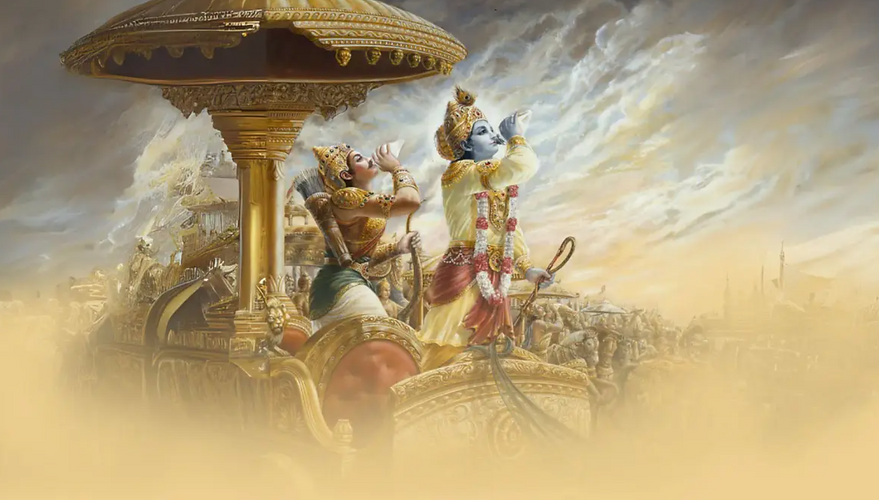
Bhagvad Gita Chapter 10
भगवद् गीता अध्याय १०
Bhagvad Gita Chapter 10 - Vibhuti Yog
भगवद गीता का अध्याय १० - विभूति योग
Chapter 10 of the Bhagavad Gita, titled Vibhuti Yog, is a powerful revelation where Shri Krishna unveils His divine manifestations to Arjun. After emphasizing the importance of devotion in the previous chapters, Shri Krishna now begins to describe the infinite expressions of His divine power and presence that pervade the universe.
This chapter marks a turning point in Arjun's understanding of Shri Krishna, not just as a friend or charioteer, but as the Supreme Divine, the source of all creation. Shri Krishna declares that everything extraordinary, glorious, or powerful in the world is a spark of His divine essence. Whether it’s wisdom, strength, beauty, or greatness found in beings or objects, it is all a reflection of His infinite nature.
Vibhuti Yog aims to shift Arjun's (and the seeker’s) perspective from the mundane to the divine. It encourages us to see the sacred in the everyday to recognize that the Divine is not confined to temples or scriptures, but is immanent in all things. Shri Krishna lists numerous examples, from great sages and celestial beings to natural elements and mighty animals, demonstrating that the universe is alive with His presence.
Through this knowledge, devotion deepens. When we see God in all, the ego dissolves, and love, reverence, and surrender arise naturally. Chapter 10 is not merely about listing divine glories, it’s an invitation to expand our awareness, cultivate bhakti (devotion), and realize the oneness behind the diversity of the cosmos.
भगवद गीता अध्याय 10: विभूति योग - दिव्य महिमा का योग (परिचय)
भगवद गीता का अध्याय 10, जिसका शीर्षक विभूति योग है, एक शक्तिशाली रहस्योद्घाटन है जहाँ भगवान कृष्ण अर्जुन के सामने अपनी दिव्य अभिव्यक्तियों का अनावरण करते हैं। पिछले अध्यायों में भक्ति के महत्व पर जोर देने के बाद, कृष्ण अब अपनी दिव्य शक्ति और उपस्थिति की अनंत अभिव्यक्तियों का वर्णन करना शुरू करते हैं जो ब्रह्मांड में व्याप्त हैं।
यह अध्याय कृष्ण के बारे में अर्जुन की समझ में एक महत्वपूर्ण मोड़ है - न केवल एक मित्र या सारथी के रूप में, बल्कि सर्वोच्च ईश्वर के रूप में, जो सभी सृष्टि का स्रोत है। कृष्ण घोषणा करते हैं कि दुनिया में असाधारण, गौरवशाली या शक्तिशाली हर चीज उनके दिव्य सार की एक चिंगारी है। चाहे वह ज्ञान हो, शक्ति हो, सुंदरता हो, या प्राणियों या वस्तुओं में पाई जाने वाली महानता हो, यह सब उनकी अनंत प्रकृति का प्रतिबिंब है।
विभूति योग का उद्देश्य अर्जुन (और साधक) के दृष्टिकोण को सांसारिक से दिव्य की ओर स्थानांतरित करना है। यह हमें हर रोज़ की चीज़ों में पवित्रता देखने के लिए प्रोत्साहित करता है - यह पहचानने के लिए कि ईश्वर सिर्फ़ मंदिरों या शास्त्रों तक सीमित नहीं है, बल्कि सभी चीज़ों में व्याप्त है। कृष्ण महान ऋषियों और दिव्य प्राणियों से लेकर प्राकृतिक तत्वों और शक्तिशाली जानवरों तक के कई उदाहरण देते हैं, जो दर्शाते हैं कि ब्रह्मांड उनकी उपस्थिति से जीवंत है।
इस ज्ञान के माध्यम से भक्ति गहरी होती है। जब हम सभी में ईश्वर को देखते हैं, तो अहंकार विलीन हो जाता है और प्रेम, श्रद्धा और समर्पण स्वाभाविक रूप से पैदा होते हैं। अध्याय 10 केवल दिव्य महिमाओं को सूचीबद्ध करने के बारे में नहीं है - यह हमारी जागरूकता का विस्तार करने, भक्ति (भक्ति) विकसित करने और ब्रह्मांड की विविधता के पीछे एकता को महसूस करने का निमंत्रण है।
श्रीभगवानुवाच |
भूय एव महाबाहो शृणु मे परमं वच: |
यत्तेऽहं प्रीयमाणाय वक्ष्यामि हितकाम्यया ||1||
Shri Bhagavan said:
“Hear again, O mighty-armed Arjun, My supreme word. Out of love for you, I will speak for your benefit.”
This opening verse of Chapter 10 sets a deeply intimate and devotional tone. Shri Krishna addresses Arjun affectionately as Mahabaho (mighty-armed), acknowledging his strength and readiness for higher knowledge. Shri Krishna is about to reveal deeper truths, not out of obligation, but out of love and concern (priyamāṇāya, meaning “to the beloved”).
The use of the word paramam vachah (supreme word) signals that what follows is of utmost importance, teachings that transcend even previous discussions. Shri Krishna speaks not as a distant teacher but as a compassionate divine guide, offering wisdom for Arjun’s highest good (hitakāmyayā).
This shlok highlights the guru-shishya bond when the disciple is sincere and open, the teacher responds with grace and revelation. It also reflects the compassionate nature of the Divine, who is ever-willing to guide those who are devoted and seeking truth. The verse prepares the seeker to receive the glories of God with a humble and open heart.
“हे महाबाहु अर्जुन, मेरे सर्वोच्च वचन को फिर से सुनो। तुम्हारे प्रति प्रेम के कारण, मैं तुम्हारे लाभ के लिए बोलूँगा।” अध्याय 10 का यह आरंभिक श्लोक एक गहन अंतरंग और भक्तिपूर्ण स्वर स्थापित करता है। कृष्ण अर्जुन को स्नेहपूर्वक महाबाहो (महाबाहु) कहकर संबोधित करते हैं, जो उच्च ज्ञान के लिए उसकी शक्ति और तत्परता को स्वीकार करता है। कृष्ण गहन सत्य को प्रकट करने वाले हैं - दायित्व से नहीं, बल्कि प्रेम और चिंता (प्रियमानाया, जिसका अर्थ है "प्रियतम के प्रति") से। परमम वाचः (सर्वोच्च शब्द) शब्द का प्रयोग संकेत देता है कि आगे जो कुछ भी है वह अत्यंत महत्वपूर्ण है - ऐसी शिक्षाएँ जो पिछली चर्चाओं से भी परे हैं। कृष्ण एक दूरस्थ शिक्षक के रूप में नहीं बल्कि एक दयालु दिव्य मार्गदर्शक के रूप में बोलते हैं, जो अर्जुन के सर्वोच्च हित (हितकाम्यया) के लिए ज्ञान प्रदान करते हैं। यह श्लोक गुरु-शिष्य बंधन को उजागर करता है - जब शिष्य ईमानदार और खुला होता है, तो शिक्षक अनुग्रह और रहस्योद्घाटन के साथ प्रतिक्रिया करता है। यह ईश्वर की दयालु प्रकृति को भी दर्शाता है, जो समर्पित और सत्य की खोज करने वालों का मार्गदर्शन करने के लिए हमेशा तत्पर रहते हैं। यह श्लोक साधक को विनम्र और खुले दिल से ईश्वर की महिमा को ग्रहण करने के लिए तैयार करता है।
न मे विदुः सुरगणाः प्रभवं न महर्षयः।
अहमादिर्हि देवानाṁ महर्षीणां च सर्वश: ||2||
“Neither the hosts of gods nor the great sages know My origin, for I am the source of all the gods and sages in every way.”
In this powerful verse, Shri Krishna declares the transcendence of His divine nature. Even celestial beings (sura-gaṇāḥ, the gods) and the most enlightened sages (maharṣayaḥ) do not fully comprehend His origin. This is because Shri Krishna is not a created being, He is the ādi (beginning) of all creation, including the gods and sages themselves.
The shlok emphasizes that the Divine is beyond intellectual grasp, even for the highest evolved beings. It humbles human pride and urges the seeker to approach the Divine not just with intellect, but with devotion and surrender. Shri Krishna's declaration also sets the stage for the chapter’s theme, revealing His vibhutis (divine manifestations), which are meant to inspire awe, reverence, and deeper connection with the Supreme.
“न तो देवताओं के समूह और न ही महान ऋषिगण मेरी उत्पत्ति को जानते हैं, क्योंकि मैं सभी प्रकार से सभी देवताओं और ऋषियों का स्रोत हूँ।” इस शक्तिशाली श्लोक में, भगवान कृष्ण अपनी दिव्य प्रकृति की उत्कृष्टता की घोषणा करते हैं। यहाँ तक कि दिव्य प्राणी (सुर-गणाः, देवता) और सबसे प्रबुद्ध ऋषिगण (महर्षयः) भी उनकी उत्पत्ति को पूरी तरह से नहीं समझ पाते हैं। ऐसा इसलिए है क्योंकि कृष्ण कोई सृजित प्राणी नहीं हैं - वे देवताओं और ऋषियों सहित सभी सृष्टि के आदि (आरंभ) हैं। श्लोक इस बात पर जोर देता है कि ईश्वर बौद्धिक समझ से परे है, यहाँ तक कि उच्चतम विकसित प्राणियों के लिए भी। यह मानवीय अभिमान को कम करता है और साधक से आग्रह करता है कि वह ईश्वर के पास केवल बुद्धि से ही नहीं, बल्कि भक्ति और समर्पण के साथ जाए। कृष्ण की घोषणा अध्याय के विषय के लिए भी मंच तैयार करती है - उनकी विभूतियों (दिव्य अभिव्यक्तियों) को प्रकट करना, जिसका उद्देश्य विस्मय, श्रद्धा और सर्वोच्च के साथ गहरे संबंध को प्रेरित करना है।
यो मामजमनादिं च वेत्ति लोकमहेश्वरम्।
असम्मूढ: स मर्त्येषु सर्वपापै: प्रमुच्यते ||3||
“He who knows Me as unborn, without beginning, and as the great Lord of the worlds, such a person, free from delusion among mortals, is released from all sins.”
In this verse, Shri Krishna emphasizes the liberating power of true knowledge. To recognize Shri Krishna as ajam (unborn), anādim (without origin), and lokamaheśvaram (Supreme Lord of all worlds) is to understand His eternal, unchanging divine nature. Unlike beings bound by birth and death, Shri Krishna exists beyond time and space.
The one who realizes this truth becomes asammūḍhaḥ, free from delusion and ignorance. Such a person, through clarity and devotion, is no longer caught in the karmic cycle of sin and suffering. This verse reminds us that liberation (moksh) is not just a result of action, but of deep, inner realization of the Divine. Knowing God as the eternal source and surrendering with devotion purifies the heart and leads the soul toward ultimate freedom.
"जो मुझे अजन्मा, अनादि और लोकों का महान स्वामी जानता है - ऐसा मनुष्य, मनुष्यों में मोह से मुक्त होकर, सभी पापों से मुक्त हो जाता है।" इस श्लोक में, भगवान कृष्ण सच्चे ज्ञान की मुक्ति देने वाली शक्ति पर जोर देते हैं। कृष्ण को अजम (अजन्मा), अनादिम (उत्पत्ति के बिना) और लोकमहेश्वरम (सभी लोकों के सर्वोच्च स्वामी) के रूप में पहचानना उनके शाश्वत, अपरिवर्तनीय दिव्य स्वभाव को समझना है। जन्म और मृत्यु से बंधे प्राणियों के विपरीत, कृष्ण समय और स्थान से परे हैं। जो इस सत्य को समझ लेता है, वह असम्मुदः हो जाता है - मोह और अज्ञान से मुक्त। ऐसा व्यक्ति, स्पष्टता और भक्ति के माध्यम से, पाप और दुख के कर्म चक्र में नहीं फंसता। यह श्लोक हमें याद दिलाता है कि मुक्ति (मोक्ष) केवल कर्म का परिणाम नहीं है, बल्कि ईश्वर की गहरी, आंतरिक अनुभूति का परिणाम है। ईश्वर को शाश्वत स्रोत के रूप में जानना और भक्ति के साथ समर्पण करना हृदय को शुद्ध करता है और आत्मा को परम स्वतंत्रता की ओर ले जाता है।
बुद्धिर्ज्ञानमसम्मोह: क्षमा सत्यं दम: शम:। सुखं दुःखं भवोऽभावो भयं चाभयमेव च॥4॥
अहिंसा समता तुष्टिस्तपो दानं यशोऽयश:। भवन्ति भावा भूतानां मत्त एव पृथग्विधा:॥5॥
In this shlok, Shri Krishna lists various qualities and emotions that arise in living beings—both positive and negative. He mentions intellect (buddhi), knowledge (jnanam), clarity (asammoha), forgiveness (kshama), truthfulness (satya), self-control (dama), peace (shama), happiness (sukha), sorrow (duhkha), birth and death, fear and fearlessness, non-violence (ahimsa), equanimity (samata), contentment (tushti), austerity (tapas), charity (danam), fame (yasha), and infamy (ayasha).
Shri Krishna says all these diverse qualities arise “matta eva”—from Him alone. This verse shows that the Divine is not separate from the human experience but is its very source. Both virtues and challenges are part of the cosmic play, given by the Divine for learning and evolution. By understanding this, a seeker moves beyond judgment and begins to see every quality—pleasant or unpleasant—as part of a divine plan, ultimately leading to spiritual growth and realization.
“Non-violence, equanimity, contentment, austerity, charity, fame, and infamy, these diverse states of beings arise from Me alone.”
In continuation of the previous verse, Shri Krishna further explains that all qualities, noble or difficult, originate from Him. He specifically names virtues like ahimsa (non-violence), samata (equanimity), tushti (contentment), tapas (austerity), and danam (charity), along with yasha (fame) and ayasha (infamy).
The inclusion of both positive and negative outcomes reveals the impartial, all-encompassing nature of the Divine. Shri Krishna is not merely the source of goodness and virtue but of all dualities in existence. This realization helps the seeker transcend judgment and develop a balanced, detached outlook. Everything that exists is an expression of the Divine's will and energy.
By recognizing Shri Krishna as the root of all qualities, the devotee learns to stay humble in success and composed in adversity, understanding that all arises from the same divine source, and is part of the soul’s evolution.
इस श्लोक में भगवान कृष्ण जीवों में उत्पन्न होने वाले विभिन्न गुणों और भावनाओं को सूचीबद्ध करते हैं - सकारात्मक और नकारात्मक दोनों। वे बुद्धि (बुद्धि), ज्ञान (ज्ञानम), स्पष्टता (असममोह), क्षमा (क्षमा), सत्यवादिता (सत्य), आत्म-नियंत्रण (दामा), शांति (शमा), खुशी (सुख), दुख (दुःख), जन्म और मृत्यु, भय और निर्भयता, अहिंसा (अहिंसा), समता (समता), संतोष (तुष्टि), तपस्या (तपस), दान (दानम), यश (यशा), और अपयश (अयशा) का उल्लेख करते हैं। कृष्ण कहते हैं कि ये सभी विविध गुण "मत्त एव" - केवल उन्हीं से उत्पन्न होते हैं। यह श्लोक दर्शाता है कि ईश्वर मानव अनुभव से अलग नहीं है बल्कि उसका मूल स्रोत है। गुण और चुनौतियाँ दोनों ही ब्रह्मांडीय खेल का हिस्सा हैं, जो ईश्वर द्वारा सीखने और विकास के लिए दिए गए हैं। इसे समझकर, साधक निर्णय से आगे बढ़ जाता है और प्रत्येक गुण को - चाहे वह सुखद हो या अप्रिय - एक दिव्य योजना के भाग के रूप में देखना शुरू कर देता है, जो अंततः आध्यात्मिक विकास और प्राप्ति की ओर ले जाता है।
"अहिंसा, समता, संतोष, तप, दान, यश और अपयश - ये विविध जीवात्माएँ मुझसे ही उत्पन्न होती हैं।" पिछले श्लोक की निरंतरता में, भगवान कृष्ण आगे बताते हैं कि सभी गुण - महान या कठिन - उनसे ही उत्पन्न होते हैं। वे विशेष रूप से अहिंसा (अहिंसा), समता (समता), तुष्टि (संतोष), तप (तपस्या), और दान (दान) जैसे गुणों के साथ-साथ यश (प्रसिद्धि) और अयश (अपयश) का नाम लेते हैं। सकारात्मक और नकारात्मक दोनों परिणामों का समावेश ईश्वर की निष्पक्ष, सर्वव्यापी प्रकृति को प्रकट करता है। कृष्ण केवल अच्छाई और सद्गुण का ही स्रोत नहीं हैं, बल्कि अस्तित्व में सभी द्वंद्वों का स्रोत हैं। यह अनुभूति साधक को निर्णय से परे जाने और एक संतुलित, अनासक्त दृष्टिकोण विकसित करने में मदद करती है। जो कुछ भी मौजूद है वह ईश्वर की इच्छा और ऊर्जा की अभिव्यक्ति है। कृष्ण को सभी गुणों के मूल के रूप में पहचान कर, भक्त सफलता में विनम्र और प्रतिकूल परिस्थितियों में शांत रहना सीखता है, तथा यह समझता है कि सभी एक ही दिव्य स्रोत से उत्पन्न होते हैं, तथा आत्मा के विकास का हिस्सा हैं।
महर्षय: सप्त पूर्वे चत्वारो मनवस्तथा।
मद्भावा मानसा जाता येषां लोक इमाः प्रजाः॥6॥
“The seven great sages and the four ancient Manus, from whom all beings in this world have descended, were born of My mind and came forth from Me.”
In this verse, Shri Krishna reveals that the sapta rishis (seven great sages) and the four Manus—the progenitors of mankind—originated from Him. They are not born through ordinary means but are manasa-jata, born from His divine mind.
These ancient beings are considered the foundational pillars of cosmic order and human civilization. By declaring that they emerged from His own being, Shri Krishna reaffirms that He is the ultimate source of creation, not just of material elements but also of the spiritual and guiding forces of the universe.
This verse helps Arjun understand the vastness of Shri Krishna's divine play and the sacred lineage of wisdom and order that upholds existence. It instills reverence for ancient knowledge while deepening the sense of Shri Krishna’s supreme, all-creating power.
"सात महान ऋषि और चार प्राचीन मनु, जिनसे इस संसार के सभी प्राणी उत्पन्न हुए हैं, मेरे मन से उत्पन्न हुए और मुझसे ही उत्पन्न हुए।" इस श्लोक में, भगवान कृष्ण बताते हैं कि सप्त ऋषि (सात महान ऋषि) और चार मनु - मानव जाति के पूर्वज - उनसे उत्पन्न हुए। वे साधारण साधनों से पैदा नहीं हुए हैं, बल्कि मनस-जटा हैं - उनके दिव्य मन से पैदा हुए हैं। इन प्राचीन प्राणियों को ब्रह्मांडीय व्यवस्था और मानव सभ्यता के आधारभूत स्तंभ माना जाता है। यह घोषणा करके कि वे अपने अस्तित्व से उत्पन्न हुए हैं, कृष्ण इस बात की पुष्टि करते हैं कि वे न केवल भौतिक तत्वों के बल्कि ब्रह्मांड की आध्यात्मिक और मार्गदर्शक शक्तियों के निर्माण का अंतिम स्रोत हैं। यह श्लोक अर्जुन को कृष्ण की दिव्य लीला की विशालता और अस्तित्व को बनाए रखने वाली ज्ञान और व्यवस्था की पवित्र वंशावली को समझने में मदद करता है। यह कृष्ण की सर्वोच्च, सर्व-सृजनकारी शक्ति की भावना को गहरा करते हुए प्राचीन ज्ञान के प्रति श्रद्धा पैदा करता है।
एतां विभूतिं योगं च मम यो वेत्ति तत्वत:।
सोऽविकम्पेन योगेन युज्यते नात्र संशय:॥7॥
“One who truly understands My divine glories (vibhutis) and yogic power (yog), is united with Me through unwavering devotion. Of this, there is no doubt.”
In this verse, Shri Krishna emphasizes the transformative power of true knowledge. To know His vibhutis (divine manifestations) and yog (mystical power) in their essence, not just intellectually but with heartfelt realization—leads to unshakable union with Him.
This union is not based on ritual or mere belief, but on deep devotion and understanding. When one sees Shri Krishna as the divine source behind all greatness, beauty, and wisdom in the world, their faith becomes steady and unshaken (avikampena yogena).
Shri Krishna assures Arjun and all seekers, that such knowledge naturally leads to yog, the path of connection, and ultimately, liberation. There is no doubt (na atra samshayaḥ) in this promise, making the verse a strong affirmation of the power of inner realization and devotional awareness.
"जो व्यक्ति मेरी दिव्य महिमा (विभूतियाँ) और योग शक्ति (योग) को सही मायने में समझ लेता है, वह अटूट भक्ति के माध्यम से मेरे साथ जुड़ जाता है। इसमें कोई संदेह नहीं है।" इस श्लोक में, भगवान कृष्ण सच्चे ज्ञान की परिवर्तनकारी शक्ति पर जोर देते हैं। उनकी विभूतियों (दिव्य अभिव्यक्तियों) और योग (रहस्यमय शक्ति) को उनके सार में जानना - न केवल बौद्धिक रूप से बल्कि हार्दिक अनुभूति के साथ - उनके साथ अडिग एकता की ओर ले जाता है। यह एकता अनुष्ठान या मात्र विश्वास पर आधारित नहीं है, बल्कि गहरी भक्ति और समझ पर आधारित है। जब कोई कृष्ण को दुनिया में सभी महानता, सुंदरता और ज्ञान के पीछे दिव्य स्रोत के रूप में देखता है, तो उनका विश्वास स्थिर और अडिग हो जाता है (अविकम्पेन योगेन)। कृष्ण अर्जुन को आश्वस्त करते हैं - और सभी साधकों को - कि ऐसा ज्ञान स्वाभाविक रूप से योग, संबंध का मार्ग और अंततः मुक्ति की ओर ले जाता है। इस वादे में कोई संदेह नहीं है (न अत्र संशयः), जो इस श्लोक को आंतरिक बोध और भक्ति जागरूकता की शक्ति की एक मजबूत पुष्टि बनाता है।
अहं सर्वस्य प्रभवो मत्तः सर्वं प्रवर्तते।
इति मत्वा भजन्ते मां बुधा भावसमन्विताः॥8॥
“I am the source of all creation; everything emanates from Me. Knowing this, the wise worship Me with deep devotion and awe.”
In this profound verse, Shri Krishna declares Himself as the origin and cause of all that exists. Everything—living and non-living, seen and unseen—emerges from Him. He is not only the creator but also the sustaining power behind the universe.
The truly wise (budhaḥ) recognize this truth and respond not with pride or curiosity, but with deep devotion (bhava-samanvitāḥ). This devotion is not mechanical; it comes from heartfelt reverence, wonder, and surrender.
This shlok marks a pivotal point in understanding bhakti yog when knowledge leads to humility, and humility deepens love. Shri Krishna is telling Arjun that true wisdom doesn't just analyze the Divine; it worships it, lovingly and continuously. For the awakened soul, devotion becomes a natural expression of seeing God in all.
"मैं ही समस्त सृष्टि का मूल हूँ; सब कुछ मुझसे ही निकलता है। यह जानकर, बुद्धिमान लोग गहरी भक्ति और विस्मय के साथ मेरी पूजा करते हैं।" इस गहन श्लोक में, भगवान कृष्ण स्वयं को सभी विद्यमान वस्तुओं का मूल और कारण बताते हैं। सभी सजीव और निर्जीव, दृश्य और अदृश्य सभी उनसे ही निकलते हैं। वे न केवल सृष्टिकर्ता हैं, बल्कि ब्रह्मांड के पीछे की पालनहार शक्ति भी हैं। सच्चे ज्ञानी (बुद्ध:) इस सत्य को पहचानते हैं और गर्व या जिज्ञासा से नहीं, बल्कि गहरी भक्ति (भाव-समन्विता:) से प्रतिक्रिया करते हैं। यह भक्ति यांत्रिक नहीं है; यह हृदय से की गई श्रद्धा, आश्चर्य और समर्पण से आती है। यह श्लोक भक्ति योग को समझने में एक महत्वपूर्ण बिंदु है - जब ज्ञान विनम्रता की ओर ले जाता है, और विनम्रता प्रेम को गहरा करती है। कृष्ण अर्जुन से कह रहे हैं कि सच्चा ज्ञान केवल ईश्वर का विश्लेषण नहीं करता है; यह प्रेमपूर्वक और निरंतर उसकी पूजा करता है। जागृत आत्मा के लिए, भक्ति सभी में ईश्वर को देखने की एक स्वाभाविक अभिव्यक्ति बन जाती है।
मच्चित्ता मद्गतप्राणा बोधयन्तः परस्परम्।
कथयन्तश्च मां नित्यं तुष्यन्ति च रमन्ति च॥9॥
“With minds fixed on Me and lives devoted to Me, My devotees enlighten one another and constantly speak of Me. They derive great joy and satisfaction in doing so.”
In this beautiful verse, Shri Krishna describes the inner world of His true devotees. Their minds are absorbed in Him (maccittāḥ) and their life force is dedicated to Him (madgata-prāṇāḥ). Such souls naturally engage in spiritual conversations, sharing divine wisdom and experiences, and continuously remembering and glorifying the Lord.
These exchanges are not dull or duty-bound—they are filled with joy (tuṣyanti) and delight (ramanti). Devotion here is not a burden; it is a source of deep fulfillment. This verse highlights the power of satsang (spiritual company), where seekers uplift and inspire each other.
Shri Krishna reminds Arjun that divine remembrance brings not only liberation but also immeasurable inner joy, even amidst the challenges of life.
"मेरे प्रति मन को स्थिर करके और मेरे लिए समर्पित जीवन के साथ, मेरे भक्त एक दूसरे को ज्ञान देते हैं और लगातार मेरे बारे में बोलते हैं। ऐसा करने में उन्हें बहुत खुशी और संतुष्टि मिलती है।" इस सुंदर श्लोक में, भगवान कृष्ण अपने सच्चे भक्तों की आंतरिक दुनिया का वर्णन करते हैं। उनके मन उनमें लीन (मच्छिता:) होते हैं और उनकी जीवन शक्ति उन्हें समर्पित होती है (मद्गत-प्राणा:)। ऐसी आत्माएँ स्वाभाविक रूप से आध्यात्मिक वार्तालाप में संलग्न होती हैं, दिव्य ज्ञान और अनुभवों को साझा करती हैं, और लगातार भगवान को याद करती हैं और उनकी महिमा करती हैं। ये आदान-प्रदान नीरस या कर्तव्य-बद्ध नहीं हैं - वे आनंद (तुष्यन्ति) और प्रसन्नता (रमंति) से भरे हुए हैं। यहाँ भक्ति एक बोझ नहीं है; यह गहन तृप्ति का स्रोत है। यह श्लोक सत्संग (आध्यात्मिक संगति) की शक्ति को उजागर करता है, जहाँ साधक एक-दूसरे को ऊपर उठाते हैं और प्रेरित करते हैं। कृष्ण अर्जुन को याद दिलाते हैं कि दिव्य स्मरण न केवल मुक्ति लाता है, बल्कि जीवन की चुनौतियों के बीच भी असीम आंतरिक आनंद देता है।
तेषां सततयुक्तानां भजतां प्रीतिपूर्वकम्।
ददामि बुद्धियोगं तं येन मामुपयान्ति ते॥10॥
“To those who are constantly devoted and who worship Me with love, I give the divine wisdom (buddhi yog) by which they come to Me.”
In this verse, Shri Krishna assures that loving, continuous devotion attracts divine grace. To the ones who worship Him with affection and steadiness, He Himself grants the buddhi yog - the inner clarity and spiritual intelligence required to reach Him.
This verse shows that the spiritual journey isn’t walked alone. When a devotee offers sincere love, the Divine actively participates, guiding the soul from within. Buddhi yog is not mere intellectual understanding; it is wisdom born of grace, which removes confusion and leads directly to union with the Divine.
Shri Krishna emphasizes that love is the key, and where love exists, He responds with light and direction. For the seeker, this verse offers deep reassurance: true, heartfelt devotion will never go unanswered, and the path to God becomes clearer through His loving guidance.
"जो लोग निरंतर समर्पित रहते हैं और जो प्रेम से मेरी पूजा करते हैं, मैं उन्हें दिव्य ज्ञान (बुद्धि योग) देता हूँ, जिसके द्वारा वे मेरे पास आते हैं।" इस श्लोक में, भगवान कृष्ण आश्वासन देते हैं कि प्रेमपूर्ण, निरंतर भक्ति दिव्य कृपा को आकर्षित करती है। जो लोग स्नेह और स्थिरता के साथ उनकी पूजा करते हैं, उन्हें वे स्वयं बुद्धि योग प्रदान करते हैं - जो उनके पास पहुँचने के लिए आवश्यक आंतरिक स्पष्टता और आध्यात्मिक बुद्धि है। यह श्लोक दर्शाता है कि आध्यात्मिक यात्रा अकेले नहीं की जाती है। जब कोई भक्त सच्चा प्रेम अर्पित करता है, तो ईश्वर सक्रिय रूप से भाग लेते हैं, आत्मा को भीतर से मार्गदर्शन करते हैं। बुद्धि योग केवल बौद्धिक समझ नहीं है; यह कृपा से उत्पन्न ज्ञान है, जो भ्रम को दूर करता है और सीधे ईश्वर के साथ मिलन की ओर ले जाता है। कृष्ण इस बात पर जोर देते हैं कि प्रेम ही कुंजी है, और जहाँ प्रेम मौजूद है, वे प्रकाश और दिशा के साथ प्रतिक्रिया करते हैं। साधक के लिए, यह श्लोक गहरा आश्वासन देता है: सच्ची, हार्दिक भक्ति कभी अनुत्तरित नहीं रहेगी, और उनके प्रेमपूर्ण मार्गदर्शन के माध्यम से ईश्वर तक पहुँचने का मार्ग स्पष्ट हो जाता है।
तेषामेवानुकम्पार्थमहमज्ञानजं तम:।
नाशयाम्यात्मभावस्थो ज्ञानदीपेन भास्वता॥11॥
“Out of compassion for them, I dwell in their hearts and destroy the darkness born of ignorance with the shining lamp of knowledge.”
In this deeply compassionate verse, Shri Krishna expresses how He helps sincere devotees. When a seeker is devoted with love and constancy, Shri Krishna, moved by anukampā (divine compassion), dispels their inner darkness, ignorance (ajñāna) by illuminating their hearts with the lamp of knowledge (jñāna dīpa).
This knowledge is not merely intellectual, it is self-revealing awareness that arises from within, as Shri Krishna resides in the very heart (ātma-bhāva-sthaḥ) of the devotee. He becomes the inner light that removes confusion, fear, and illusion, guiding the soul towards truth and liberation.
This verse assures that God is not distant or passive; He is an active, loving presence in the life of a true devotee, constantly working from within to uplift, enlighten, and unite the soul with Himself.
"उन पर दया करके, मैं उनके हृदय में निवास करता हूँ और ज्ञान के चमकते दीपक से अज्ञान से उत्पन्न अंधकार को नष्ट करता हूँ।" इस अत्यंत करुणामयी श्लोक में भगवान कृष्ण व्यक्त करते हैं कि वे सच्चे भक्तों की कैसे सहायता करते हैं। जब कोई साधक प्रेम और स्थिरता के साथ समर्पित होता है, तो कृष्ण, अनुकम्पा (दिव्य करुणा) से प्रेरित होकर, उनके हृदयों को ज्ञान के दीपक (ज्ञान दीपा) से प्रकाशित करके उनके आंतरिक अंधकार—अज्ञान (अज्ञान) को दूर करते हैं। यह ज्ञान केवल बौद्धिक नहीं है—यह आत्म-प्रकट करने वाली जागरूकता है जो भीतर से उत्पन्न होती है, क्योंकि कृष्ण भक्त के हृदय (आत्म-भाव-स्थ:) में निवास करते हैं। वे आंतरिक प्रकाश बन जाते हैं जो भ्रम, भय और भ्रम को दूर करते हैं, आत्मा को सत्य और मुक्ति की ओर मार्गदर्शन करते हैं। यह श्लोक आश्वस्त करता है कि ईश्वर दूर या निष्क्रिय नहीं है; वे एक सच्चे भक्त के जीवन में एक सक्रिय, प्रेमपूर्ण उपस्थिति हैं, जो आत्मा को उन्नत करने, प्रबुद्ध करने तथा स्वयं के साथ एक करने के लिए निरंतर भीतर से कार्य करते रहते हैं।
अर्जुन उवाच
परं ब्रह्म परं धाम पवित्रं परमं भवान्।
पुरुषं शाश्वतं दिव्यमादिदेवमजं विभुम्॥12॥
“Arjun said: You are the Supreme Brahman, the Supreme Abode, the Supreme Purifier. You are the eternal, divine Person, the original God, unborn, and all-pervading.”
In this verse, Arjun responds to Shri Krishna’s revelations with reverence and awe. He acknowledges Shri Krishna not just as a teacher or friend, but as the Supreme Reality itself, Parabrahma, beyond form and time. He calls Shri Krishna the ultimate refuge (param dhām) and the purest essence (pavitraṁ paramam), recognizing that contact with Him purifies the soul.
By referring to Shri Krishna as the eternal and divine Person (śāśvataṁ divyam puruṣam) and the original deity (ādidevam), Arjun affirms that Krishna is not a mortal being but the unchanging, unborn source of all. He also calls Him vibhu, all-pervading, present in all beings.
This verse reflects Arjun’s deep spiritual realization—that Shri Krishna is none other than God Himself, the very truth all seekers strive to know.
“अर्जुन ने कहा: आप परम ब्रह्म, परम धाम, परम शुद्धिदाता हैं। आप शाश्वत, दिव्य व्यक्ति, मूल ईश्वर, अजन्मा और सर्वव्यापी हैं।” इस श्लोक में, अर्जुन कृष्ण के रहस्योद्घाटन का श्रद्धा और विस्मय के साथ जवाब देता है। वह कृष्ण को न केवल एक शिक्षक या मित्र के रूप में स्वीकार करता है, बल्कि स्वयं सर्वोच्च वास्तविकता के रूप में स्वीकार करता है - परब्रह्म, रूप और समय से परे। वह कृष्ण को परम शरण (परम धाम) और शुद्धतम सार (पवित्रम परम) कहता है, यह पहचानते हुए कि उनके साथ संपर्क आत्मा को शुद्ध करता है। कृष्ण को शाश्वत और दिव्य व्यक्ति (शाश्वतं दिव्यम पुरुषम) और मूल देवता (आदिदेवम) के रूप में संदर्भित करके, अर्जुन पुष्टि करता है कि कृष्ण एक नश्वर प्राणी नहीं हैं, बल्कि सभी का अपरिवर्तनीय, अजन्मा स्रोत हैं। वह उन्हें विभु भी कहता है - सर्वव्यापी, सभी प्राणियों में मौजूद। यह श्लोक अर्जुन की गहरी आध्यात्मिक अनुभूति को दर्शाता है - कि कृष्ण कोई और नहीं बल्कि स्वयं भगवान हैं, वही सत्य है जिसे जानने के लिए सभी साधक प्रयास करते हैं।
आहुस् त्वामृषयः सर्वे देवर्षिर्नारदस्तथा।
असितो देवलो व्यासः स्वयं चैव ब्रवीषि मे॥13॥
“All the great sages, such as Narada, Asita, Devala, and Vyasa, have declared You as the Supreme Person, and now You Yourself are telling me the same.”
In this verse, Arjun reinforces his faith in Shri Krishna’s divinity by referring to the testimony of revered sages. He names Narada, the divine messenger; Asita and Devala, ancient seers; and Vyasa, the compiler of the Vedas and author of the Mahabharat, all of whom have proclaimed Shri Krishna as the Supreme Being.
By citing these authorities, Arjun shows that his realization is not based on blind belief, but aligned with the wisdom of the enlightened. Moreover, Shri Krishna Himself has now confirmed this truth, removing all doubt from Arjun’s heart.
This verse highlights the power of divine confirmation when the truth spoken by scriptures and saints is also revealed directly by God, it leads to unwavering conviction and surrender in the heart of the devotee.
“नारद, असित, देवल और व्यास जैसे सभी महान ऋषियों ने आपको सर्वोच्च व्यक्ति घोषित किया है, और अब आप स्वयं मुझे वही बता रहे हैं।” इस श्लोक में, अर्जुन श्रद्धेय ऋषियों की गवाही का हवाला देकर कृष्ण की दिव्यता में अपने विश्वास को मजबूत करता है। वह नारद, दिव्य दूत; असित और देवल, प्राचीन ऋषि; और व्यास, वेदों के संकलनकर्ता और महाभारत के लेखक का नाम लेता है - इन सभी ने कृष्ण को सर्वोच्च व्यक्ति के रूप में घोषित किया है। इन अधिकारियों का हवाला देकर, अर्जुन दिखाता है कि उसका बोध अंधविश्वास पर आधारित नहीं है, बल्कि प्रबुद्ध लोगों के ज्ञान के साथ जुड़ा हुआ है। इसके अलावा, कृष्ण ने अब स्वयं इस सत्य की पुष्टि की है, जिससे अर्जुन के दिल से सभी संदेह दूर हो गए हैं। यह श्लोक दिव्य पुष्टि की शक्ति को उजागर करता है - जब शास्त्रों और संतों द्वारा कहा गया सत्य भी भगवान द्वारा सीधे प्रकट किया जाता है, तो यह भक्त के दिल में अटूट विश्वास और समर्पण की ओर ले जाता है।
सर्वमेतदृतं मन्ये यन्मां वदसि केशव।
न हि ते भगवन्व्यक्तिं विदुर्देवा न दानवाः॥14॥
“O Keshava, I consider as true all that You have told me. Neither the gods nor the demons truly know Your manifestation, O Lord.”
In this verse, Arjun fully accepts the divine revelations shared by Shri Krishna. He addresses Him as Keshava (slayer of the demon Keshi and Lord of all), and declares his complete faith in Shri Krishna’s words, acknowledging them as absolute truth (ṛtaṁ).
Arjun also recognizes the mystery of Shri Krishna’s divine nature, stating that even the gods (devas) and demons (dānavas) - powerful beings with immense knowledge—cannot fully comprehend Him. This highlights the transcendental nature of the Divine, which is beyond the grasp of even the most elevated cosmic beings.
By expressing both trust and humility, Arjun sets an example for all seekers: spiritual truth is not merely understood by intellect, but accepted through faith, surrender, and grace from the Divine Itself.
"हे केशव, आपने जो कुछ मुझसे कहा है, मैं उसे सत्य मानता हूँ। हे प्रभु, न तो देवता और न ही राक्षस आपके स्वरूप को सही रूप से जानते हैं।" इस श्लोक में, अर्जुन कृष्ण द्वारा साझा किए गए दिव्य रहस्योद्घाटन को पूरी तरह से स्वीकार करता है। वह उन्हें केशव (राक्षस केशी का वध करने वाला और सभी का स्वामी) कहकर संबोधित करता है, और कृष्ण के वचनों में अपना पूर्ण विश्वास व्यक्त करता है, उन्हें पूर्ण सत्य (ऋतम्) के रूप में स्वीकार करता है। अर्जुन कृष्ण की दिव्य प्रकृति के रहस्य को भी पहचानता है, यह बताते हुए कि देवता (देव) और दानव (दानव) - अपार ज्ञान वाले शक्तिशाली प्राणी - भी उन्हें पूरी तरह से नहीं समझ सकते हैं। यह ईश्वर की पारलौकिक प्रकृति को उजागर करता है, जो सबसे श्रेष्ठ ब्रह्मांडीय प्राणियों की समझ से परे है। विश्वास और विनम्रता दोनों को व्यक्त करके, अर्जुन सभी साधकों के लिए एक उदाहरण प्रस्तुत करता है: आध्यात्मिक सत्य को केवल बुद्धि से नहीं समझा जाता है, बल्कि ईश्वर से विश्वास, समर्पण और कृपा के माध्यम से स्वीकार किया जाता है।
स्वयमेवात्मनात्मानं वेत्थ त्वं पुरुषोत्तम।
भूतभावन भूतेश देवदेव जगत्पते॥15॥
“O Supreme Person, only You know Yourself by Your own Self. You are the origin of all beings, the Lord of all beings, God of gods, and the Lord of the universe.”
In this verse, Arjun glorifies Shri Krishna as Purushottam, the Supreme Being beyond both the perishable and the imperishable. He acknowledges that only Shri Krishna truly knows Himself, since His nature is infinite and beyond the grasp of others, including gods and sages.
Arjun calls Shri Krishna Bhūta-bhāvana (creator of all beings), Bhūteśa (lord of all beings), Deva-deva (God of gods), and Jagat-pati (Lord of the universe), affirming Shri Krishna’s unmatched supremacy over all existence.
This verse is a profound declaration of Shri Krishna’s divinity and transcendence. It reflects Arjun’s deep reverence and surrender, recognizing that true understanding of the Divine can only come from the Divine Itself. For the devotee, it inspires humility and devotion, knowing that God is both the source and the knower of all.
"हे परम पुरुष, केवल आप ही अपने आप को स्वयं से जानते हैं। आप सभी प्राणियों के मूल, सभी प्राणियों के स्वामी, देवताओं के देवता और ब्रह्मांड के स्वामी हैं।" इस श्लोक में, अर्जुन भगवान कृष्ण को पुरुषोत्तम के रूप में महिमामंडित करता है - नाशवान और अविनाशी दोनों से परे सर्वोच्च प्राणी। वह स्वीकार करता है कि केवल कृष्ण ही वास्तव में स्वयं को जानते हैं, क्योंकि उनका स्वभाव अनंत है और देवताओं और ऋषियों सहित दूसरों की समझ से परे है। अर्जुन कृष्ण को भूत-भावन (सभी प्राणियों का निर्माता), भूतेश (सभी प्राणियों का स्वामी), देव-देव (देवताओं का देवता) और जगत-पति (ब्रह्मांड का स्वामी) कहते हैं, जो सभी अस्तित्व पर कृष्ण की बेजोड़ सर्वोच्चता की पुष्टि करता है। यह श्लोक कृष्ण की दिव्यता और उत्कृष्टता की गहन घोषणा है। यह अर्जुन की गहरी श्रद्धा और समर्पण को दर्शाता है, यह पहचानते हुए कि दिव्य की सच्ची समझ केवल स्वयं दिव्य से ही आ सकती है। भक्त के लिए यह विनम्रता और भक्ति की प्रेरणा देता है, यह जानते हुए कि ईश्वर ही सबका स्रोत और ज्ञाता है।
वक्तुमर्हस्यशेषेण दिव्या ह्यात्मविभूतय:।
याभिर्विभूतिभिर्लोकानिमांस्त्वं व्याप्य तिष्ठसि॥16॥
“O Shri Krishna, please describe in full Your divine glories, by which You pervade and exist in all these worlds.”
In this verse, Arjun humbly requests Shri Krishna to reveal more about His divine manifestations (vibhūtis) - the ways in which He expresses Himself across the universe. Though Shri Krishna has already declared Himself the source of all, Arjun, filled with awe and devotion, desires to hear in detail how the Lord pervades the cosmos.
This request reflects Arjun’s deepening spiritual thirst, not for intellectual knowledge, but for a greater experience of the Divine in all aspects of creation. It also sets the stage for Shri Krishna’s detailed discourse on His vibhūtis in the coming verses.
By seeking to know God in all things, Arjun represents the ideal seeker, whose devotion is rooted in wonder, love, and the desire to see the Divine presence everywhere in nature, beings, and life itself.
"हे कृष्ण, कृपया अपनी दिव्य महिमा का पूर्ण वर्णन करें, जिसके द्वारा आप इन सभी लोकों में व्याप्त हैं और विद्यमान हैं।" इस श्लोक में, अर्जुन भगवान कृष्ण से विनम्रतापूर्वक अनुरोध करता है कि वे अपनी दिव्य अभिव्यक्तियों (विभूतियों) के बारे में और अधिक बताएं - वे तरीके जिनसे वे पूरे ब्रह्मांड में खुद को अभिव्यक्त करते हैं। हालाँकि कृष्ण ने पहले ही खुद को सभी का स्रोत घोषित कर दिया है, लेकिन अर्जुन, विस्मय और भक्ति से भरा हुआ, विस्तार से सुनना चाहता है कि भगवान ब्रह्मांड में कैसे व्याप्त हैं। यह अनुरोध अर्जुन की गहरी होती आध्यात्मिक प्यास को दर्शाता है - बौद्धिक ज्ञान के लिए नहीं, बल्कि सृष्टि के सभी पहलुओं में दिव्य के अधिक से अधिक अनुभव के लिए। यह आने वाले श्लोकों में कृष्ण द्वारा उनकी विभूतियों पर विस्तृत प्रवचन के लिए मंच भी तैयार करता है। सभी चीजों में भगवान को जानने की कोशिश करके, अर्जुन आदर्श साधक का प्रतिनिधित्व करता है, जिसकी भक्ति आश्चर्य, प्रेम और हर जगह दिव्य उपस्थिति को देखने की इच्छा में निहित है - प्रकृति, प्राणियों और जीवन में।
कथं विद्यामहं योगिंस्त्वां सदा परिचिन्तयन्।
केषु केषु च भावेषु चिन्त्योऽसि भगवन्मया॥17॥
“O Yogin, how shall I constantly think of You? In what various aspects or forms, O Lord, should I meditate upon You?”
In this heartfelt verse, Arjun seeks guidance on how to maintain constant remembrance of the Divine. Addressing Shri Krishna as Yogin, the master of yog - he asks not just what Krishna is, but how to relate to Him in daily thought and meditation.
Arjun wants to know the forms or qualities (bhāvas) in which Shri Krishna can be contemplated. His question reflects the spiritual desire to see the Divine in all aspects of life, to internalize Shri Krishna’s presence not just during worship, but in every moment.
This verse shows Arjun’s evolving devotion from a warrior to a seeker of intimate spiritual connection. It teaches all aspirants that sincere questioning and longing are key steps toward realizing the Divine, and that seeing God in all forms is a powerful path to union.
“हे योगी, मैं निरंतर आपका चिंतन कैसे करूँ? हे प्रभु, मुझे आपका ध्यान किन विभिन्न रूपों या पहलुओं में करना चाहिए?” इस हृदयस्पर्शी श्लोक में, अर्जुन निरंतर ईश्वरीय स्मरण बनाए रखने के बारे में मार्गदर्शन चाहता है। कृष्ण को योगी-योग के गुरु के रूप में संबोधित करते हुए, वह न केवल यह पूछता है कि कृष्ण क्या हैं, बल्कि दैनिक विचार और ध्यान में उनके साथ कैसे संबंध बनाए रखें। अर्जुन उन रूपों या गुणों (भावों) को जानना चाहता है जिनमें कृष्ण का चिंतन किया जा सकता है। उसका प्रश्न जीवन के सभी पहलुओं में ईश्वरीय को देखने की आध्यात्मिक इच्छा को दर्शाता है, न केवल पूजा के दौरान, बल्कि हर पल में कृष्ण की उपस्थिति को आत्मसात करना। यह श्लोक अर्जुन की विकसित होती भक्ति को दर्शाता है - एक योद्धा से अंतरंग आध्यात्मिक संबंध के साधक तक। यह सभी आकांक्षियों को सिखाता है कि ईमानदारी से सवाल करना और तड़पना ईश्वर को महसूस करने की दिशा में महत्वपूर्ण कदम हैं, और सभी रूपों में ईश्वर को देखना मिलन का एक शक्तिशाली मार्ग है।
विस्तरेणात्मनो योगं विभूतिं च जनार्दन।
भूयः कथय तृप्तिर्हि शृण्वतो नास्ति मेऽमृतम्॥18॥
“O Janardana, please describe again in detail Your divine powers and yogic opulence. I never tire of hearing Your nectar-like words.”
In this verse, Arjun expresses his deep longing and joy in listening to Shri Krishna’s revelations. He lovingly addresses Shri Krishna as Janardana (One who is the sustainer and liberator of people), and requests Him to again elaborate on His divine glories (vibhūtis) and yogic powers (yog).
Arjun says that listening to Shri Krishna’s words is like drinking amṛta, divine nectar and that no matter how much he hears, he never feels satisfied. This verse beautifully reflects the nature of true devotion: when the heart is absorbed in God, even divine knowledge becomes a source of bliss.
It shows that spiritual wisdom, when received with love and openness, becomes not just informative but transformative, awakening deep connection and surrender to the Divine.
"हे जनार्दन, कृपया अपनी दिव्य शक्तियों और योगिक ऐश्वर्य का फिर से विस्तार से वर्णन करें। मैं आपके अमृतमय वचनों को सुनकर कभी नहीं थकता।" इस श्लोक में, अर्जुन भगवान कृष्ण के रहस्योद्घाटन को सुनने में अपनी गहरी लालसा और आनंद व्यक्त करता है। वह प्रेमपूर्वक कृष्ण को जनार्दन (जो लोगों का पालनहार और मुक्तिदाता है) कहकर संबोधित करता है, और उनसे अपनी दिव्य महिमा (विभूति) और योगिक शक्तियों (योग) के बारे में फिर से विस्तार से बताने का अनुरोध करता है। अर्जुन कहता है कि कृष्ण के वचनों को सुनना अमृत पीने के समान है और चाहे वह कितना भी सुन ले, उसे कभी संतुष्टि नहीं मिलती। यह श्लोक सच्ची भक्ति की प्रकृति को खूबसूरती से दर्शाता है: जब हृदय ईश्वर में लीन हो जाता है, तो दिव्य ज्ञान भी आनंद का स्रोत बन जाता है। यह दर्शाता है कि आध्यात्मिक ज्ञान, जब प्रेम और खुलेपन के साथ प्राप्त किया जाता है, तो यह न केवल जानकारीपूर्ण बल्कि परिवर्तनकारी बन जाता है, जो ईश्वर के प्रति गहरा संबंध और समर्पण जागृत करता है।
श्रीभगवानुवाच
हन्त ते कथयिष्यामि दिव्या ह्यात्मविभूतयः।
प्राधान्यतः कुरुश्रेष्ठ नास्त्यन्तो विस्तरस्य मे॥19॥
“The Blessed Lord said: Very well, O best of the Kurus, I shall now describe My divine glories to you but only the principal ones, for there is no end to My manifestations.”
In response to Arjun's heartfelt request, Shri Krishna begins to reveal His divine manifestations (vibhūtis). He lovingly addresses Arjun as Kuruśreṣṭha (best of the Kurus), acknowledging his worthiness and sincerity.
Shri Krishna makes it clear that while He will describe His main, most prominent manifestations, there is truly no limit to the ways in which He pervades and sustains the universe. His vibhūtis are infinite, just like His nature.
This verse sets the tone for the upcoming verses, where Shri Krishna will list His manifestations across gods, elements, and beings—offering a powerful way for devotees to see the Divine in the world around them, and to deepen their meditation and devotion through awareness of His omnipresence.
"भगवान ने कहा: बहुत अच्छा, हे कुरुश्रेष्ठ, अब मैं तुम्हें अपनी दिव्य महिमा का वर्णन करूँगा - लेकिन केवल मुख्य महिमा का, क्योंकि मेरे प्रकटीकरण का कोई अंत नहीं है।" अर्जुन के हार्दिक अनुरोध के जवाब में, भगवान कृष्ण अपनी दिव्य अभिव्यक्तियों (विभूतियों) को प्रकट करना शुरू करते हैं। वे प्रेमपूर्वक अर्जुन को कुरुश्रेष्ठ (कुरुश्रेष्ठ) कहकर संबोधित करते हैं, उसकी योग्यता और ईमानदारी को स्वीकार करते हैं। कृष्ण यह स्पष्ट करते हैं कि जब वे अपनी मुख्य, सबसे प्रमुख अभिव्यक्तियों का वर्णन करेंगे, तो वास्तव में उन तरीकों की कोई सीमा नहीं है जिनसे वे ब्रह्मांड में व्याप्त हैं और उसे बनाए रखते हैं। उनकी विभूतियाँ अनंत हैं, ठीक उनकी प्रकृति की तरह। यह श्लोक आगामी श्लोकों के लिए स्वर निर्धारित करता है, जहाँ कृष्ण देवताओं, तत्वों और प्राणियों में अपनी अभिव्यक्तियों को सूचीबद्ध करेंगे - भक्तों को अपने आस-पास की दुनिया में दिव्य को देखने और उनकी सर्वव्यापकता के बारे में जागरूकता के माध्यम से अपने ध्यान और भक्ति को गहरा करने का एक शक्तिशाली तरीका प्रदान करेंगे।
अहमात्मा गुडाकेश सर्वभूताशयस्थित:।
अहमादिश्च मध्यं च भूतानामन्त एव च॥20॥
“I am the Self, O Gudakesha, seated in the hearts of all beings. I am the beginning, the middle, and also the end of all beings.”
In this profound declaration, Shri Krishna tells Arjun addressed lovingly as Gudakesha (conqueror of sleep or ignorance)—that He is the very Self (Ātman) present in the heart of all beings. This highlights His intimate and universal presence, not as an external deity, but as the inner witness and life force in every creature.
Shri Krishna also reveals that He is the origin (ādi), sustainer (madhya), and dissolution (anta) of all beings, encompassing the full cycle of existence. This shlok beautifully conveys that the Divine is not separate from creation, but is the essence of everything—from the smallest life to the vast cosmos.
For seekers, it’s a powerful reminder: God is not far—He resides within, as one’s very soul.
“हे गुडाकेश, मैं सभी प्राणियों के हृदय में विराजमान आत्मा हूँ। मैं सभी प्राणियों का आदि, मध्य और अंत भी हूँ।” इस गहन घोषणा में, भगवान कृष्ण अर्जुन से कहते हैं - जिसे प्यार से गुडाकेश (नींद या अज्ञान का विजेता) कहकर संबोधित किया जाता है - कि वे सभी प्राणियों के हृदय में मौजूद आत्मा हैं। यह उनकी अंतरंग और सार्वभौमिक उपस्थिति को उजागर करता है, बाहरी देवता के रूप में नहीं, बल्कि प्रत्येक प्राणी में आंतरिक साक्षी और जीवन शक्ति के रूप में। कृष्ण यह भी बताते हैं कि वे सभी प्राणियों के मूल (आदि), पालनकर्ता (मध्य) और विघटन (अंत) हैं, जो अस्तित्व के पूरे चक्र को समाहित करते हैं। यह श्लोक खूबसूरती से बताता है कि ईश्वर सृष्टि से अलग नहीं है, बल्कि हर चीज का सार है - सबसे छोटे जीवन से लेकर विशाल ब्रह्मांड तक। साधकों के लिए, यह एक शक्तिशाली अनुस्मारक है: ईश्वर दूर नहीं है - वह व्यक्ति की आत्मा के रूप में भीतर रहता है।
आदित्यानामहं विष्णुर्ज्योतिषां रविरंशुमान्।
मरीचिर्मरुतामस्मि नक्षत्राणामहं शशी॥21॥
“Among the Ādityas, I am Vishnu; among luminous bodies, I am the radiant sun; among the Maruts, I am Marīchi; and among the stars, I am the moon.”
In this verse, Shri Krishna begins to list His divine manifestations in the world. He says, “Among the Ādityas (solar deities), I am Vishnu,” highlighting His role as the preserver and protector. Among all luminous objects, He is the sun, the most brilliant and life-giving force.
Shri Krishna also identifies Himself as Marīchi, one of the powerful sages among the Maruts (wind gods), and as the moon (Śaśī) among stars—calming, gentle, and essential for nature’s rhythm.
Through these examples, Shri Krishna shows that wherever there is power, beauty, brilliance, or importance, it is a reflection of His divine presence. For the devotee, recognizing these symbols becomes a way to worship and connect with God in the everyday world.
“आदित्यों में मैं विष्णु हूँ; प्रकाशमान पिंडों में मैं तेजोमय सूर्य हूँ; मरुतों में मैं मरीचि हूँ; और तारों में मैं चन्द्रमा हूँ।” इस श्लोक में भगवान कृष्ण दुनिया में अपने दिव्य स्वरूपों की सूची बनाना शुरू करते हैं। वे कहते हैं, “आदित्यों (सूर्यदेवताओं) में मैं विष्णु हूँ,” संरक्षक और रक्षक के रूप में अपनी भूमिका को उजागर करते हुए। सभी चमकदार वस्तुओं में वे सूर्य हैं - सबसे तेजोमय और जीवन देने वाली शक्ति। कृष्ण खुद को मरीचि के रूप में भी पहचानते हैं, जो मरुतों (पवन देवताओं) के बीच शक्तिशाली ऋषियों में से एक हैं, और तारों में चंद्रमा (शशि) के रूप में - शांत, सौम्य और प्रकृति की लय के लिए आवश्यक। इन उदाहरणों के माध्यम से, कृष्ण दिखाते हैं कि जहाँ कहीं भी शक्ति, सौंदर्य, चमक या महत्व है, वह उनकी दिव्य उपस्थिति का प्रतिबिंब है। भक्त के लिए, इन प्रतीकों को पहचानना रोजमर्रा की दुनिया में भगवान की पूजा करने और उनसे जुड़ने का एक तरीका बन जाता है।
वेदानां सामवेदोऽस्मि देवानामस्मि वासवः।
इन्द्रियाणां मनश्चास्मि भूतानामस्मि चेतना॥22॥
“Among the Vedas, I am the Sāma Veda; among the gods, I am Indra (Vāsava); among the senses, I am the mind; and among living beings, I am consciousness.”
In this verse, Shri Krishna continues to reveal His divine manifestations through the most prominent and powerful aspects of creation. He declares Himself as the Sāma Veda, known for its musical beauty and devotional chants—symbolizing spiritual harmony and inner elevation.
Among the gods, He is Indra, king of the heavens and a symbol of leadership and strength. Among the senses, Shri Krishna identifies with the mind (manaḥ)—the central instrument that governs perception and action.
Most profoundly, He says He is consciousness (cetana) in all beings—the very essence of life and awareness. This verse teaches that the Divine pervades the highest, most vital forces in the universe and within us, guiding all from within.
“वेदों में मैं सामवेद हूँ; देवताओं में मैं इन्द्र (वासव) हूँ; इन्द्रियों में मैं मन हूँ; और जीवों में मैं चेतना हूँ।” इस श्लोक में भगवान कृष्ण सृष्टि के सबसे प्रमुख और शक्तिशाली पहलुओं के माध्यम से अपनी दिव्य अभिव्यक्तियों को प्रकट करना जारी रखते हैं। वे स्वयं को सामवेद घोषित करते हैं, जो अपनी संगीतमय सुंदरता और भक्तिपूर्ण मंत्रों के लिए जाना जाता है - जो आध्यात्मिक सद्भाव और आंतरिक उत्थान का प्रतीक है। देवताओं में वे इंद्र हैं, स्वर्ग के राजा और नेतृत्व और शक्ति के प्रतीक हैं। इन्द्रियों में कृष्ण मन (मनः) से पहचान करते हैं - वह केंद्रीय साधन जो धारणा और क्रिया को नियंत्रित करता है। सबसे गहराई से, वे कहते हैं कि वे सभी प्राणियों में चेतना (चेतना) हैं - जीवन और जागरूकता का सार। यह श्लोक सिखाता है कि ईश्वर ब्रह्मांड में और हमारे भीतर उच्चतम, सबसे महत्वपूर्ण शक्तियों में व्याप्त है, और भीतर से सभी का मार्गदर्शन करता है।
रुद्राणां शङ्करश्चास्मि वित्तेशो यक्षरक्षसाम्।
वसूनां पावकश्चास्मि मेरुः शिखरिणामहम्॥23॥
“Among the Rudras, I am Shankara; among Yakshas and Rakshasas, I am the Lord of wealth (Kubera); among the Vasus, I am Agni (fire); and among mountains, I am Meru.”
In this verse, Shri Krishna continues to highlight His divine manifestations in various powerful forms. Among the Rudras (storm gods or fierce deities), He is Shankara (Shiva), representing auspiciousness and transformative power. Among the Yakshas and Rakshasas, celestial beings and nature spirits - He is Kubera, the lord of wealth and treasures.
As one of the Vasus (elemental gods), He is Agni, the sacred fire that symbolizes energy, purification, and divine connection through rituals. And among the mountains, He is Meru, the mythical golden mountain that stands as the spiritual axis of the universe.
Through these powerful symbols, Shri Krishna shows that His essence shines through strength, abundance, purity, and spiritual grandeur, offering the devotee multiple ways to recognize and worship the Divine in the world.
“रुद्रों में मैं शंकर हूँ; यक्षों और राक्षसों में मैं धन का स्वामी (कुबेर) हूँ; वसुओं में मैं अग्नि हूँ; और पहाड़ों में मैं मेरु हूँ।” इस श्लोक में भगवान कृष्ण अपने दिव्य स्वरूप को विभिन्न शक्तिशाली रूपों में उजागर करते हैं। रुद्रों (तूफ़ान के देवता या भयंकर देवता) में वे शंकर (शिव) हैं, जो शुभता और परिवर्तनकारी शक्ति का प्रतिनिधित्व करते हैं। यक्षों और राक्षसों में - आकाशीय प्राणी और प्रकृति की आत्माएँ - वे धन और खजाने के स्वामी कुबेर हैं। वसुओं (तत्व देवताओं) में से एक के रूप में वे अग्नि हैं, पवित्र अग्नि जो अनुष्ठानों के माध्यम से ऊर्जा, शुद्धि और दिव्य संबंध का प्रतीक है। और पहाड़ों में वे मेरु हैं, पौराणिक स्वर्ण पर्वत जो ब्रह्मांड की आध्यात्मिक धुरी के रूप में खड़ा है। इन शक्तिशाली प्रतीकों के माध्यम से, कृष्ण दिखाते हैं कि उनका सार शक्ति, प्रचुरता, पवित्रता और आध्यात्मिक भव्यता के माध्यम से चमकता है - जो भक्त को दुनिया में दिव्य को पहचानने और उसकी पूजा करने के कई तरीके प्रदान करता है।
पुरोधसां च मुख्यं मां विद्धि पार्थ बृहस्पतिम्।
सेनानीनामहं स्कन्दः सरसामस्मि सागरः॥24॥
“Among priests, O Partha, know Me to be Brihaspati, the chief of them. Among commanders, I am Skanda (Kartikeya); among bodies of water, I am the ocean.”
In this verse, Shri Krishna continues to reveal His vibhūtis, His most glorious and powerful manifestations. Among the priests (purodhasām), He is Brihaspati, the wise and eloquent guru of the gods, symbolizing divine wisdom and guidance. Among military commanders, He is Skanda (Kartikeya), the son of Shiva and a fierce warrior leader, representing valor and strength.
Among all the bodies of water, Shri Krishna says He is the ocean, vast, deep, and unfathomable, symbolizing majesty, stillness, and power.
This verse emphasizes that in every field whether spiritual, martial, or natural, the most eminent, powerful, or profound entity is a reflection of the Divine’s glory. Recognizing these helps a seeker cultivate devotion by seeing the Divine in the highest expressions of the world.
हे पार्थ! पुरोहितों में मुझे बृहस्पति समझो, जो उनमें से प्रधान हैं। सेनापतियों में मैं स्कंद (कार्तिकेय) हूँ; जल निकायों में मैं सागर हूँ। इस श्लोक में भगवान कृष्ण अपनी विभूतियों को प्रकट करना जारी रखते हैं - उनकी सबसे शानदार और शक्तिशाली अभिव्यक्तियाँ। पुरोहितों (पुरोधा) में वे बृहस्पति हैं, जो देवताओं के बुद्धिमान और वाक्पटु गुरु हैं, जो दिव्य ज्ञान और मार्गदर्शन के प्रतीक हैं। सैन्य कमांडरों में वे स्कंद (कार्तिकेय) हैं, जो शिव के पुत्र और एक भयंकर योद्धा नेता हैं, जो वीरता और शक्ति का प्रतिनिधित्व करते हैं। सभी जल निकायों में, कृष्ण कहते हैं कि वे महासागर हैं, विशाल, गहरे और अथाह - जो राजसीपन, शांति और शक्ति का प्रतीक हैं। यह श्लोक इस बात पर जोर देता है कि हर क्षेत्र में - चाहे आध्यात्मिक, सैन्य या प्राकृतिक - सबसे प्रतिष्ठित, शक्तिशाली या गहन इकाई दिव्य महिमा का प्रतिबिंब है। इन्हें पहचानने से साधक को संसार की सर्वोच्च अभिव्यक्तियों में ईश्वर को देखकर भक्ति विकसित करने में सहायता मिलती है।
महर्षीणां भृगुरहं गिरामस्म्येकमक्षरम् |
यज्ञानां जपयज्ञोऽस्मि स्थावराणां हिमालय: || 25||
Among the great sages, I am Bhrigu; among the words, I am the sacred syllable Om, which is imperishable; among sacrifices, I am the Japa (the repetition of mantras); and among stationary objects, I am the Himalayas.
In this verse, Shri Krishna reveals His divine manifestations in specific aspects of the world. He says He is Bhrigu, one of the greatest sages, emphasizing His connection to wisdom and spiritual knowledge. The Om syllable represents the imperishable sound of the universe, symbolizing Shri Krishna's eternal nature. He also identifies Himself with Japa, the meditation practice through which spiritual power is attained. The Himalayas, representing the immovable, eternal, and majestic mountains, embody Shri Krishna’s presence in the stationary aspects of nature. This verse teaches that the divine is present in all forms, from the sages to the sacred syllables, sacrifices, and natural wonders.
महान ऋषियों में मैं भृगु हूँ; शब्दों में मैं पवित्र अक्षर ॐ हूँ, जो अविनाशी है; यज्ञों में मैं जप (मंत्रों का जाप) हूँ; और स्थिर वस्तुओं में मैं हिमालय हूँ।
इस श्लोक में भगवान कृष्ण दुनिया के विशिष्ट पहलुओं में अपनी दिव्य अभिव्यक्तियों को प्रकट करते हैं। वह कहते हैं कि वह भृगु हैं, जो सबसे महान ऋषियों में से एक हैं, जो ज्ञान और आध्यात्मिक ज्ञान से अपने संबंध पर जोर देते हैं। ॐ अक्षर ब्रह्मांड की अविनाशी ध्वनि का प्रतिनिधित्व करता है, जो कृष्ण की शाश्वत प्रकृति का प्रतीक है। वह खुद को जप से भी पहचानते हैं, ध्यान अभ्यास जिसके माध्यम से आध्यात्मिक शक्ति प्राप्त की जाती है। हिमालय, अचल, शाश्वत और राजसी पहाड़ों का प्रतिनिधित्व करते हैं, प्रकृति के स्थिर पहलुओं में कृष्ण की उपस्थिति का प्रतीक हैं।
अश्वत्थमं सर्ववृक्षाणां देवर्षिणां च नारदं।
गणेशं च महर्षीं च सर्ववेदान्तविदां पितृम्।।26।।
“Among the trees, I am the Ashvattha (Peepal tree); among the sages, I am Narada; among the celestial beings, I am Lord Ganesh, and among the great rishis, I am Bhrigu. Among all the Vedas, I am the Vedanta.”
In this verse, Shri Krishna identifies Himself with some of the most revered and symbolic figures and elements in the universe. The Ashvattha tree, known for its symbolic connection to the eternal, represents Shri Krishna’s presence in the natural world. Among the sages, He is Narada, the divine sage who spreads the message of devotion.
Shri Krishna further reveals that among the gods, He is Lord Ganesh, the remover of obstacles, and among the rishis, He is Bhrigu, a great sage renowned for his wisdom.
Finally, Shri Krishna claims to be the essence of the Vedanta, the culmination of all Vedic wisdom, pointing to His supreme role as the ultimate truth. This verse highlights Shri Krishna’s omnipresence in the cosmic order and in spiritual wisdom.
“वृक्षों में मैं अश्वत्थ (पीपल का पेड़) हूँ; ऋषियों में मैं नारद हूँ; देवों में मैं भगवान गणेश हूँ, और महान ऋषियों में मैं भृगु हूँ। सभी वेदों में मैं वेदांत हूँ।” इस श्लोक में भगवान कृष्ण स्वयं को ब्रह्मांड के कुछ सबसे पूजनीय और प्रतीकात्मक आकृतियों और तत्वों के साथ पहचानते हैं। अश्वत्थ वृक्ष, जो शाश्वत से अपने प्रतीकात्मक संबंध के लिए जाना जाता है, प्राकृतिक दुनिया में कृष्ण की उपस्थिति का प्रतिनिधित्व करता है। ऋषियों में वे नारद हैं, दिव्य ऋषि जो भक्ति का संदेश फैलाते हैं। कृष्ण आगे बताते हैं कि देवताओं में वे भगवान गणेश हैं, जो बाधाओं को दूर करते हैं, और ऋषियों में वे भृगु हैं, जो अपने ज्ञान के लिए प्रसिद्ध एक महान ऋषि हैं। अंत में, कृष्ण वेदांत का सार होने का दावा करते हैं, जो सभी वैदिक ज्ञान की परिणति है, जो परम सत्य के रूप में उनकी सर्वोच्च भूमिका की ओर इशारा करता है। यह श्लोक ब्रह्मांडीय व्यवस्था और आध्यात्मिक ज्ञान में कृष्ण की सर्वव्यापकता पर प्रकाश डालता है।
उच्चैःश्रवसमश्वानां विद्धि माममृतोद्भवम्।
ऐरावतं गजेन्द्राणां नराणां च नराधिपम्।।27।।
“Among horses, know Me to be Uchchaihshravas, born of the nectar of immortality; among elephants, I am Airavata; and among men, I am the king.”
In this verse, Shri Krishna continues describing His divine manifestations. Among horses, He is Uchchaihshravas, the celestial, seven-headed horse that emerged during the churning of the ocean (Samudra Manthan), symbolizing royalty, power, and divine origin.
Among elephants, He is Airavata, the majestic white elephant and mount of Indra, king of the heavens—symbolizing strength, majesty, and divinity. And among humans, Shri Krishna declares Himself as the king, representing leadership, authority, and responsibility.
This verse highlights that wherever there is greatness, nobility, or divine influence, it is a reflection of Shri Krishna’s presence. For the seeker, it inspires reverence and the practice of seeing God not just in temples, but in the highest expressions of power, grace, and virtue in the world.
“घोड़ों में मुझे उच्चैःश्रवा जानो, जो अमरता के अमृत से उत्पन्न हुआ है; हाथियों में मैं ऐरावत हूँ; और मनुष्यों में मैं राजा हूँ।” इस श्लोक में भगवान कृष्ण अपने दिव्य स्वरूपों का वर्णन करते हैं। घोड़ों में वे उच्चैःश्रवा हैं, जो समुद्र मंथन (समुद्र मंथन) के दौरान उत्पन्न हुआ दिव्य, सात सिर वाला घोड़ा है, जो राजसी, शक्ति और दिव्य उत्पत्ति का प्रतीक है। हाथियों में वे ऐरावत हैं, जो राजसी सफेद हाथी और स्वर्ग के राजा इंद्र की सवारी है - जो शक्ति, ऐश्वर्य और दिव्यता का प्रतीक है। और मनुष्यों में कृष्ण स्वयं को राजा घोषित करते हैं, जो नेतृत्व, अधिकार और जिम्मेदारी का प्रतिनिधित्व करते हैं। यह श्लोक इस बात पर प्रकाश डालता है कि जहाँ कहीं भी महानता, कुलीनता या दिव्य प्रभाव है, वह कृष्ण की उपस्थिति का प्रतिबिंब है। साधक के लिए यह श्रद्धा और ईश्वर को न केवल मंदिरों में देखने का अभ्यास करने की प्रेरणा देता है, बल्कि दुनिया में शक्ति, कृपा और सद्गुण की सर्वोच्च अभिव्यक्तियों में भी देखने का अभ्यास कराता है।
आयुधानामहं वज्रं धेनूनामस्मि कामधुक्।
प्रजनश्चास्मि कन्दर्पः सर्पाणामस्मि वासुकिः।।28।।
“Among weapons, I am the thunderbolt (Vajra); among cows, I am Kāmadhenu, the wish-fulfilling cow; among causes for progeny, I am Kandarpa (the god of love); and among serpents, I am Vāsuki.”
In this shlok, Shri Krishna continues to describe His divine manifestations across various realms. As Vajra, the thunderbolt weapon of Indra, He represents irresistible force and divine power. Among cows, He is Kāmadhenu, the celestial cow who fulfills all desires, symbolizing abundance, nurturing, and generosity.
In the context of creation and desire, He identifies with Kandarpa, the god of love (Kamadeva), representing pure creative energy that sustains life. Among serpents, He is Vāsuki, the mighty serpent king who played a key role in the churning of the ocean.
Each symbol reveals a facet of Shri Krishna’s infinite nature, strength, nourishment, creativity, and potency inviting the seeker to see Him in all that is powerful and sacred.
“हथियारों में मैं वज्र हूँ; गायों में मैं कामधेनु हूँ, जो इच्छा पूरी करने वाली गाय है; संतानोत्पत्ति के कारणों में मैं कंदर्प (प्रेम का देवता) हूँ; और साँपों में मैं वासुकी हूँ।” इस श्लोक में भगवान कृष्ण विभिन्न लोकों में अपनी दिव्य अभिव्यक्तियों का वर्णन करते हैं। इंद्र के वज्र अस्त्र के रूप में वे अदम्य शक्ति और दिव्य शक्ति का प्रतिनिधित्व करते हैं। गायों में वे कामधेनु हैं, जो दिव्य गाय है जो सभी इच्छाओं को पूरा करती है, जो प्रचुरता, पोषण और उदारता का प्रतीक है। सृजन और इच्छा के संदर्भ में, वे कंदर्प, प्रेम के देवता (कामदेव) से पहचाने जाते हैं, जो जीवन को बनाए रखने वाली शुद्ध रचनात्मक ऊर्जा का प्रतिनिधित्व करते हैं। साँपों में वे वासुकी हैं, जो शक्तिशाली सर्प राजा हैं जिन्होंने समुद्र मंथन में महत्वपूर्ण भूमिका निभाई थी। प्रत्येक प्रतीक कृष्ण की अनंत प्रकृति के एक पहलू को प्रकट करता है - शक्ति, पोषण, रचनात्मकता और सामर्थ्य - जो साधक को उन सभी शक्तिशाली और पवित्र चीजों में उन्हें देखने के लिए आमंत्रित करता है।
अनन्तश्चास्मि नागानां वरुणो यादसामहम्।
पितॄणामर्यमा चास्मि यमः संयमतामहम्।।29।।
“Among the Nāgas (serpent beings), I am Ananta; among aquatics, I am Varuṇa; among the ancestors, I am Aryamā; and among controllers, I am Yama, the lord of justice.”
In this verse, Shri Krishna reveals His presence through key cosmic and divine forces. Among Nāgas, He is Ananta the infinite, thousand-headed serpent who supports the universe and symbolizes eternity, stability, and boundless strength.
Among aquatic deities, He is Varuṇa, the god of the cosmic waters and upholder of moral law (ṛta). Among the Pitṛs (ancestral spirits), He is Aryamā, known for nobility and upholding family dharma.
Lastly, among those who control or discipline, He is Yama, the god of death and justice, who ensures balance and righteousness.
This verse shows how Shri Krishna pervades every layer of cosmic order from infinity and justice to law and ancestry, guiding all beings through His presence in these divine roles.
“नागों (सर्प प्राणियों) में मैं अनंत हूँ; जलचरों में मैं वरुण हूँ; पितरों में मैं अर्यमा हूँ; और नियंत्रकों में मैं न्याय का देवता यम हूँ।” इस श्लोक में भगवान कृष्ण प्रमुख ब्रह्मांडीय और दैवीय शक्तियों के माध्यम से अपनी उपस्थिति प्रकट करते हैं। नागों में वे अनंत हैं - अनंत, हज़ार सिरों वाला सर्प जो ब्रह्मांड को सहारा देता है और अनंत काल, स्थिरता और असीम शक्ति का प्रतीक है। जलीय देवताओं में वे वरुण हैं, जो ब्रह्मांडीय जल के देवता और नैतिक कानून (ऋत) के पालनकर्ता हैं। पितरों (पूर्वजों की आत्माओं) में वे अर्यमा हैं, जो कुलीनता और पारिवारिक धर्म को बनाए रखने के लिए जाने जाते हैं। अंत में, नियंत्रण या अनुशासन करने वालों में वे यम हैं, जो मृत्यु और न्याय के देवता हैं, जो संतुलन और धार्मिकता सुनिश्चित करते हैं। यह श्लोक दर्शाता है कि किस प्रकार कृष्ण ब्रह्मांडीय व्यवस्था की प्रत्येक परत में व्याप्त हैं - अनन्तता और न्याय से लेकर कानून और वंश तक - तथा इन दिव्य भूमिकाओं में अपनी उपस्थिति के माध्यम से सभी प्राणियों का मार्गदर्शन करते हैं।
प्रह्लादश्चास्मि दैत्यानां कालः कलयतामहम्।
मृगाणां च मृगेन्द्रोऽहं वैनतेयश्च पक्षिणाम्।।30।।
“Among the Daityas (demons), I am Prahlāda; among measurers of time, I am Time itself; among beasts, I am the lion; and among birds, I am Garuḍa, the son of Vinatā.”
In this verse, Shri Krishna emphasizes that His divine presence exists even among the most unexpected places. Among the Daityas (a race often opposing the gods), He is Prahlāda, the pure and devoted child who remained steadfast in his love for Vishnu despite being born in a demon family. This reflects that devotion transcends all birth and background.
Among those who measure and govern time, He is Kāla (Time), the supreme force that controls all life and destiny. Among animals, He is the lion, symbolizing courage and sovereignty. And among birds, He is Garuḍa, the mighty, divine eagle and vehicle of Lord Vishnu.
This verse teaches that Shri Krishna's essence is found in courage, righteousness, and eternal time across all realms.
“दैत्यों (राक्षसों) में मैं प्रह्लाद हूँ; समय को मापने वालों में मैं स्वयं काल हूँ; पशुओं में मैं सिंह हूँ; और पक्षियों में मैं विनता का पुत्र गरुड़ हूँ।” इस श्लोक में भगवान कृष्ण इस बात पर जोर देते हैं कि उनकी दिव्य उपस्थिति सबसे अप्रत्याशित स्थानों में भी मौजूद है। दैत्यों (एक जाति जो अक्सर देवताओं का विरोध करती है) में वे प्रह्लाद हैं, शुद्ध और समर्पित बालक जो राक्षस परिवार में पैदा होने के बावजूद विष्णु के प्रति अपने प्रेम में दृढ़ रहे। यह दर्शाता है कि भक्ति सभी जन्म और पृष्ठभूमि से परे है। समय को मापने और नियंत्रित करने वालों में वे काल (समय) हैं - सर्वोच्च शक्ति जो सभी जीवन और भाग्य को नियंत्रित करती है। जानवरों में वे सिंह हैं, जो साहस और संप्रभुता का प्रतीक हैं। और पक्षियों में वे गरुड़ हैं, जो शक्तिशाली, दिव्य चील और भगवान विष्णु के वाहन हैं। यह श्लोक सिखाता है कि कृष्ण का सार साहस, धार्मिकता और शाश्वत समय में पाया जाता है - सभी क्षेत्रों में।
पवनः पवतामस्मि रामः शस्त्रभृतामहम्।
झषाणां मकरश्चास्मि स्रोतसामस्मि जान्हवी।।31।।
“Among purifiers, I am the wind; among warriors, I am Rāma; among aquatic creatures, I am the crocodile; and among rivers, I am the Ganges.”
In this verse, Shri Krishna continues to describe His divine manifestations through various natural and divine forms. Among all purifiers, He is Vāyu, the wind invisible yet vital, moving freely and cleansing the world. Among those who wield weapons, He is Lord Rāma, the embodiment of virtue, valor, and dharma.
In the aquatic realm, Shri Krishna is the makara, a powerful mythical sea creature, often interpreted as a crocodile, representing strength and mystery. Among all rivers, He is the Ganges (Jāhnavī), revered for its purity, sacredness, and divine descent from the heavens.
This verse shows how the Divine expresses itself through forces that cleanse, protect, and inspire reverence, inviting us to recognize Shri Krishna in the most powerful elements of the world.
“शुद्ध करने वालों में मैं वायु हूँ; योद्धाओं में मैं राम हूँ; जलीय जीवों में मैं मगरमच्छ हूँ; और नदियों में मैं गंगा हूँ।” इस श्लोक में भगवान कृष्ण विभिन्न प्राकृतिक और दिव्य रूपों के माध्यम से अपनी दिव्य अभिव्यक्तियों का वर्णन करना जारी रखते हैं। सभी शुद्ध करने वालों में वे वायु हैं, वायु - अदृश्य होते हुए भी महत्वपूर्ण, स्वतंत्र रूप से घूमते हुए और दुनिया को साफ करते हुए। शस्त्र चलाने वालों में वे भगवान राम हैं, जो सद्गुण, वीरता और धर्म के अवतार हैं। जलीय क्षेत्र में कृष्ण मकर हैं - एक शक्तिशाली पौराणिक समुद्री जीव, जिसे अक्सर मगरमच्छ के रूप में व्याख्यायित किया जाता है, जो शक्ति और रहस्य का प्रतिनिधित्व करता है। सभी नदियों में वे गंगा (जाह्नवी) हैं, जो अपनी शुद्धता, पवित्रता और स्वर्ग से दिव्य अवतरण के लिए पूजनीय हैं। यह श्लोक दिखाता है कि कैसे ईश्वर खुद को उन शक्तियों के माध्यम से व्यक्त करता है जो शुद्ध करती हैं, रक्षा करती हैं और श्रद्धा को प्रेरित करती हैं, हमें दुनिया के सबसे शक्तिशाली तत्वों में कृष्ण को पहचानने के लिए आमंत्रित करती हैं।
सर्गाणामादिरन्तश्च मध्यं चैवाहमर्जुन।
अध्यात्मविद्या विद्यानां वादः प्रवदतामहम्।।32।।
“Of all creations, O Arjun, I am the beginning, the end, and also the middle. Of sciences, I am the science of the self; and among logicians, I am the logic of truth.”
In this profound verse, Shri Krishna reveals His presence as the eternal thread through time He is the origin, sustenance, and dissolution of all creation. This highlights the timeless nature of the Divine, untouched by change, yet present in all change.
Among all branches of knowledge, Shri Krishna declares Himself as Adhyatma Vidya, the science of the Self, or spiritual wisdom, which leads one to liberation and inner realization. It is the highest knowledge, as it reveals the eternal soul.
Among those who engage in reasoning and debate, He is truthful argumentation, Vāda, the sincere pursuit of understanding, rather than quarrelsome disputation.
This shlok inspires seekers to recognize Shri Krishna not only in the outer world but also within the core of wisdom, time, and truth.
हे अर्जुन, सभी रचनाओं में मैं आदि, अंत और मध्य भी हूँ। विज्ञानों में मैं आत्मा का विज्ञान हूँ और तर्कशास्त्रियों में मैं सत्य का तर्क हूँ। इस गहन श्लोक में भगवान कृष्ण समय के माध्यम से शाश्वत धागे के रूप में अपनी उपस्थिति को प्रकट करते हैं - वे सभी रचनाओं की उत्पत्ति, पोषण और विलय हैं। यह ईश्वर की कालातीत प्रकृति को उजागर करता है, जो परिवर्तन से अछूती है, फिर भी सभी परिवर्तनों में मौजूद है। ज्ञान की सभी शाखाओं में, कृष्ण स्वयं को अध्यात्म विद्या के रूप में घोषित करते हैं - आत्मा का विज्ञान, या आध्यात्मिक ज्ञान, जो व्यक्ति को मुक्ति और आंतरिक बोध की ओर ले जाता है। यह सर्वोच्च ज्ञान है, क्योंकि यह शाश्वत आत्मा को प्रकट करता है। तर्क और बहस में लगे लोगों के बीच, वे सत्य तर्क हैं - वाद, झगड़ालू विवाद के बजाय समझ की ईमानदारी से खोज। यह श्लोक साधकों को न केवल बाहरी दुनिया में बल्कि भीतर भी कृष्ण को पहचानने के लिए प्रेरित करता है - ज्ञान, समय और सत्य का मूल।
अक्षराणामकारोऽस्मि द्वन्द्वः सामासिकस्य च।
अहमेवाक्षयः कालो धाताहं विश्वतोमुखः।।33।।
“Among letters, I am the letter ‘A’; among compound words, I am the dual (dvandva); I alone am the inexhaustible time; I am the all-faced (universal) Creator.”
In this verse, Shri Krishna continues to describe His divine essence in elements of language, time, and creation. Among all letters, He is ‘A’ (akāra)—the primordial sound and the first vibration, from which all speech and mantras emerge. It is the seed of all expression.
Among Sanskrit compound words, He is the Dvandva, the dual compound, symbolizing balance and harmony between opposites (e.g., joy–sorrow, day–night).
Shri Krishna further declares Himself as Kāla, or Time, in its imperishable, unending form, governing all existence and change. Finally, He says He is Dhātā, the creator who sees in all directions indicating His omnipresence and creative power.
This verse reminds us that Shri Krishna is not separate from the structure of reality He is within sound, time, balance, and creation itself.
“अक्षरों में मैं ‘अ’ अक्षर हूँ; यौगिक शब्दों में मैं द्वैत हूँ; मैं ही अक्षय काल हूँ; मैं ही सर्वव्यापी (सार्वभौमिक) रचयिता हूँ।” इस श्लोक में भगवान कृष्ण भाषा, समय और सृष्टि के तत्वों में अपने दिव्य सार का वर्णन करना जारी रखते हैं। सभी अक्षरों में वे ‘अ’ (अकार) हैं - आदि ध्वनि और पहला कंपन, जिससे सभी वाणी और मंत्र निकलते हैं। यह सभी अभिव्यक्ति का बीज है। संस्कृत यौगिक शब्दों में वे द्वैत हैं, द्वैत यौगिक, जो विपरीतों (जैसे, सुख-दुःख, दिन-रात) के बीच संतुलन और सामंजस्य का प्रतीक है। कृष्ण आगे स्वयं को काल या समय के रूप में घोषित करते हैं, जो अपने अविनाशी, अनंत रूप में सभी अस्तित्व और परिवर्तन को नियंत्रित करता है। अंत में, वे कहते हैं कि वे धाता हैं, वे रचयिता हैं जो सभी दिशाओं में देखते हैं - जो उनकी सर्वव्यापकता और रचनात्मक शक्ति को दर्शाता है। यह श्लोक हमें याद दिलाता है कि कृष्ण वास्तविकता की संरचना से अलग नहीं हैं - वे ध्वनि, समय, संतुलन और सृष्टि के भीतर हैं।
मृत्युः सर्वहरश्चाहम् उद्भवश्च भविष्यताम्।
कीर्तिः श्रीर्वाक्च नारीणां स्मृतिर्मेधा धृतिः क्षमा।।34।।
“I am death, which takes away all; and among those yet to be, I am the cause of birth. Among women, I am fame, prosperity, speech, memory, intelligence, firmness, and forgiveness.”
In this shlok, Shri Krishna expresses His divine presence in both the end and the beginning of life. He is Mrityu (death) - the great equalizer who takes away all, symbolizing the impermanence of the material world. Yet, He is also the source of all future births, the creative spark behind every beginning.
Among the feminine qualities, Shri Krishna identifies Himself with the most revered virtues:
Kirti (fame), Shri (prosperity), Vak (eloquence), Smriti (memory), Medha (intelligence), Dhriti (steadfastness), and Kshama (forgiveness). These divine qualities are expressions of Shakti and represent the inner strength and grace of the feminine.
This verse beautifully honors both the cycles of life and the sacred feminine, encouraging devotees to see Shri Krishna in the subtle powers that sustain the world.
"मैं मृत्यु हूँ, जो सब कुछ ले जाती है; और जो अभी होने वाली हैं, उनमें मैं जन्म का कारण हूँ। स्त्रियों में मैं यश, समृद्धि, वाणी, स्मृति, बुद्धि, दृढ़ता और क्षमा हूँ।" इस श्लोक में भगवान कृष्ण जीवन के अंत और आरंभ दोनों में अपनी दिव्य उपस्थिति व्यक्त करते हैं। वे मृत्यु हैं - महान समतुल्य जो सब कुछ ले लेते हैं, जो भौतिक संसार की नश्वरता का प्रतीक है। फिर भी, वे सभी भावी जन्मों का स्रोत भी हैं, हर शुरुआत के पीछे रचनात्मक चिंगारी। स्त्रैण गुणों में, कृष्ण स्वयं को सबसे अधिक पूजनीय गुणों से पहचानते हैं: कीर्ति (प्रसिद्धि), श्री (समृद्धि), वाक (वाकपटुता), स्मृति (स्मृति), मेधा (बुद्धि), धृति (दृढ़ता), और क्षमा (क्षमा)। ये दिव्य गुण शक्ति की अभिव्यक्ति हैं और स्त्रैण की आंतरिक शक्ति और कृपा का प्रतिनिधित्व करते हैं। यह श्लोक जीवन चक्र और पवित्र स्त्रीत्व दोनों का खूबसूरती से सम्मान करता है, तथा भक्तों को संसार को बनाए रखने वाली सूक्ष्म शक्तियों में कृष्ण को देखने के लिए प्रोत्साहित करता है।
बृहत्साम तथा साम्नां गायत्री छन्दसामहम्।
मासानां मार्गशीर्षोऽहमृतूनां कुसुमाकरः।।35।।
“Among the hymns of the Sāma Veda, I am the Bṛhat-Sāma; among poetic meters, I am the Gāyatrī. Among months, I am Mārgaśīrṣa; among seasons, I am spring, the season of flowers.”
In this shlok, Shri Krishna identifies Himself with the finest and most revered aspects of time, poetry, and nature. Among the sacred Sāma Veda hymns, He is the Bṛhat-Sāma, known for its grand and melodious chanting. In meters, He is the Gāyatrī Chhandas, the most powerful and sacred Vedic meter, often used in mantras invoking divine light.
Among the months, He is Mārgaśīrṣa (roughly November–December), considered spiritually auspicious and symbolizing clarity and devotion. And among the seasons, Shri Krishna is spring (Vasanta)—the season of renewal, joy, and blossoming.
This verse invites seekers to see divinity in the rhythm of time, sacred sound, and beauty of nature.
“सामवेद के भजनों में मैं बृहत्-साम हूँ; काव्यात्मक छंदों में मैं गायत्री हूँ। महीनों में मैं मार्गशीर्ष हूँ; ऋतुओं में मैं वसंत हूँ, फूलों का मौसम।” इस श्लोक में भगवान कृष्ण समय, कविता और प्रकृति के सबसे बेहतरीन और सबसे पूजनीय पहलुओं के साथ खुद की पहचान करते हैं। पवित्र सामवेद भजनों में वे बृहत्-साम हैं, जो अपने भव्य और मधुर जप के लिए जाने जाते हैं। छंदों में वे गायत्री छंद हैं, जो सबसे शक्तिशाली और पवित्र वैदिक छंद है, जिसका उपयोग अक्सर दिव्य प्रकाश का आह्वान करने वाले मंत्रों में किया जाता है। महीनों में वे मार्गशीर्ष (लगभग नवंबर-दिसंबर) हैं, जिन्हें आध्यात्मिक रूप से शुभ माना जाता है और जो स्पष्टता और भक्ति का प्रतीक है। और ऋतुओं में कृष्ण वसंत हैं - नवीकरण, आनंद और खिलने का मौसम। यह श्लोक साधकों को समय की लय, पवित्र ध्वनि और प्रकृति की सुंदरता में दिव्यता देखने के लिए आमंत्रित करता है।
द्युतं छलयतामस्मि तेजस्तेजस्विनामहम्।
जयोऽस्मि व्यवसायोऽस्मि सत्त्वं सत्त्ववतामहम्।।36।।
“Among those who deceive, I am gambling; I am the splendor of the splendid. I am victory, I am determination, and I am the goodness of those who are good.”
In this intriguing verse, Shri Krishna shows that even in unexpected places, like deception, His divine presence exists. He declares Himself as dyūta (gambling), the sharp intelligence and unpredictability that governs games of chance reminding us that divine will operates even in illusion.
Among the radiant, He is their brilliance, the inner glow that shines through strength and virtue. He is also the spirit of victory (jaya) and the firm resolve (vyavasāya) that drives one’s purpose forward.
Finally, among the virtuous (sāttvika), He is their very sattva (goodness and purity).
This shlok teaches us that Shri Krishna is not limited to the noble or pure, He is present in all expressions of power, intensity, and will, urging us to see beyond dualities.
“धोखेबाज़ों में मैं जुआ हूँ; मैं वैभवशाली लोगों में वैभव हूँ। मैं विजय हूँ, मैं दृढ़ संकल्प हूँ, और मैं अच्छे लोगों की अच्छाई हूँ।” इस रोचक श्लोक में भगवान कृष्ण दिखाते हैं कि धोखे जैसे अप्रत्याशित स्थानों पर भी उनकी दिव्य उपस्थिति मौजूद है। वे खुद को द्युत (जुआ) के रूप में घोषित करते हैं, जो कि तीक्ष्ण बुद्धि और अप्रत्याशितता है जो कि भाग्य के खेलों को नियंत्रित करती है - हमें याद दिलाते हुए कि दिव्य इच्छा भ्रम में भी काम करती है। तेजस्वी लोगों में वे उनकी चमक हैं - आंतरिक चमक जो शक्ति और सद्गुण के माध्यम से चमकती है। वे विजय (जय) की भावना और दृढ़ संकल्प (व्यवसाया) भी हैं जो किसी के उद्देश्य को आगे बढ़ाते हैं। अंत में, सद्गुणों (सात्विक) के बीच वे उनका सत्व (अच्छाई और पवित्रता) हैं। यह श्लोक हमें सिखाता है कि कृष्ण केवल श्रेष्ठ या पवित्र तक ही सीमित नहीं हैं - वे शक्ति, तीव्रता और इच्छा की सभी अभिव्यक्तियों में विद्यमान हैं, तथा हमें द्वैत से परे देखने का आग्रह करते हैं।
वृष्णीनां वासुदेवोऽस्मि पाण्डवानां धनञ्जय: |
मुनीनामप्यहं व्यास: कवीनामुशना कवि: || 37||
“Of the Vrishni clan, I am Vasudeva (Krishna); among the Pandavas, I am Dhananjaya (Arjun). Among the sages, I am Vyasa; and among poets, I am Ushana (Shukracharya).”
In this verse, Shri Krishna continues to reveal His divine manifestations, His vibhūtis. He declares that among the Vrishni dynasty, He is Vasudeva, referring to Himself as the Supreme Being incarnated as Shri Krishna. Among the Pandavas, He is Arjun
, the great archer and devoted disciple. Among sages, He is Vyasa, the compiler of the Vedas and author of the Mahabharata. Among poets and seers, He is Ushana or Shukracharya, known for his wisdom and eloquence.
This verse highlights that God's presence is manifest in the most distinguished individuals across various domains—warriors, sages, poets. It reminds us that the Divine expresses through excellence, brilliance, and devotion in all fields. Recognizing these forms helps the devotee see God not only in the transcendental but also in the dynamic world around.
“वृष्णि वंश में मैं वासुदेव (कृष्ण) हूँ; पांडवों में मैं धनंजय (अर्जुन) हूँ। ऋषियों में मैं व्यास हूँ; और कवियों में मैं उशना (शुक्राचार्य) हूँ।” इस श्लोक में भगवान कृष्ण अपनी दिव्य अभिव्यक्तियाँ - अपनी विभूतियाँ प्रकट करना जारी रखते हैं। वे घोषणा करते हैं कि वृष्णि वंश में वे वासुदेव हैं, और स्वयं को कृष्ण के रूप में अवतरित सर्वोच्च व्यक्ति बताते हैं। पांडवों में वे महान धनुर्धर और समर्पित शिष्य अर्जुन हैं। ऋषियों में वे व्यास हैं, जो वेदों के संकलनकर्ता और महाभारत के रचयिता हैं। कवियों और द्रष्टाओं में वे उशना या शुक्राचार्य हैं, जो अपनी बुद्धि और वाक्पटुता के लिए जाने जाते हैं। यह श्लोक इस बात पर प्रकाश डालता है कि भगवान की उपस्थिति विभिन्न क्षेत्रों के सबसे प्रतिष्ठित व्यक्तियों - योद्धाओं, ऋषियों, कवियों में प्रकट होती है। यह हमें याद दिलाता है कि ईश्वर सभी क्षेत्रों में उत्कृष्टता, प्रतिभा और भक्ति के माध्यम से अभिव्यक्त होते हैं। इन रूपों को पहचानने से भक्त को न केवल पारलौकिक बल्कि चारों ओर की गतिशील दुनिया में भी ईश्वर को देखने में मदद मिलती है।
दण्डो दमयतामस्मि नीतिरस्मि जिगीषताम् |
मौनं चैवास्मि गुह्यानां ज्ञानं ज्ञानवतामहम् || 38||
"Among those who discipline, I am punishment (danda); among those who seek victory, I am strategy (nīti). Among secrets, I am silence; and among the wise, I am wisdom."
In this verse, Shri Krishna describes how He manifests through various qualities that govern and guide the world. He says that among those who enforce control or discipline, He is the force of punishment or justice (danda), which maintains order and righteousness. Among those who strive for victory, He is strategy or ethics (nīti), the wisdom that leads to rightful success.
Among all secrets, Shri Krishna declares He is silence (mauna), suggesting that silence holds the deepest truths and transcends spoken words. Finally, among the wise, He is the very essence of wisdom (jñāna), the light that illuminates the path of truth and liberation.
This verse teaches that the Divine is not only in visible forms or deities but also in the principles of justice, ethics, introspection, and inner knowing. Recognizing these aspects as divine helps the seeker live a life of depth, balance, and awareness.
"अनुशासन करने वालों में मैं दंड हूँ; विजय चाहने वालों में मैं नीति हूँ। रहस्यों में मैं मौन हूँ; और बुद्धिमानों में मैं ज्ञान हूँ।" व्याख्या (150 शब्दों में): इस श्लोक में भगवान कृष्ण बताते हैं कि कैसे वे विभिन्न गुणों के माध्यम से प्रकट होते हैं जो दुनिया को नियंत्रित और निर्देशित करते हैं। वे कहते हैं कि जो लोग नियंत्रण या अनुशासन लागू करते हैं, उनमें वे दंड या न्याय (दंड) की शक्ति हैं, जो व्यवस्था और धार्मिकता को बनाए रखती है। जो लोग विजय के लिए प्रयास करते हैं, उनमें वे नीति या नीति हैं - वह ज्ञान जो सही सफलता की ओर ले जाता है। सभी रहस्यों में, कृष्ण घोषणा करते हैं कि वे मौन हैं, यह सुझाव देते हुए कि मौन में सबसे गहरे सत्य होते हैं और बोले गए शब्दों से परे होते हैं। अंत में, बुद्धिमानों के बीच, वे ज्ञान का सार हैं - वह प्रकाश जो सत्य और मुक्ति के मार्ग को प्रकाशित करता है। यह श्लोक सिखाता है कि ईश्वर केवल दृश्य रूपों या देवताओं में ही नहीं है, बल्कि न्याय, नैतिकता, आत्मनिरीक्षण और आंतरिक ज्ञान के सिद्धांतों में भी है। इन पहलुओं को ईश्वर के रूप में पहचानने से साधक को गहराई, संतुलन और जागरूकता का जीवन जीने में मदद मिलती है।
यच्चापि सर्वभूतानां बीजं तदहमर्जुन |
न तदस्ति विना यत्स्यान्मया भूतं चराचरम् || 39||
"I am the seed of all beings, O Arjun. There is no living or non-living entity that can exist without Me."
In this powerful verse, Shri Krishna reveals Himself as the source of all creation. By saying He is the bīja (seed) of all beings, He means that every form of life, moving (charam) or non-moving (achar) originates from Him. Just as a seed contains the potential of an entire tree, Shri Krishna is the divine essence from which the entire universe unfolds.
He emphasizes that nothing can exist independent of Him, highlighting His omnipresence and immanence. Everything that exists plants, animals, humans, planets, even thoughts and energies have their origin and sustenance in Him. This understanding helps the seeker develop a sense of humility, reverence, and unity with all creation.
This verse invites us to look beyond appearances and recognize the Divine as the inner essence of all. When we realize that every being carries that same divine seed, compassion and oneness naturally blossom in our hearts.
"मैं सभी प्राणियों का बीज हूँ, हे अर्जुन। कोई भी जीवित या निर्जीव इकाई मेरे बिना अस्तित्व में नहीं रह सकती।" इस शक्तिशाली श्लोक में, भगवान कृष्ण स्वयं को सभी सृष्टि के स्रोत के रूप में प्रकट करते हैं। यह कहकर कि वे सभी प्राणियों के बीज हैं, उनका मतलब है कि जीवन का हर रूप - चल (चरम) या अचल (आचार) - उनसे उत्पन्न होता है। जिस तरह एक बीज में पूरे वृक्ष की क्षमता होती है, उसी तरह कृष्ण दिव्य सार हैं जिससे पूरा ब्रह्मांड प्रकट होता है। वे इस बात पर जोर देते हैं कि उनसे स्वतंत्र कुछ भी अस्तित्व में नहीं रह सकता, उनकी सर्वव्यापकता और अन्तर्निहितता पर प्रकाश डालते हुए। जो कुछ भी अस्तित्व में है - पौधे, जानवर, मनुष्य, ग्रह, यहाँ तक कि विचार और ऊर्जाएँ - उनकी उत्पत्ति और पोषण उन्हीं में है। यह समझ साधक को सभी सृष्टि के साथ विनम्रता, श्रद्धा और एकता की भावना विकसित करने में मदद करती है। यह श्लोक हमें दिखावे से परे देखने और सभी के आंतरिक सार के रूप में दिव्य को पहचानने के लिए आमंत्रित करता है। जब हम यह समझ जाते हैं कि प्रत्येक प्राणी में वही दिव्य बीज विद्यमान है, तो करुणा और एकता स्वाभाविक रूप से हमारे हृदय में प्रस्फुटित होने लगती है।
नान्तोऽस्ति मम दिव्यानां विभूतीनां परन्तप |
एष तूद्देशत: प्रोक्तो विभूतेर्विस्तरो मया || 40||
"O Arjun, there is no end to My divine manifestations. What I have spoken is only a brief indication of the extent of My glory."
In this verse, Shri Krishna tells Arjun that His divine manifestations (vibhūtis) are limitless and beyond full comprehension. Although He has described many glorious forms through which He expresses Himself in the universe such as strength, wisdom, beauty, and virtue, these examples are only a small glimpse of His vast and infinite nature.
The phrase “nānto ’sti” means “there is no end,” signifying that the Divine expresses through countless forms, beings, and qualities. This verse reminds the seeker that the universe is filled with God’s presence in both seen and unseen ways. Whatever is powerful, beautiful, or extraordinary is a spark of that infinite divinity.
By understanding this, one begins to see the sacred in all things, developing reverence, humility, and devotion. Shri Krishna gently shifts the focus from intellectual comprehension to inner realization that the Divine is not just to be listed or measured, but deeply felt and experienced.
"हे अर्जुन, मेरी दिव्य अभिव्यक्तियों का कोई अंत नहीं है। मैंने जो कुछ कहा है, वह मेरी महिमा की सीमा का एक संक्षिप्त संकेत मात्र है।" इस श्लोक में भगवान कृष्ण अर्जुन से कहते हैं कि उनकी दिव्य अभिव्यक्तियाँ (विभूतियाँ) असीम हैं और पूरी समझ से परे हैं। हालाँकि उन्होंने कई शानदार रूपों का वर्णन किया है जिनके माध्यम से वे ब्रह्मांड में खुद को अभिव्यक्त करते हैं - जैसे कि शक्ति, ज्ञान, सौंदर्य और गुण - ये उदाहरण उनकी विशाल और अनंत प्रकृति की एक छोटी सी झलक मात्र हैं। "नान्टो ऽस्ति" वाक्यांश का अर्थ है "कोई अंत नहीं है", यह दर्शाता है कि ईश्वर अनगिनत रूपों, प्राणियों और गुणों के माध्यम से अभिव्यक्त होता है। यह श्लोक साधक को याद दिलाता है कि ब्रह्मांड दृश्य और अदृश्य दोनों तरीकों से भगवान की उपस्थिति से भरा हुआ है। जो कुछ भी शक्तिशाली, सुंदर या असाधारण है, वह उस अनंत दिव्यता की एक चिंगारी है। इसे समझने से, व्यक्ति सभी चीजों में पवित्रता को देखना शुरू कर देता है, श्रद्धा, विनम्रता और भक्ति विकसित करता है। कृष्ण धीरे-धीरे बौद्धिक समझ से ध्यान हटाकर आंतरिक अनुभूति की ओर ले जाते हैं - कि ईश्वर को केवल सूचीबद्ध या मापा नहीं जा सकता, बल्कि उसे गहराई से महसूस और अनुभव किया जा सकता है।
यद्यद्विभूतिमत्सत्त्वं श्रीमदूर्जितमेव वा |
तत्देवावगच्छ त्वं मम तेजोंऽशसम्भवम् || 41||
"Whatever is glorious, prosperous, or powerful know that it has arisen from a fragment of My splendor."
In this verse, Shri Krishna teaches Arjun a key insight: every form of greatness in the world be it strength, beauty, wisdom, wealth, or influence is a reflection of the Divine spark. He explains that all such qualities are not separate or random, but originate from a fraction of His own infinite power (tejo-aṁśa).
This means that anything or anyone who displays brilliance or excellence is essentially carrying a piece of God’s energy. Whether it’s a mighty king, a gifted artist, or a wise sage, their abilities are rooted in the Divine.
By recognizing this, the devotee learns to see God in all greatness, not as ego or individual merit, but as divine expression. It fosters both humility and reverence, reminding us that true power and beauty are sacred and not to be possessed, but honored as glimpses of the infinite. This transforms how we view the world with awe, gratitude, and devotion.
"जो कुछ भी गौरवशाली, समृद्ध या शक्तिशाली है - उसे जान लो कि वह मेरे तेज के अंश से उत्पन्न हुआ है।" इस श्लोक में, भगवान कृष्ण अर्जुन को एक महत्वपूर्ण अंतर्दृष्टि सिखाते हैं: दुनिया में महानता का हर रूप - चाहे वह शक्ति, सौंदर्य, ज्ञान, धन या प्रभाव हो - ईश्वरीय चिंगारी का प्रतिबिंब है। वह बताते हैं कि ऐसे सभी गुण अलग-अलग या यादृच्छिक नहीं हैं, बल्कि उनकी अपनी अनंत शक्ति (तेजो-अंश) के एक अंश से उत्पन्न होते हैं। इसका मतलब यह है कि कोई भी चीज़ या कोई भी व्यक्ति जो प्रतिभा या उत्कृष्टता प्रदर्शित करता है, वह अनिवार्य रूप से ईश्वर की ऊर्जा का एक अंश लेकर चल रहा है। चाहे वह एक शक्तिशाली राजा हो, एक प्रतिभाशाली कलाकार हो, या एक बुद्धिमान ऋषि हो, उनकी क्षमताएँ ईश्वर में निहित हैं। इसे पहचानकर, भक्त ईश्वर को सभी महानताओं में देखना सीखता है, अहंकार या व्यक्तिगत गुण के रूप में नहीं, बल्कि ईश्वरीय अभिव्यक्ति के रूप में। यह विनम्रता और श्रद्धा दोनों को बढ़ावा देता है, हमें याद दिलाता है कि सच्ची शक्ति और सुंदरता पवित्र हैं और उन्हें अपने पास रखने की नहीं, बल्कि अनंत की झलक के रूप में सम्मानित करने की हैं। इससे दुनिया को देखने का हमारा नजरिया बदल जाता है - विस्मय, कृतज्ञता और भक्ति के साथ।
अथवा बहुनैतेन किं ज्ञातेन तवार्जुन |
विष्टभ्याहमिदं कृत्स्नमेकांशेन स्थितो जगत् || 42||
"But what need is there, Arjun, for all this detailed knowledge? With a single fragment of Myself, I pervade and support the entire universe."
In this verse, Shri Krishna reveals the vastness of His Divine presence. He tells Arjun that while He has described His divine manifestations in great detail, there is no need for such extensive knowledge. The essence of the Divine is simple yet profound: with a single fragment of Himself, Shri Krishna pervades the entire universe, supporting all of creation.
This indicates that Shri Krishna's Divine energy is present in every atom, every being, and every force that governs the cosmos. Despite the apparent complexity of the world, the fundamental truth is that it is all supported and sustained by a small part of His infinite energy.
The verse emphasizes that God’s power is so vast and subtle that it transcends detailed analysis. One need only realize the unity of all creation to understand the Divine's omnipresence and omnipotence.
"लेकिन, अर्जुन, इस विस्तृत ज्ञान की क्या आवश्यकता है? अपने एक अंश से मैं पूरे ब्रह्मांड में व्याप्त हूँ और उसे सहारा देता हूँ।" इस श्लोक में भगवान कृष्ण अपनी दिव्य उपस्थिति की विशालता को प्रकट करते हैं। वे अर्जुन से कहते हैं कि उन्होंने अपने दिव्य स्वरूपों का बहुत विस्तार से वर्णन किया है, लेकिन इतने व्यापक ज्ञान की कोई आवश्यकता नहीं है। ईश्वर का सार सरल लेकिन गहरा है: अपने एक अंश से कृष्ण पूरे ब्रह्मांड में व्याप्त हैं और पूरी सृष्टि को सहारा देते हैं। यह दर्शाता है कि कृष्ण की दिव्य ऊर्जा हर परमाणु, हर प्राणी और ब्रह्मांड को नियंत्रित करने वाली हर शक्ति में मौजूद है। दुनिया की स्पष्ट जटिलता के बावजूद, मौलिक सत्य यह है कि यह सब उनकी अनंत ऊर्जा के एक छोटे से हिस्से द्वारा समर्थित और कायम है। श्लोक इस बात पर जोर देता है कि भगवान की शक्ति इतनी विशाल और सूक्ष्म है कि यह विस्तृत विश्लेषण से परे है। ईश्वर की सर्वव्यापकता और सर्वशक्तिमानता को समझने के लिए किसी को केवल सभी सृष्टि की एकता का एहसास होना चाहिए।
In Chapter 10 of the Bhagavad Gita, titled Vibhuti Yog (The Yog of Divine Glories), Shri Krishna reveals His divine manifestations to Arjun, showcasing His omnipresence and the various forms of His supreme power in the universe. The chapter emphasizes the idea that all greatness, power, and beauty in the world are manifestations of the divine.
Shri Krishna begins by explaining that the knowledge He is imparting is the highest and most confidential. He encourages Arjun to understand that all beings, both living and non-living are created from a fragment of His divine essence. He reveals that He is the seed of all life, and nothing in the universe exists without Him. Shri Krishna describes Himself as the source of all creation, sustaining and controlling the world.
He lists specific manifestations of His divine presence in various forms, such as strength in warriors (like Arjun), wisdom in sages (like Vyasa), and the qualities of beauty, power, and purity seen in nature and human abilities. These manifestations, or vibhūtis, are simply glimpses of Shri Krishna's infinite glory. Shri Krishna assures Arjun that these divine forms are only a small fraction of His vast power, which pervades the entire universe.
The chapter concludes with Shri Krishna emphasizing that the divine is present in everything whatever is glorious or powerful in the world is a reflection of His divine energy. By recognizing the divine presence in all things, one can develop reverence, humility, and a deeper connection with the Divine. Shri Krishna's message encourages Arjun and all seekers to perceive the universe not as a collection of separate entities but as an interconnected expression of the Divine.
In essence, Chapter 10 highlights the omnipresence of the Divine in all forms and the importance of recognizing God's power in every aspect of creation. It calls for a deeper understanding of the universe as a reflection of God's glory.
भगवद गीता के अध्याय 10 में, जिसका शीर्षक विभूति योग (दिव्य महिमा का योग) है, भगवान कृष्ण अर्जुन को अपनी दिव्य अभिव्यक्तियाँ दिखाते हैं, अपनी सर्वव्यापकता और ब्रह्मांड में अपनी सर्वोच्च शक्ति के विभिन्न रूपों को प्रदर्शित करते हैं। अध्याय इस विचार पर जोर देता है कि दुनिया में सभी महानता, शक्ति और सुंदरता दिव्य की अभिव्यक्तियाँ हैं। कृष्ण यह समझाते हुए शुरू करते हैं कि वे जो ज्ञान प्रदान कर रहे हैं वह सर्वोच्च और सबसे गोपनीय है। वे अर्जुन को यह समझने के लिए प्रोत्साहित करते हैं कि सभी प्राणी - जीवित और निर्जीव दोनों - उनके दिव्य सार के एक अंश से निर्मित हैं। वे बताते हैं कि वे सभी जीवन का बीज हैं, और ब्रह्मांड में कुछ भी उनके बिना मौजूद नहीं है। कृष्ण खुद को सभी सृष्टि का स्रोत बताते हैं, जो दुनिया को बनाए रखते हैं और नियंत्रित करते हैं। वे विभिन्न रूपों में अपनी दिव्य उपस्थिति की विशिष्ट अभिव्यक्तियों को सूचीबद्ध करते हैं, जैसे कि योद्धाओं में शक्ति (अर्जुन की तरह), ऋषियों में ज्ञान (व्यास की तरह), और प्रकृति और मानव क्षमताओं में देखी जाने वाली सुंदरता, शक्ति और पवित्रता के गुण। ये अभिव्यक्तियाँ या विभूतियाँ कृष्ण की अनंत महिमा की झलक मात्र हैं। कृष्ण अर्जुन को आश्वस्त करते हैं कि ये दिव्य रूप उनकी विशाल शक्ति का एक छोटा सा अंश मात्र हैं, जो पूरे ब्रह्मांड में व्याप्त है।
अध्याय का समापन कृष्ण द्वारा इस बात पर जोर देने के साथ होता है कि ईश्वर हर चीज में मौजूद है - दुनिया में जो कुछ भी शानदार या शक्तिशाली है, वह उनकी दिव्य ऊर्जा का प्रतिबिंब है। सभी चीजों में ईश्वर की उपस्थिति को पहचानकर, व्यक्ति ईश्वर के प्रति श्रद्धा, विनम्रता और गहरा संबंध विकसित कर सकता है। कृष्ण का संदेश अर्जुन और सभी साधकों को प्रोत्साहित करता है कि वे ब्रह्मांड को अलग-अलग संस्थाओं के संग्रह के रूप में न देखें, बल्कि ईश्वर की एक परस्पर अभिव्यक्ति के रूप में देखें। संक्षेप में, अध्याय 10 सभी रूपों में ईश्वर की सर्वव्यापकता और सृष्टि के हर पहलू में ईश्वर की शक्ति को पहचानने के महत्व पर प्रकाश डालता है। यह ईश्वर की महिमा के प्रतिबिंब के रूप में ब्रह्मांड की गहरी समझ का आह्वान करता है।