
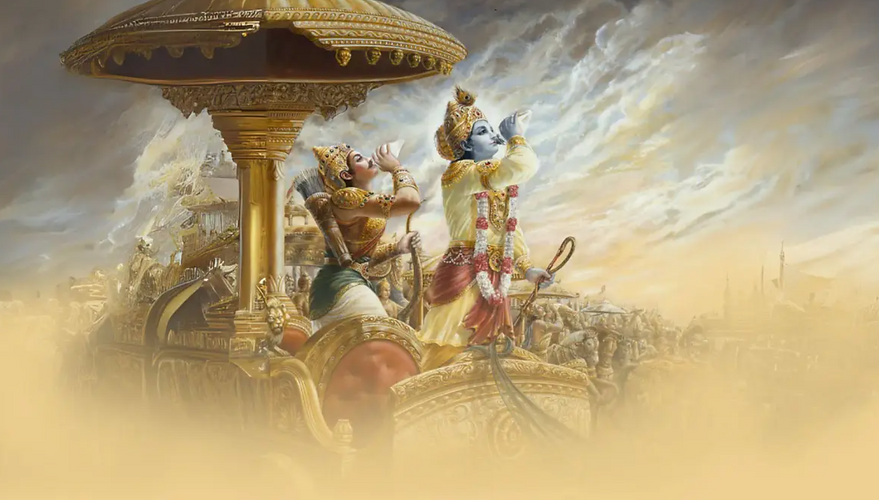
Bhagvad Gita Chapter 12
भगवद् गीता अध्याय १२
Bhagvad Gita Chapter 12 -Bhakti Yog
भगवद गीता का अध्याय १२ - भक्ति योग
Chapter 12 of the Bhagavad Gita, titled Bhakti Yog or the "Yog of Devotion," explores the path of devotion as a means of attaining union with the Divine. Arjun, the warrior prince, inquires from Shri Krishna about the superiority of the path of devotion compared to the path of knowledge (Jnana Yog). This chapter presents a dialogue between Arjun and Shri Krishna, where Krishna explains that while both paths are valid, the path of devotion is more accessible and easier for most people, especially in the current age of Kali Yuga.
In this chapter, Shri Krishna emphasizes that true devotion is marked by selflessness, purity of heart, and unwavering faith in God. He delineates the qualities of a true devotee, which include humility, non-attachment, forgiveness, patience, and compassion. The devotee must also transcend desires and ego, surrendering completely to the will of the Divine.
Shri Krishna further clarifies that the essence of Bhakti is not merely rituals or external acts of worship but the inner attitude of surrender and love toward the Divine. Such devotion, Shri Krishna assures, leads to liberation (moksh), freeing the soul from the cycle of birth and death.
Through this chapter, the Bhagavad Gita provides a practical and spiritual framework for those seeking a closer connection with the Divine. By emphasizing qualities such as detachment, equanimity, and humility, Chapter 12 of the Gita highlights the importance of cultivating a heart that is devoted to the highest ideal of spiritual truth.
भगवद गीता का अध्याय 12, जिसका शीर्षक भक्ति योग है, ईश्वर से मिलन प्राप्त करने के साधन के रूप में भक्ति के मार्ग की खोज करता है। योद्धा राजकुमार अर्जुन, भगवान कृष्ण से ज्ञान के मार्ग (ज्ञान योग) की तुलना में भक्ति के मार्ग की श्रेष्ठता के बारे में पूछता है। यह अध्याय अर्जुन और कृष्ण के बीच एक संवाद प्रस्तुत करता है, जहाँ कृष्ण बताते हैं कि जबकि दोनों मार्ग मान्य हैं, भक्ति का मार्ग अधिकांश लोगों के लिए अधिक सुलभ और आसान है, खासकर कलियुग के वर्तमान युग में। इस अध्याय में, कृष्ण इस बात पर जोर देते हैं कि सच्ची भक्ति निस्वार्थता, हृदय की पवित्रता और ईश्वर में अटूट विश्वास से चिह्नित होती है। वह एक सच्चे भक्त के गुणों का वर्णन करते हैं, जिसमें विनम्रता, अनासक्ति, क्षमा, धैर्य और करुणा शामिल हैं। भक्त को इच्छाओं और अहंकार से भी ऊपर उठकर पूरी तरह से ईश्वर की इच्छा के सामने आत्मसमर्पण करना चाहिए। भगवान कृष्ण आगे स्पष्ट करते हैं कि भक्ति का सार केवल अनुष्ठान या पूजा के बाहरी कार्य नहीं हैं, बल्कि ईश्वर के प्रति समर्पण और प्रेम का आंतरिक दृष्टिकोण है। कृष्ण कहते हैं कि ऐसी भक्ति मोक्ष की ओर ले जाती है, जो आत्मा को जन्म और मृत्यु के चक्र से मुक्त करती है। इस अध्याय के माध्यम से, भगवद गीता उन लोगों के लिए एक व्यावहारिक और आध्यात्मिक रूपरेखा प्रदान करती है जो ईश्वर के साथ घनिष्ठ संबंध चाहते हैं। वैराग्य, समता और विनम्रता जैसे गुणों पर जोर देकर, गीता का अध्याय 12 आध्यात्मिक सत्य के उच्चतम आदर्श के प्रति समर्पित हृदय विकसित करने के महत्व पर प्रकाश डालता है।
अर्जुन उवाच |
एवं सततयुक्ता ये भक्तास्त्वां पर्युपासते |
ये चाप्यक्षरमव्यक्तं तेषां के योगवित्तमा: || 1||
"Arjun said: Those who constantly engage in Your worship with devotion and those who meditate upon the imperishable, formless aspect of the Supreme, who among them are considered the most advanced in their spiritual knowledge?"
In this verse, Arjun asks Shri Krishna about the two main paths of devotion. One group of devotees worships the personal form of the Divine (Shri Krishna), while the other group focuses on the formless, unmanifest aspect of God. Arjun is seeking to understand which of these two forms of worship is superior in terms of spiritual growth. His question reflects his desire to know which approach leads to the highest realization and whether one path is better suited for different types of spiritual seekers. Arjun's inquiry is not just about which path is superior, but also which is more effective in leading to liberation and a deeper connection with the Divine.
"अर्जुन ने कहा: जो लोग आपकी निरंतर भक्ति करते हैं और जो अव्यक्त, निराकार परमात्मा का ध्यान करते हैं, इनमें से कौन सा योगी अधिक उन्नत है?"
इस श्लोक में अर्जुन श्री कृष्ण से दो प्रमुख भक्ति मार्गों के बारे में पूछते हैं। एक मार्ग में भक्त भगवान के व्यक्त रूप की पूजा करते हैं, जबकि दूसरे मार्ग में भक्त परमात्मा के निराकार, अव्यक्त रूप में ध्यान करते हैं। अर्जुन यह जानना चाहते हैं कि इनमें से कौन सा मार्ग अधिक उन्नत है और किस मार्ग से आत्मा की मुक्ति और परम सत्य की प्राप्ति में अधिक सहायता मिलती है। उनका प्रश्न यह दर्शाता है कि वे जानना चाहते हैं कि कौन सा मार्ग सरल, प्रभावी और अधिक उपयुक्त है, जो किसी भी प्रकार के भक्त के लिए आत्मिक उन्नति की दिशा में सबसे अच्छा साबित हो।
श्रीभगवानुवाच |
मय्यावेश्य मनो ये मां नित्ययुक्ता उपासते |
श्रद्धया परयोपेतास्ते मे युक्ततमा मता: || 2||
"Shri Krishna said: Those who fix their minds on Me and engage in constant devotion, with unwavering faith, are considered to be the most perfectly united with Me."
In this verse, Shri Krishna explains that the devotees who continuously focus their minds on Him with pure devotion and faith are the highest form of yogis. Unlike those who practice meditation on the formless or abstract aspect of the Divine, the path of devotion to a personal deity (like Shri Krishna) leads to a more direct and intimate connection with the Divine. Shri Krishna emphasizes that the key to this connection is unwavering devotion, sincerity, and the complete surrender of the mind. Those who are dedicated to such devotion, with full faith, are regarded as the most accomplished in their spiritual practice, as they establish the strongest bond with God.
"जो लोग मुझमें मनोयोग से लीन होकर, नित्य भक्ति में लगे रहते हैं और पूर्ण श्रद्धा के साथ मेरी उपासना करते हैं, वे मेरे अनुसार सबसे उत्तम योगी माने जाते हैं।"
इस श्लोक में भगवान श्री कृष्ण यह बताते हैं कि जो भक्त निरंतर भगवान के रूप में ध्यान और भक्ति करते हैं, और जिनकी श्रद्धा दृढ़ होती है, वे सबसे उत्तम योगी होते हैं। भगवान के निराकार रूप की बजाय, व्यक्त रूप में भक्ति करने वाले भक्तों के लिए भगवान के साथ एक सीधा और सजीव संबंध बनता है। कृष्ण ने यह स्पष्ट किया कि भक्ति में जो श्रद्धा, समर्पण और मनोयोग है, वही भक्त को परमात्मा से गहरे संबंध की प्राप्ति कराता है। ऐसे भक्तों को ही सर्वश्रेष्ठ और सबसे उच्च योगी माना जाता है।
ये त्वक्षरमनिर्देश्यमव्यक्तं पर्युपासते | सर्वत्रगमचिन्त्यञ्च कूटस्थमचलन्ध्रुवम् || 3||
सन्नियम्येन्द्रियग्रामं सर्वत्र समबुद्धय: | ते प्राप्नुवन्ति मामेव सर्वभूतहिते रता: || 4||
"Those who worship the imperishable, unmanifest aspect of the Divine, which is beyond description, all-pervading, inconceivable, and immutable, they, with firm determination, engage in their devotion."
"By controlling their senses and having a mind that is even in all situations, such devotees, who are dedicated to the welfare of all beings, attain union with Me."
In these verses, Shri Krishna contrasts the paths of worship. In verse 3, He describes the worshipers of the formless, imperishable, and all-pervading aspect of God. This path requires high mental discipline and deep contemplation on the Divine's transcendental nature. It is for those who seek to understand the formless, eternal principle of existence.
In verse 4, Shri Krishna explains the qualities of devotees who follow this path. They practice self-control, possess a balanced and equanimous mind, and are motivated by a desire to serve the welfare of all living beings. Such devotees, by their disciplined and altruistic approach, ultimately attain unity with Shri Krishna.
"जो लोग निराकार, अव्यक्त, अवर्णनीय, सर्वव्यापी, अप्रतिम और अचल परमात्मा की उपासना करते हैं, वे संकल्पित होकर अपनी भक्ति में लीन रहते हैं।"
"जो लोग इन्द्रियों का निग्रह करके और सर्वत्र समभाव रखने वाले होते हुए, सभी प्राणियों के कल्याण में रत रहते हैं, वे मुझे प्राप्त करते हैं।"
इन श्लोकों में भगवान श्री कृष्ण भक्ति के दो रूपों को स्पष्ट करते हैं। श्लोक 3 में, वे निराकार और अव्यक्त रूप की उपासना करने वाले भक्तों की चर्चा करते हैं, जो परमात्मा के अव्यक्त और शाश्वत रूप पर ध्यान करते हैं। इस मार्ग में उच्च मानसिक अनुशासन और ध्यान की आवश्यकता होती है, क्योंकि भक्त केवल परमात्मा के निराकार रूप में डूबे रहते हैं।
श्लोक 4 में कृष्ण ऐसे भक्तों के गुण बताते हैं, जो अपने इन्द्रियों पर नियंत्रण रखते हैं और जो हर स्थिति में समभाव रखते हैं। वे सभी प्राणियों के भले के लिए कार्य करते हैं, और इस प्रकार, अपने आत्मिक और समाजिक कर्तव्यों का पालन करते हुए भगवान को प्राप्त करते हैं।
क्लेशोऽधिकतरस्तेषामव्यक्तासक्तचेतसाम् ||
अव्यक्ता हि गतिर्दु:खं देहवद्भिरवाप्यते || 5||
"Those whose minds are attached to the formless, unmanifest aspect of the Divine experience greater difficulties. The path to the formless is indeed fraught with suffering, as it is difficult for those embodied in a physical form."
In this verse, Shri Krishna explains that for those whose minds are attached to the formless, unmanifest aspect of the Divine (i.e., those who focus on the abstract and impersonal nature of God), the spiritual journey is harder. The struggle arises because the mind, bound by the physical body, finds it challenging to grasp the formless nature of the Divine. This path requires intense discipline, concentration, and detachment, which can lead to greater hardship for those who are still enmeshed in worldly desires and attachments. Thus, Shri Krishna points out that the pursuit of the formless God can be more difficult for those in physical forms, as it is not as easily accessible to them.
"जो लोग अव्यक्त, निराकार परमात्मा में मन लगाते हैं, उनके लिए यह मार्ग अधिक कठिन होता है। क्योंकि निराकार रूप की प्राप्ति में दुःख होता है, और यह शरीरधारी प्राणियों के लिए कठिन है।"
इस श्लोक में भगवान श्री कृष्ण बताते हैं कि जो भक्त परमात्मा के निराकार रूप में ध्यान करते हैं, उनके लिए यह मार्ग अधिक कठिन है। इसका कारण यह है कि जो व्यक्ति भौतिक रूप में बंधे होते हैं, उनके लिए निराकार परमात्मा को समझना और उस पर ध्यान केंद्रित करना बहुत मुश्किल होता है। इस मार्ग में गहरी साधना, ध्यान, और पूर्ण समर्पण की आवश्यकता होती है, जो शारीरिक इच्छाओं और बंधनों में उलझे हुए लोगों के लिए कठिन हो सकता है। इस प्रकार, कृष्ण यह बताते हैं कि निराकार रूप की उपासना उन व्यक्तियों के लिए ज्यादा कठिन हो सकती है, जो शारीरिक रूप से बंधे होते हैं।
ये तु सर्वाणि कर्माणि मयि संन्न्यस्य मत्परा: | अनन्येनैव योगेन मां ध्यायन्त उपासते || 6||
तेषामहं समुद्धर्ता मृत्युसंसारसागरात् | भवामि नचिरात्पार्थ मय्यावेशितचेतसाम् || 7||
"Those who surrender all their actions to Me, with their minds fixed on Me and without any other thought, and who engage in meditation on Me with exclusive devotion, are considered to be the highest yogis."
"For such devotees, I, O Arjun, quickly deliver them from the ocean of birth and death, as their minds are absorbed in Me."
In these verses, Shri Krishna emphasizes the power of complete surrender and exclusive devotion. He explains that those who offer all their actions to Him, focusing their thoughts only on Him, and engaging in constant meditation with unwavering devotion are the highest form of devotees. Shri Krishna assures that such devotees, whose hearts and minds are wholly absorbed in Him, will be liberated from the cycle of birth and death (samsara) quickly. This liberation comes because their entire being is attuned to the Divine, and Shri Krishna Himself takes responsibility for their salvation.
"जो लोग अपने सभी कार्यों को मुझे समर्पित करके, केवल मुझे ही ध्यान में रखते हुए, किसी अन्य बात पर विचार किए बिना, निरंतर मेरे ध्यान में रहते हैं, वे सबसे श्रेष्ठ योगी माने जाते हैं।"
"ऐसे भक्तों को, अर्जुन, मैं शीघ्र ही मृत्यु के संसार सागर से उबारता हूं, क्योंकि उनके मन और हृदय मुझमें पूरी तरह से लीन होते हैं।"
इन श्लोकों में भगवान श्री कृष्ण पूर्ण समर्पण और अनन्य भक्ति की महिमा बताते हैं। वे कहते हैं कि जो भक्त सभी कार्यों को भगवान को समर्पित करते हैं, केवल उन्हें ही ध्यान में रखते हैं और बिना किसी अन्य विचार के मेरे ध्यान में लीन रहते हैं, वे सबसे उच्च योगी होते हैं। कृष्ण यह आश्वासन देते हैं कि ऐसे भक्तों को, जिनके मन और हृदय पूरी तरह से भगवान में समाहित होते हैं, वे मृत्यु और जन्म के चक्कर से शीघ्र ही उबार लेते हैं। यह मुक्ति इस कारण से मिलती है क्योंकि उनका सम्पूर्ण अस्तित्व भगवान में डूबा हुआ होता है और कृष्ण स्वयं उनकी रक्षा करते हैं।
मय्येव मन आधत्स्व मयि बुद्धिं निवेशय |
निवसिष्यसि मय्येव अत ऊर्ध्वं न संशय: || 8||
"Fix your mind on Me alone, place your intellect in Me, and you will surely live in Me. There is no doubt about this."
In this verse, Shri Krishna advises Arjun to dedicate his mind and intellect entirely to Him. By focusing solely on the Divine, without any distraction or attachment to other desires, one can attain union with God. Shri Krishna assures Arjun that by such exclusive devotion and surrender, he will remain in the Divine consciousness, overcoming doubts and distractions. This teaching emphasizes the importance of undivided attention to the Divine, as it leads to spiritual liberation and lasting peace.
"मुझे ही मन में स्थिर करो, मुझमें अपनी बुद्धि लगाओ, और तुम निश्चय ही मुझमें स्थिर रहोगे, इसमें कोई संदेह नहीं है।"
इस श्लोक में भगवान श्री कृष्ण अर्जुन को अपना मन और बुद्धि पूरी तरह से भगवान में समर्पित करने की सलाह देते हैं। जब कोई व्यक्ति अपने मन और बुद्धि को सिर्फ भगवान में लीन करता है, तो वह Divine चेतना में स्थित हो जाता है। कृष्ण यह आश्वासन देते हैं कि इस प्रकार की निष्ठा और भक्ति से कोई संदेह नहीं रहता, और भक्त भगवान में स्थित रहता है, जिससे शांति और मुक्ति की प्राप्ति होती है। इस शिक्षण से यह स्पष्ट होता है कि भगवान में पूर्ण समर्पण और ध्यान से आत्मा का उद्धार होता है।
अथ चित्तं समाधातुं न शक्नोषि मयि स्थिरम् |
अभ्यासयोगेन ततो मामिच्छाप्तुं धनञ्जय || 9||
"If you are unable to fix your mind steadily on Me, then by the practice of meditation, O Dhananjaya, you should seek to reach Me."
In this verse, Shri Krishna acknowledges that some may find it difficult to concentrate their minds fully on Him, especially due to the distractions of the material world. He suggests that if Arjun or any devotee cannot fix their mind on the Divine with unwavering focus, they can still reach the Divine by practicing regular meditation (Abhyasa Yog). Shri Krishna encourages the devotee to engage in consistent practice, which over time will help them overcome obstacles and gradually establish a deeper connection with Him.
"यदि तुम अपना मन मुझमें स्थिर नहीं कर सकते, तो अभ्यासयोग द्वारा मुझे प्राप्त करने का प्रयास करो, हे धनञ्जय।"
इस श्लोक में भगवान श्री कृष्ण यह स्वीकार करते हैं कि कुछ भक्तों के लिए भगवान में अपना मन स्थिर करना कठिन हो सकता है, खासकर भौतिक संसार की व्यस्तताओं के कारण। वे अर्जुन को यह सलाह देते हैं कि यदि कोई व्यक्ति अपने मन को भगवान में पूरी तरह से स्थिर नहीं कर पा रहा है, तो उसे निरंतर अभ्यास (अभ्यासयोग) के माध्यम से भगवान को प्राप्त करने का प्रयास करना चाहिए। कृष्ण भक्त को यह प्रोत्साहित करते हैं कि निरंतर साधना से वे धीरे-धीरे रुकावटों को पार कर भगवान से गहरे संबंध में स्थापित हो सकते हैं।
अभ्यासेऽप्यसमर्थोऽसि मत्कर्मपरमो भव |
मदर्थमपि कर्माणि कुर्वन्सिद्धिमवाप्स्यसि || 10||
"If you are unable to practice meditation, then dedicate yourself to performing all actions for My sake. By doing so, you will attain perfection."
In this verse, Shri Krishna assures Arjun that even if one is unable to engage in intense meditation or concentration, they can still attain spiritual perfection by dedicating all their actions to the Divine. Shri Krishna encourages the practice of selfless action (Karma Yog) — performing duties without attachment to the results, but solely for the sake of God. By doing so, one can purify their heart and mind, and eventually reach the state of spiritual fulfillment and union with the Divine.
"यदि तुम अभ्यास में समर्थ नहीं हो, तो मेरे लिए समर्पित होकर कर्म करो। इस प्रकार कर्म करते हुए भी तुम सिद्धि प्राप्त करोगे।"
इस श्लोक में भगवान श्री कृष्ण अर्जुन को यह आश्वासन देते हैं कि यदि कोई व्यक्ति गहरे ध्यान या साधना में समर्थ नहीं है, तो भी वह भगवान के लिए समर्पित होकर अपने सभी कर्म कर सकता है और इस प्रकार आत्मिक सिद्धि प्राप्त कर सकता है। कृष्ण आत्मless कार्य (कर्म योग) का अभ्यास करने के लिए प्रेरित करते हैं — जिसमें कर्म केवल भगवान के लिए किए जाते हैं, न कि परिणामों के लिए। इस प्रकार, व्यक्ति अपने मन और हृदय को शुद्ध करता है और अंततः भगवान के साथ एकता और मुक्ति प्राप्त करता है।
अथैतदप्यशक्तोऽसि कर्तुं मद्योगमाश्रित: |
सर्वकर्मफलत्यागं तत: कुरु यतात्मवान् || 11||
"If you are unable to do even this, then by renouncing the fruits of all actions, take refuge in My yog, with your mind focused on Me. By doing so, you will attain liberation."
In this verse, Shri Krishna provides an alternative for those who find it difficult to practice even selfless action (Karma Yog). He advises that if one cannot perform actions with detachment or meditate on the Divine, they can still attain spiritual growth by renouncing the results of all actions (giving up attachment to outcomes) and dedicating themselves to His yog. By surrendering the fruits of their actions and focusing their mind on Him, they will ultimately attain liberation (moksh), as their actions will no longer be driven by personal desires but by a divine purpose.
"यदि तुम यह भी नहीं कर सकते, तो सभी कर्मों के फल का त्याग करके मेरी योग में शरण लो और अपने मन को मुझमें स्थिर करके कर्म करो। इस प्रकार तुम मुक्ति प्राप्त करोगे।"
इस श्लोक में भगवान श्री कृष्ण उन भक्तों के लिए एक विकल्प प्रस्तुत करते हैं जो कर्मयोग (निःस्वार्थ कर्म) का पालन नहीं कर पा रहे हैं। वे कहते हैं कि यदि कोई व्यक्ति अपने कर्मों को निष्कलंक और बिना किसी व्यक्तिगत इच्छाओं के नहीं कर सकता, तो उसे कर्मों के फल का त्याग करके भगवान की योग में शरण लेनी चाहिए। भगवान के प्रति समर्पण और उनके ध्यान में मन को स्थिर करके किए गए कर्म आत्मिक उन्नति की ओर मार्गदर्शित करते हैं, और ऐसे कर्मी को अंततः मुक्ति प्राप्त होती है।
श्रेयो हि ज्ञानमभ्यासाज्ज्ञानाद्ध्यानं विशिष्यते |
ध्यानात्कर्मफलत्यागस्त्यागाच्छान्तिरनन्तरम् || 12||
"Better than practice is knowledge, and better than knowledge is meditation. Through meditation, the renunciation of the fruits of action is attained, and from renunciation comes immediate peace."
In this verse, Shri Krishna explains the hierarchy of spiritual practices. He highlights that while practicing yog (Abhyasa) is beneficial, true wisdom (Jnana) is superior to practice. Even more superior is meditation (Dhyana), as it helps in transcending attachment to the results of actions. Through meditation, one can surrender the fruits of all actions, which leads to inner peace. Shri Krishna emphasizes that peace follows from renouncing desires and results, and meditation is the most effective way to achieve this state of equanimity.
"अभ्यास से ज्ञान श्रेष्ठ है, और ज्ञान से ध्यान श्रेष्ठ है। ध्यान से कर्मफलत्याग होता है, और त्याग से तुरंत शांति प्राप्त होती है।"
इस श्लोक में भगवान श्री कृष्ण आत्मिक साधना के विभिन्न स्तरों को स्पष्ट करते हैं। वे कहते हैं कि अभ्यास (योग) महत्वपूर्ण है, लेकिन उससे भी श्रेष्ठ ज्ञान है। ज्ञान से भी श्रेष्ठ ध्यान है, क्योंकि ध्यान के माध्यम से व्यक्ति अपने कर्मों के फल से अज्ञात रूप से मुक्त हो जाता है। जब कोई भक्त अपने कार्यों के परिणामों का त्याग करता है, तो उसे तुरंत शांति प्राप्त होती है। कृष्ण यह बताते हैं कि ध्यान के द्वारा कर्मफल का त्याग करना और उसे भगवान में समर्पित करना शांति और आत्मिक संतुलन की प्राप्ति का मार्ग है।
अद्वेष्टा सर्वभूतानां मैत्र: करुण एव च | निर्ममो निरहङ्कार: समदु:खसुख: क्षमी || 13||
सन्तुष्ट: सततं योगी यतात्मा दृढनिश्चय: | मय्यर्पितमनोबुद्धिर्यो मद्भक्त: स मे प्रिय: || 14||
"One who has no hatred for anyone, who is friendly and compassionate, free from ego and pride, and who remains unaffected by joy and sorrow, and is forgiving, such a person is dear to Me."
"A yogi who is always content, whose mind and intellect are focused on Me, and who is firmly determined, and whose actions are dedicated to Me with devotion, such a devotee is very dear to Me."
In these verses, Shri Krishna describes the qualities of a true devotee. The person who is free from hate, ego, and pride, who remains calm and patient in both pleasure and pain, and who is compassionate towards others, becomes dear to God. Such a person remains unwavering in their devotion and dedicates all actions to the Divine with a firm determination and sense of peace.Shri Krishna highlights that the qualities of humility, equanimity, and a mind focused on Him make one extremely beloved to the Divine.
"जो व्यक्ति सभी प्राणियों के प्रति द्वेष रहित होता है, जो मैत्रीपूर्ण और करुणामय होता है, जो ममता और अहंकार से मुक्त होता है, जो सुख-दुःख में सम रहता है और क्षमाशील होता है, वह मुझे प्रिय है।"
"जो योगी हमेशा संतुष्ट रहता है, जिसका मन और बुद्धि मुझमें संलग्न रहते हैं, जो दृढ़ निश्चयी होता है, और जो मेरे लिए समर्पित होकर कर्म करता है, वह भक्त मुझे अत्यंत प्रिय है।"
इन श्लोकों में भगवान श्री कृष्ण एक सच्चे भक्त की विशेषताएँ बताते हैं। वह भक्त जो द्वेष, अहंकार और ममता से मुक्त होता है, जो सुख-दुःख में सम रहता है, और जो सभी प्राणियों के प्रति करुणा और मैत्री का भाव रखता है, वह भगवान को प्रिय होता है। इसके साथ ही, जो व्यक्ति हर समय संतुष्ट रहता है, और जिसका मन और बुद्धि भगवान में समर्पित होती हैं, वह भक्त भगवान का प्रिय होता है।
यस्मान्नोद्विजते लोको लोकान्नोद्विजते च य: |
हर्षामर्षभयोद्वेगैर्मुक्तो य: स च मे प्रिय: || 15||
"One who neither disturbs the world nor is disturbed by it, who is free from joy, anger, fear, and anxiety, such a person is dear to Me."
In this verse, Shri Krishna describes a person who remains unaffected by the ups and downs of life. They do not cause turmoil in the world, nor do they allow the world to disturb their inner peace. Such a person is free from negative emotions like excessive joy, anger, fear, and anxiety, and is calm in all circumstances.Shri Krishna emphasizes that this inner equanimity and peace make such a person especially dear to Him.
"जो व्यक्ति न तो संसार को विचलित करता है, और न ही संसार उससे विचलित होता है, जो हर्ष, क्रोध, भय और उद्वेग से मुक्त रहता है, वह मुझे प्रिय है।"
इस श्लोक में भगवान श्री कृष्ण उस व्यक्ति का वर्णन करते हैं जो जीवन की उठापटक से अप्रभावित रहता है। वह न तो दुनिया को परेशान करता है, और न ही दुनिया उसे परेशान करती है। ऐसे व्यक्ति के भीतर हर्ष, क्रोध, भय और चिंता जैसे नकारात्मक भावनाओं का कोई स्थान नहीं होता, और वह हर स्थिति में शांत रहता है। कृष्ण यह बताते हैं कि यह आंतरिक संतुलन और शांति भगवान के प्रिय भक्त को बनाती है।
अनपेक्ष: शुचिर्दक्ष उदासीनो गतव्यथ: |
सर्वारम्भपरित्यागी यो मद्भक्त: स मे प्रिय: || 16||
"One who is without expectations, pure, self-controlled, unaffected by sorrow, and renounces all undertakings, such a devotee, who is dedicated to Me, is dear to Me."
In this verse, Shri Krishna explains that a true devotee is free from desires or expectations or any worldly gains, leading a pure and disciplined life. They do not allow sorrow to affect them and are unaffected by the challenges of the world. Additionally, they renounce attachment to the outcomes of all actions and surrender them to the Divine. This kind of devotion, marked by inner purity, control, and renunciation, makes the devotee particularly dear to Shri Krishna.
"जो व्यक्ति अपेक्षाओं से मुक्त, शुद्ध, सक्षम, दुःख से अप्रभावित और सभी कार्यों का त्याग करने वाला होता है, वह मेरा भक्त मुझे प्रिय है।"
इस श्लोक में भगवान श्री कृष्ण एक सच्चे भक्त की विशेषताओं का वर्णन करते हैं। वह भक्त जो किसी भी प्रकार की इच्छाओं या अपेक्षाओं से मुक्त होता है, जो शुद्ध और संयमित जीवन जीता है, और जो दुःख से अप्रभावित रहता है, वह भगवान को प्रिय होता है। साथ ही, वह व्यक्ति सभी कार्यों के परिणामों से मुक्त होकर उन्हें भगवान को समर्पित कर देता है। ऐसे भक्त की यह शुद्धता, संयम और कार्यों का त्याग भगवान के साथ एक गहरे संबंध को बनाता है, जो उन्हें अत्यंत प्रिय बनाता है।
यो न हृष्यति न द्वेष्टि न शोचति न काङ् क्षति |
शुभाशुभपरित्यागी भक्तिमान्य: स मे प्रिय: || 17||
"One who neither rejoices nor hates, who does not grieve or long for anything, and who renounces both good and bad, such a devotee is dear to Me."
In this verse, Shri Krishna highlights the importance of equanimity in a true devotee. The person who remains unaffected by joy and sorrow, who does not harbor hatred or attachment, and who renounces both favorable and unfavorable outcomes, is considered a true devotee. This kind of balance and detachment from worldly dualities make such a person especially dear to God, as their mind and actions are in perfect harmony with the Divine will.
"जो न तो हर्षित होता है, न द्वेष करता है, न शोक करता है, न किसी चीज़ की इच्छा करता है, और जो शुभाशुभ का त्याग करता है, वह भक्त मुझे प्रिय है।"
इस श्लोक में भगवान श्री कृष्ण एक सच्चे भक्त की मानसिक स्थिति का वर्णन करते हैं। वह भक्त जो सुख-दुःख, हर्ष-द्वेष, शोक और इच्छाओं से अप्रभावित रहता है, और जो अच्छे-बुरे के सभी परिणामों से दूर रहता है, वही भगवान का प्रिय भक्त होता है। ऐसे व्यक्ति का आंतरिक संतुलन और भक्ति उसे भगवान के सबसे करीबी बनाती है, क्योंकि उनकी क्रियाएँ और विचार पूरी तरह से दिव्य इच्छाओं के अनुरूप होते हैं।
सम: शत्रौ च मित्रे च तथा मानापमानयो: | शीतोष्णसुखदु:खेषु सम: सङ्गविवर्जित: || 18||
तुल्यनिन्दास्तुतिर्मौनी सन्तुष्टो येन केनचित् | अनिकेत: स्थिरमतिर्भक्तिमान्मे प्रियो नर: || 19||
"One who is the same to an enemy and a friend, and who is free from honor and dishonor, who is unaffected by heat, cold, pleasure, and pain, and avoids attachment, such a person is dear to Me."
"One who is indifferent to praise and blame, who is silent, content with whatever they have, without a permanent dwelling, and who has a steady mind, that person is dear to Me."
In these verses, Shri Krishna describes the qualities of a true devotee who has transcended all worldly attachments and dualities. A devotee who treats both friend and foe equally, remains unaffected by honor or dishonor, and maintains calmness in the face of heat, cold, or any emotional disturbance is truly dear to God. Furthermore, someone who remains indifferent to both praise and criticism, is content with whatever comes their way, lives without attachment to any particular place, and has a steady, unwavering mind is particularly cherished by Shri Krishna.
"जो शत्रु और मित्र, सम्मान और अपमान, शीत, उष्ण, सुख और दुःख में सम रहता है और संग से दूर रहता है, वह मुझे प्रिय है।"
"जो निंदा और स्तुति से अप्रभावित रहता है, जो मौन रहता है, जो जो कुछ भी प्राप्त होता है उससे संतुष्ट रहता है, जिसका कोई स्थिर निवास नहीं है और जिसकी सोच स्थिर होती है, वह भक्त मुझे प्रिय है।"
इन श्लोकों में भगवान श्री कृष्ण उस भक्त की विशेषताएँ बताते हैं जो सांसारिक द्वंद्वों और बंधनों से पार हो चुका होता है। वह भक्त जो शत्रु और मित्र, सम्मान और अपमान, सुख और दुःख में सम रहता है और जिनके लिए कोई भी बाहरी परिस्थिति या द्वार द्वार का प्रभाव नहीं होता। साथ ही, वह व्यक्ति जो निंदा और स्तुति से अप्रभावित रहता है, जो किसी विशेष स्थान या स्थिति का इच्छुक नहीं है और जिसका मन स्थिर होता है, वह भगवान का प्रिय भक्त होता है।
ये तु धर्म्यामृतमिदं यथोक्तं पर्युपासते |
श्रद्दधाना मत्परमा भक्तास्तेऽतीव मे प्रिया: || 20||
"Those who, with full faith, follow this immortal teaching of Mine, as described, with great devotion, are exceedingly dear to Me."
In this verse,Shri Krishna emphasizes the significance of unwavering faith and devotion in following His teachings. He reveals that those who sincerely dedicate themselves to living according to His words, with complete trust and commitment, are extremely dear to Him. Shri Krishna highlights that such devotees, who deeply value the eternal wisdom He shares, stand out as the most beloved in His eyes.
"जो लोग इस अमर धर्म को पूरी श्रद्धा से, जैसा कि मैंने बताया है, बड़े भक्तिभाव से पालन करते हैं, वे मुझे अत्यधिक प्रिय होते हैं।"
इस श्लोक में भगवान श्री कृष्ण अपनी शिक्षाओं के प्रति अडिग श्रद्धा और समर्पण को महत्वपूर्ण बताते हैं। वे कहते हैं कि जो भक्त पूरी निष्ठा और विश्वास के साथ उनके उपदेशों को आत्मसात करते हैं, वे उनके लिए अत्यधिक प्रिय होते हैं। भगवान कृष्ण यह स्पष्ट करते हैं कि ऐसे भक्त जो उनके अमर ज्ञान को गहरे श्रद्धाभाव से मानते हैं, वे उनके सबसे प्रिय होते हैं।
Chapter 12 of the Bhagavad Gita, titled "Bhakti Yog" (The Yog of Devotion), focuses on the importance of devotion (Bhakti) in spiritual progress. Arjun asks Shri Krishna whether the path of knowledge (Jnana Yog) or the path of devotion (Bhakti Yog) is superior. Shri Krishna explains that both paths ultimately lead to the same goal of spiritual liberation, but Bhakti Yog is simpler and more accessible.
Shri Krishna emphasizes that devotion involves complete surrender to God with love, trust, and unwavering faith, and it is the most effective way to attain self-realization. He explains that a true devotee practices humility, patience, forgiveness, compassion, and self-restraint. The devotee is free from anger, greed, pride, and attachment, and maintains equanimity in both happiness and suffering.
Shri Krishna reassures Arjun that even if someone has imperfections but sincerely follows the path of devotion, they will still be accepted by Him. The path of devotion doesn’t require perfect knowledge or detachment but demands a pure heart and total dedication to God. By cultivating virtuous qualities and focusing on God with love, a devotee can transcend material distractions and reach spiritual liberation.
In conclusion, Shri Krishna declares that Bhakti Yog is the most straightforward and effective path to self-realization, highlighting that God's grace is available to all sincere devotees, no matter their background or imperfections.
भगवद गीता के 12वें अध्याय का नाम "भक्ति योग" है, जो भक्ति के महत्व पर केंद्रित है। अर्जुन भगवान श्रीकृष्ण से पूछते हैं कि ज्ञान योग (Jnana Yog) और भक्ति योग (Bhakti Yog) में से कौन सा मार्ग श्रेष्ठ है। श्रीकृष्ण बताते हैं कि दोनों मार्ग अंततः एक ही लक्ष्य—आध्यात्मिक मुक्ति—की ओर ले जाते हैं, लेकिन भक्ति योग सरल और अधिक सुलभ है।
श्रीकृष्ण ने बताया कि भक्ति का अर्थ है भगवान के प्रति पूर्ण समर्पण, प्रेम, विश्वास और अडिग श्रद्धा। यह आत्म-निर्वासन का सबसे प्रभावी मार्ग है। भक्ति योग में भक्त को विनम्रता, धैर्य, क्षमा, करुणा और आत्म-नियंत्रण का पालन करना चाहिए। भक्त को क्रोध, लालच, अहंकार और आसक्ति से मुक्त रहना चाहिए और सुख-दुख में समभाव रखना चाहिए।
श्रीकृष्ण अर्जुन को आश्वस्त करते हैं कि यदि कोई भक्त कुछ कमियों के बावजूद सच्चे दिल से भक्ति का अनुसरण करता है, तो वह भगवान के द्वारा स्वीकार किया जाएगा। भक्ति योग में न तो गहरी विद्या या पूर्ण विरक्ति की आवश्यकता होती है, बल्कि शुद्ध हृदय और भगवान के प्रति समर्पण की आवश्यकता होती है।
अंत में, श्रीकृष्ण यह घोषित करते हैं कि भक्ति योग आत्म-ज्ञान प्राप्त करने का सबसे सीधा और प्रभावी मार्ग है, और भगवान की कृपा सभी सच्चे भक्तों के लिए सुलभ है, चाहे उनकी पृष्ठभूमि या imperfections कोई भी हो।