
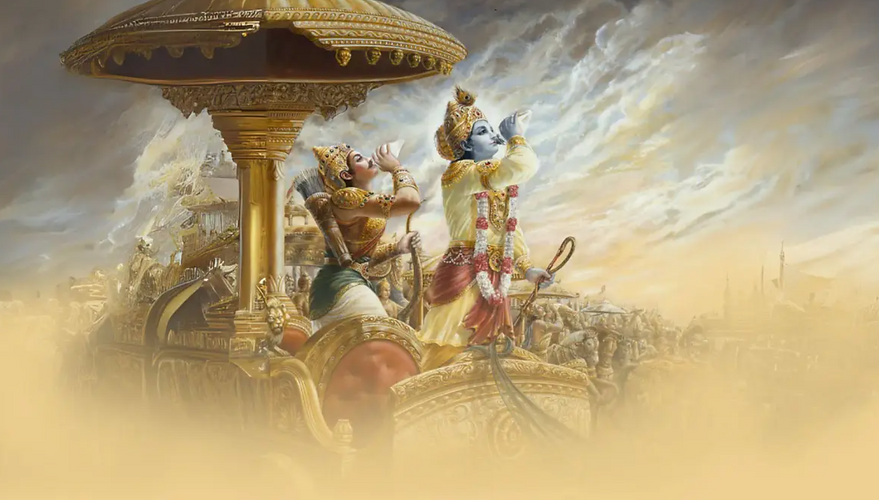
Bhagvad Gita Chapter 8
भगवद् गीता अध्याय ८
Bhagvad Gita Chapter 8 - Akshara-Parabrahma Yog
भगवद गीता का अध्याय ८ - अक्षर-परब्रह्म योग
Chapter 8 of the Bhagavad Gita, titled Akshara-Parabrahma Yog, explores the nature of the Supreme Reality and the path to attaining liberation. The chapter begins with Arjun's inquiry about Brahman (the Absolute Truth), Adhyatma (the Self), Karma (action), Adhibhuta (the material world), Adhidaiva (the divine), and Adhiyajna (sacrifice). His curiosity sets the stage for Shri Krishna’s profound teachings on the ultimate goal of life.
Shri Krishna explains that those who remember Him at the time of death attain His eternal abode, and comes out of the cycle of birth and death. He highlights the power of devotion (bhakti) and meditation (yog) in achieving liberation. The chapter also introduces the significance of Om, the sacred syllable, as a means of attaining divine consciousness.
Shri Krishna contrasts the two cosmic paths, one leading to liberation (Brahman) and the other to rebirth. He reassures Arjun that a devoted seeker, who constantly meditates upon the Supreme, reaches the eternal state beyond suffering.
This chapter emphasizes unwavering faith, spiritual discipline, and the importance of the final moment of life in determining one's ultimate destiny. It serves as a guide for seekers aiming for self-realization and union with the Supreme Being.
This chapter, called Akshara-Parabrahma Yog, reveals the eternal and imperishable nature of the Supreme Being. It emphasizes unwavering devotion, meditation, and the power of the last thought at death in shaping one's afterlife. Shri Krishna’s answers guide seekers on how to transcend the material world and unite with the divine.
भगवद गीता का अध्याय 8, जिसका शीर्षक अक्षर-परब्रह्म योग है, सर्वोच्च वास्तविकता की प्रकृति और मुक्ति प्राप्त करने के मार्ग की खोज करता है। अध्याय की शुरुआत अर्जुन द्वारा ब्रह्म (परम सत्य), अध्यात्म (स्वयं), कर्म (क्रिया), अधिभूत (भौतिक संसार), अधिदैव (दिव्य), और अधियज्ञ (बलिदान) के बारे में पूछताछ से होती है। उनकी जिज्ञासा जीवन के अंतिम लक्ष्य पर कृष्ण की गहन शिक्षाओं के लिए मंच तैयार करती है।
कृष्ण बताते हैं कि जो लोग मृत्यु के समय उन्हें याद करते हैं, वे उनके शाश्वत निवास को प्राप्त करते हैं, और जन्म और मृत्यु के चक्र से बाहर आते हैं। वे मुक्ति प्राप्त करने में भक्ति और ध्यान (योग) की शक्ति पर प्रकाश डालते हैं। अध्याय दिव्य चेतना प्राप्त करने के साधन के रूप में पवित्र शब्द ओम के महत्व का भी परिचय देता है।
कृष्ण दो ब्रह्मांडीय मार्गों की तुलना करते हैं - एक मुक्ति (ब्रह्म) की ओर ले जाता है और दूसरा पुनर्जन्म की ओर। वह अर्जुन को आश्वस्त करते हैं कि एक समर्पित साधक, जो लगातार सर्वोच्च का ध्यान करता है, दुख से परे शाश्वत अवस्था को प्राप्त करता है।
यह अध्याय अटूट विश्वास, आध्यात्मिक अनुशासन और किसी के अंतिम भाग्य को निर्धारित करने में जीवन के अंतिम क्षण के महत्व पर जोर देता है। यह आत्म-साक्षात्कार और सर्वोच्च सत्ता के साथ मिलन के लक्ष्य वाले साधकों के लिए एक मार्गदर्शक के रूप में कार्य करता है।
अक्षर-परब्रह्म योग नामक यह अध्याय सर्वोच्च सत्ता की शाश्वत और अविनाशी प्रकृति को प्रकट करता है। यह अटूट भक्ति, ध्यान और मृत्यु के बाद के जीवन को आकार देने में अंतिम विचार की शक्ति पर जोर देता है। कृष्ण के उत्तर साधकों को भौतिक दुनिया से परे जाने और दिव्य के साथ एक होने के तरीके के बारे में मार्गदर्शन करते हैं।
श्री अर्जुन उवाच:
किं तद् ब्रह्म किमध्यात्मं किं कर्म पुरुषोत्तम |
अधिभूतं च किं प्रोक्तमधिदैवं किमुच्यते ॥ १॥
Arjun said: “What is Brahman? What is Adhyatma (the Self)? What is Karma? What is called Adhibhut (the material world), and what is said to be Adhidaiv (the divine)?"
In this shlok, Arjun asks Shri Krishna fundamental spiritual questions about the nature of existence, self, and cosmic principles. This inquiry sets the stage for Shri Krishna’s teachings on the eternal soul, the imperishable Brahman, and the ultimate purpose of life.
Understanding these concepts leads to liberation. He also says that remembering Him at the time of death ensures one’s union with the divine. This chapter, provides deep insights into transcendence, devotion, and the path to the Supreme. This shlok marks the beginning of Shri Krishna’s teachings on the process of attaining liberation and the ultimate goal of life. Shri Krishna explains that remembering Him at the time of death leads one to the supreme destination, free from the cycle of birth and death.
अर्जुन ने कहा: "ब्रह्म क्या है? अध्यात्म (स्वयं) क्या है? कर्म क्या है? अधिभूत (भौतिक जगत) किसे कहते हैं, और अधिदैव (दिव्य) किसे कहते हैं?"
इस श्लोक में, अर्जुन श्रीकृष्ण से अस्तित्व, आत्मा और ब्रह्मांडीय सिद्धांतों की प्रकृति के बारे में मौलिक आध्यात्मिक प्रश्न पूछता है। यह पूछताछ शाश्वत आत्मा, अविनाशी ब्रह्म और जीवन के अंतिम उद्देश्य पर श्रीकृष्ण की शिक्षाओं के लिए मंच तैयार करती है।
इन अवधारणाओं को समझने से मुक्ति मिलती है। वे यह भी कहते हैं कि मृत्यु के समय उन्हें याद करने से व्यक्ति का ईश्वर से मिलन सुनिश्चित होता है। यह अध्याय, पारलौकिकता, भक्ति और सर्वोच्च के मार्ग के बारे में गहन अंतर्दृष्टि प्रदान करता है। यह श्लोक मुक्ति प्राप्त करने की प्रक्रिया और जीवन के अंतिम लक्ष्य पर श्रीकृष्ण की शिक्षाओं की शुरुआत को चिह्नित करता है। कृष्ण बताते हैं कि मृत्यु के समय उन्हें याद करने से व्यक्ति जन्म और मृत्यु के चक्र से मुक्त होकर परम गंतव्य की ओर जाता है।
श्री अर्जुन उवाच:
अधियज्ञः कथं कोऽत्र देहेऽस्मिन्मधुसूदन |
प्रयाणकाले च कथं ज्ञेयोऽसि नियतात्मभिः ॥ २॥
Arjun said: "O Madhusudan (Krishna), who is Adhiyajna (the Lord of sacrifice) in this body? And how are You to be known at the time of death by those who have mastered themselves?"
In this verse, Arjun continues his inquiry, asking Shri Krishna to clarify the concept of Adhiyajna, which refers to the Supreme Being presiding over all sacrifices. He also seeks to understand how a yogi or devotee can realize Supreme at the crucial moment of death.
This question leads to Shri Krishna’s detailed explanation of the process of transcendence. He later reveals that by meditating on Him with unwavering devotion, one can attain liberation and reach His divine abode. This shlok highlights the importance of self-discipline, spiritual knowledge, and devotion in preparing for the final journey beyond life and death.
अर्जुन ने कहा: "हे मधुसूदन (कृष्ण), इस शरीर में अधियज्ञ (यज्ञ का स्वामी) कौन है? और जो लोग अपने आप पर नियंत्रण कर चुके हैं, वे मृत्यु के समय आपको कैसे जान सकते हैं?"
इस श्लोक में, अर्जुन अपनी जिज्ञासा जारी रखते हुए कृष्ण से अधियज्ञ की अवधारणा को स्पष्ट करने के लिए कहते हैं, जिसका अर्थ है सभी यज्ञों की अध्यक्षता करने वाला सर्वोच्च व्यक्ति। वह यह भी समझना चाहता है कि मृत्यु के महत्वपूर्ण क्षण में एक योगी या भक्त सर्वोच्च को कैसे प्राप्त कर सकता है।
यह प्रश्न श्री कृष्ण द्वारा पारलौकिकता की प्रक्रिया के बारे में विस्तृत व्याख्या की ओर ले जाता है। बाद में वे बताते हैं कि अटूट भक्ति के साथ उनका ध्यान करने से व्यक्ति मुक्ति प्राप्त कर सकता है और उनके दिव्य निवास तक पहुँच सकता है। यह श्लोक जीवन और मृत्यु से परे अंतिम यात्रा की तैयारी में आत्म-अनुशासन, आध्यात्मिक ज्ञान और भक्ति के महत्व पर प्रकाश डालता है।
श्री भगवानुवाच:
अक्षरं ब्रह्म परमं स्वभावोऽध्यात्ममुच्यते |
भूतभावोद्भवकरो विसर्गः कर्मसंज्ञितः ॥ ३॥
The Supreme Lord said: "The eternal, imperishable reality (Akshara) is Brahman. One’s own nature (Swabhava) is called Adhyatma (the individual self). The creative force that causes the existence of beings is known as Karma (action)."
In this shlok, Shri Krishna defines three fundamental spiritual concepts:
Brahman (Akshara): The ultimate, unchanging, eternal reality beyond birth and death.
Adhyatma (Swabhav): The inner self or the individual consciousness.
Karma: The force of action that leads to creation and sustains the material world.
Shri Krishna explains that understanding these concepts helps a seeker realize the nature of existence and liberation. By recognizing the eternal soul beyond bodily experiences, one can transcend suffering. This verse sets the foundation for deeper discussions on how devotion, knowledge, and detachment lead to ultimate freedom (moksh)
परमपिता परमेश्वर ने कहा: "शाश्वत, अविनाशी वास्तविकता (अक्षर) ब्रह्म है। व्यक्ति का अपना स्वभाव (स्वभाव) अध्यात्म (व्यक्तिगत स्व) कहलाता है। सृजनात्मक शक्ति जो प्राणियों के अस्तित्व का कारण बनती है, उसे कर्म (क्रिया) कहते हैं।"
इस श्लोक में, कृष्ण तीन मौलिक आध्यात्मिक अवधारणाओं को परिभाषित करते हैं:
ब्रह्म (अक्षर): जन्म और मृत्यु से परे परम, अपरिवर्तनीय, शाश्वत वास्तविकता।
अध्यात्म (स्वभाव): आंतरिक आत्म या व्यक्तिगत चेतना।
कर्म: क्रिया की वह शक्ति जो सृजन की ओर ले जाती है और भौतिक दुनिया को बनाए रखती है।
कृष्ण बताते हैं कि इन अवधारणाओं को समझने से साधक को अस्तित्व और मुक्ति की प्रकृति का एहसास करने में मदद मिलती है। शारीरिक अनुभवों से परे शाश्वत आत्मा को पहचानकर, व्यक्ति दुख से पार पा सकता है। यह श्लोक इस बात पर गहन चर्चा की नींव रखता है कि कैसे भक्ति, ज्ञान और वैराग्य परम स्वतंत्रता (मोक्ष) की ओर ले जाते हैं।
श्री भगवानुवाच:
अधिभूतं क्षरो भावः पुरुषश्चाधिदैवतम् |
अधियज्ञोऽहमेवात्र देहे देहभृतां वर ॥ ४॥
The Supreme Lord said: "The perishable material nature is called Adhibhut, and the cosmic divine personality (Purush) is Adhidaiv. I alone am Adhiyajna, present within this body, O best among embodied beings (Arjun)."
Shri Krishna further explains key spiritual principles:
Adhibhut: The ever-changing material world, subject to decay and destruction.
Adhidaiv: The cosmic controller, representing divine forces governing the universe.
Adhiyajna: Shri Krishna Himself, residing in the hearts of all beings as the ultimate recipient of all sacrifices.
By understanding these truths, a seeker realizes Shri Krishna’s all-pervading presence. This knowledge helps one transcend material bondage and attain spiritual liberation. Shri Krishna emphasizes that He is the Supreme Being guiding every aspect of existence, and by remembering Him, one can achieve ultimate freedom (moksh).
परम प्रभु ने कहा: "नाशवान भौतिक प्रकृति को अधिभूत कहा जाता है, और ब्रह्मांडीय दिव्य व्यक्तित्व (पुरुष) को अधिदैव कहा जाता है। हे देहधारियों में श्रेष्ठ (अर्जुन) मैं ही इस शरीर में विद्यमान अधियज्ञ हूँ।"
कृष्ण आगे प्रमुख आध्यात्मिक सिद्धांतों की व्याख्या करते हैं:
अधिभूत: निरंतर परिवर्तनशील भौतिक संसार, क्षय और विनाश के अधीन।
अधिदैव: ब्रह्मांडीय नियंत्रक, ब्रह्मांड को नियंत्रित करने वाली दिव्य शक्तियों का प्रतिनिधित्व करता है।
अधियज्ञ: स्वयं कृष्ण, सभी प्राणियों के हृदय में सभी बलिदानों के अंतिम प्राप्तकर्ता के रूप में निवास करते हैं।
इन सत्यों को समझकर, एक साधक कृष्ण की सर्वव्यापी उपस्थिति का एहसास करता है। यह ज्ञान व्यक्ति को भौतिक बंधन से पार पाने और आध्यात्मिक मुक्ति प्राप्त करने में मदद करता है। कृष्ण इस बात पर जोर देते हैं कि वे अस्तित्व के हर पहलू का मार्गदर्शन करने वाले सर्वोच्च प्राणी हैं, और उन्हें याद करके, व्यक्ति परम स्वतंत्रता (मोक्ष) प्राप्त कर सकता है।
श्री भगवानुवाच:
अन्तकाले च मामेव स्मरन्मुक्त्वा कलेवरम् |
यः प्रयाति स मद्भावं याति नास्त्यत्र संशयः ॥ ५॥
The Supreme Lord said: "Whoever, at the time of death, remembers Me alone while leaving the body, attains My divine nature. There is no doubt about this."
In this powerful shlok, Shri Krishna assures Arjun that those who remember Him with unwavering devotion at the final moment of life will attain liberation and unite with His eternal, divine existence.
This verse highlights the importance of smarana (remembrance) and bhakti (devotion) in achieving moksh (liberation). Shri Krishna emphasizes that one’s final thoughts shape the soul’s journey after death. Hence, spiritual practice throughout life prepares the mind to focus on God in the last moment.
This teaching reassures devotees that surrendering to Krishna with sincerity and faith ensures freedom from the cycle of birth and death, leading to eternal bliss in His divine presence.
परमपिता परमेश्वर ने कहा: "जो कोई भी मृत्यु के समय शरीर छोड़ते समय केवल मेरा स्मरण करता है, वह मेरे दिव्य स्वरूप को प्राप्त करता है। इसमें कोई संदेह नहीं है।"
इस शक्तिशाली श्लोक में, कृष्ण अर्जुन को आश्वस्त करते हैं कि जो लोग जीवन के अंतिम क्षण में अटूट भक्ति के साथ उनका स्मरण करते हैं, वे मुक्ति प्राप्त करेंगे और उनके शाश्वत, दिव्य अस्तित्व के साथ एक हो जाएँगे। यह श्लोक मोक्ष (मुक्ति) प्राप्त करने में स्मरण (स्मरण) और भक्ति (भक्ति) के महत्व पर प्रकाश डालता है। कृष्ण इस बात पर जोर देते हैं कि व्यक्ति के अंतिम विचार मृत्यु के बाद आत्मा की यात्रा को आकार देते हैं। इसलिए, जीवन भर आध्यात्मिक अभ्यास मन को अंतिम क्षण में भगवान पर ध्यान केंद्रित करने के लिए तैयार करता है। यह शिक्षा भक्तों को आश्वस्त करती है कि ईमानदारी और विश्वास के साथ कृष्ण के प्रति समर्पण करने से जन्म और मृत्यु के चक्र से मुक्ति मिलती है, जिससे उनकी दिव्य उपस्थिति में शाश्वत आनंद मिलता है।
श्री भगवानुवाच:
यं यं वापि स्मरन्भावं त्यजत्यन्ते कलेवरम् |
तं तमेवैति कौन्तेय सदा तद्भावभावितः ॥ ६॥
"O Kaunteya (Arjun), whatever state of being one remembers at the time of death, that state one will certainly attain, being always absorbed in that thought."
Shri Krishna explains the profound spiritual law that one's final thoughts at the moment of death determine their next birth or spiritual destination. If the mind is absorbed in material desires, the soul takes birth accordingly. However, if one constantly remembers Shri Krishna, they attain liberation (moksh).
This verse emphasizes the importance of lifelong spiritual discipline. By cultivating divine thoughts through meditation, devotion (bhakti), and righteous living, one ensures a blissful transition beyond death. Shri Krishna’s teaching serves as a reminder to remain mindful of our inner consciousness, as our thoughts shape not only our present life but also our eternal destiny.
"हे कौन्तेय (अर्जुन), मृत्यु के समय मनुष्य जिस भी अवस्था को याद करता है, उस अवस्था को वह अवश्य प्राप्त कर लेता है, क्योंकि वह सदैव उसी विचार में लीन रहता है।"
कृष्ण इस गहन आध्यात्मिक नियम की व्याख्या करते हैं कि मृत्यु के समय मनुष्य के अंतिम विचार उसके अगले जन्म या आध्यात्मिक गंतव्य को निर्धारित करते हैं। यदि मन भौतिक इच्छाओं में लीन है, तो आत्मा उसी के अनुसार जन्म लेती है। हालाँकि, यदि कोई लगातार कृष्ण को याद करता है, तो उसे मुक्ति (मोक्ष) प्राप्त होती है।
यह श्लोक आजीवन आध्यात्मिक अनुशासन के महत्व पर जोर देता है। ध्यान, भक्ति और धार्मिक जीवन के माध्यम से दिव्य विचारों की खेती करके, व्यक्ति मृत्यु से परे एक आनंदमय संक्रमण सुनिश्चित करता है। कृष्ण की शिक्षा हमारी आंतरिक चेतना के प्रति सचेत रहने के लिए एक अनुस्मारक के रूप में कार्य करती है, क्योंकि हमारे विचार न केवल हमारे वर्तमान जीवन को बल्कि हमारे शाश्वत भाग्य को भी आकार देते हैं।
तस्मात्सर्वेषु कालेषु मामनुस्मर युध्य च |
मय्यर्पितमनोबुद्धिर्मामेवैष्यस्यसंशयम् ॥ ७॥
"Therefore, at all times, remember Me and fight. With your mind and intellect surrendered to Me, you will surely attain Me - of this, there is no doubt."
Shri Krishna instructs Arjun to remember Him constantly while performing his duty as a warrior. This shlok emphasizes the practice of karma yog—remaining engaged in worldly duties while keeping the mind and intellect devoted to God.
Shri Krishna assures that one who surrenders completely and maintains unwavering remembrance of Him will undoubtedly attain liberation (moksh). This teaching applies to all seekers, encouraging a balance between spiritual awareness and responsibilities.
By integrating devotion into daily actions, one can transcend material bondage and achieve divine realization. This verse highlights that spiritual progress is not about renouncing action but about performing it with surrender and remembrance of the Supreme.
"इसलिए, हर समय मेरा स्मरण करो और युद्ध करो। अपने मन और बुद्धि को मेरे प्रति समर्पित करके, तुम निश्चित रूप से मुझे प्राप्त करोगे - इसमें कोई संदेह नहीं है।"
कृष्ण अर्जुन को योद्धा के रूप में अपना कर्तव्य निभाते हुए निरंतर उनका स्मरण करने का निर्देश देते हैं। यह श्लोक कर्म योग के अभ्यास पर जोर देता है - मन और बुद्धि को भगवान के प्रति समर्पित रखते हुए सांसारिक कर्तव्यों में लगे रहना।
कृष्ण आश्वासन देते हैं कि जो व्यक्ति पूरी तरह से समर्पण कर देता है और उनका अटूट स्मरण करता है, वह निस्संदेह मुक्ति (मोक्ष) प्राप्त करेगा। यह शिक्षा सभी साधकों पर लागू होती है, जो आध्यात्मिक जागरूकता और जिम्मेदारियों के बीच संतुलन को प्रोत्साहित करती है।
दैनिक कार्यों में भक्ति को एकीकृत करके, व्यक्ति भौतिक बंधनों से परे जा सकता है और दिव्य अनुभूति प्राप्त कर सकता है। यह श्लोक इस बात पर प्रकाश डालता है कि आध्यात्मिक प्रगति का मतलब कर्म का त्याग करना नहीं है, बल्कि इसे समर्पण और सर्वोच्च के स्मरण के साथ करना है।
अभ्यासयोगयुक्तेन चेतसा नान्यगामिना |
परमं पुरुषं दिव्यं याति पार्थानुचिन्तयन् ॥ ८॥
"O Parth (Arjun), one who is constantly engaged in the practice of yog, with an unwavering mind that does not stray elsewhere, attains the Supreme Divine Person."
Shri Krishna emphasizes the power of abhyāsa-yog (the yog of constant practice). He advises that by continually meditating upon the Supreme with a focused mind, free from distractions, one can reach the ultimate divine state.
This verse highlights the importance of discipline, devotion, and mindfulness in spiritual practice. When the mind is trained to remain fixed on God through repetition and deep contemplation, liberation (moksh) becomes attainable.
Shri Krishna assures that unwavering focus on Him leads to eternal union with the Divine, reinforcing the need for persistence in spiritual growth. This teaching encourages seekers to cultivate a steady, undistracted mind through meditation and devotion.
"हे पार्थ (अर्जुन), जो व्यक्ति निरंतर योगाभ्यास में लगा रहता है, और जिसका मन कहीं और नहीं भटकता, वह परम दिव्य व्यक्ति को प्राप्त करता है।"
कृष्ण अभ्यास-योग (निरंतर अभ्यास का योग) की शक्ति पर जोर देते हैं। वे सलाह देते हैं कि निरंतर एकाग्र मन से, विकर्षणों से मुक्त होकर, परम ईश्वर का ध्यान करने से व्यक्ति परम दिव्य अवस्था को प्राप्त कर सकता है।
यह श्लोक आध्यात्मिक अभ्यास में अनुशासन, भक्ति और मननशीलता के महत्व पर प्रकाश डालता है। जब मन को दोहराव और गहन चिंतन के माध्यम से ईश्वर पर स्थिर रहने के लिए प्रशिक्षित किया जाता है, तो मुक्ति (मोक्ष) प्राप्त हो जाती है।
कृष्ण आश्वासन देते हैं कि उन पर अविचल ध्यान ईश्वर के साथ शाश्वत मिलन की ओर ले जाता है, जो आध्यात्मिक विकास में दृढ़ता की आवश्यकता को मजबूत करता है। यह शिक्षा साधकों को ध्यान और भक्ति के माध्यम से एक स्थिर, अविचल मन विकसित करने के लिए प्रोत्साहित करती है।
कविं पुराणमनुशासितारम् अणोरणीयंसमनुस्मरेद्यः |
सर्वस्य धातारमचिन्त्यरूपम् आदित्यवर्णं तमसः परस्तात् ॥ ९॥
"One who meditates upon the all-knowing, ancient, and supreme ruler; the subtle and infinite sustainer of all; the inconceivable, self-luminous like the sun, and beyond all darkness such a person attains the Supreme."
Shri Krishna describes the divine qualities of the Supreme Being (Brahman). He is eternal, omniscient, the ultimate guide, and the sustainer of everything. He is subtler than the subtlest yet all-pervading, beyond human comprehension, self-effulgent like the sun, and beyond material darkness.
This verse teaches the importance of meditating on these divine attributes with deep devotion. By contemplating Shri Krishna’s infinite nature, a seeker transcends ignorance and reaches the ultimate goal - liberation (moksh). Shri Krishna assures that unwavering focus on the Supreme leads to eternal bliss and freedom from the cycle of birth and death.
"जो व्यक्ति सर्वज्ञ, प्राचीन और सर्वोच्च शासक का ध्यान करता है; जो सभी का सूक्ष्म और अनंत पालनकर्ता है; अकल्पनीय, सूर्य के समान स्वयं प्रकाशमान और सभी अंधकार से परे है - ऐसा व्यक्ति सर्वोच्च को प्राप्त करता है।"
कृष्ण सर्वोच्च सत्ता (ब्रह्म) के दिव्य गुणों का वर्णन करते हैं। वे शाश्वत, सर्वज्ञ, परम मार्गदर्शक और सभी चीजों के पालनकर्ता हैं। वे सूक्ष्मतम से भी सूक्ष्म हैं, फिर भी सर्वव्यापी हैं, मानवीय समझ से परे हैं, सूर्य के समान स्वयं प्रकाशमान हैं और भौतिक अंधकार से परे हैं।
यह श्लोक गहरी भक्ति के साथ इन दिव्य गुणों का ध्यान करने के महत्व को सिखाता है। कृष्ण की अनंत प्रकृति का चिंतन करके, एक साधक अज्ञानता से परे हो जाता है और अंतिम लक्ष्य - मुक्ति (मोक्ष) तक पहुँच जाता है। कृष्ण आश्वासन देते हैं कि सर्वोच्च पर अटूट ध्यान शाश्वत आनंद और जन्म और मृत्यु के चक्र से मुक्ति की ओर ले जाता है।
प्रयाणकाले मनसाचलेन भक्त्या युक्तो योगबलेन चैव |
भ्रुवोर्मध्ये प्राणमावेश्य सम्यक्**स तं परं पुरुषं उपैति दिव्यम् ॥ १०॥
"At the time of death, one who, with an unwavering mind, full of devotion, and strengthened by the power of yog, fixes the life force between the eyebrows, attains that Supreme Divine Person."
Shri Krishna reveals the secret to attaining liberation at the moment of death. He explains that a true yogi, through disciplined practice, devotion, and control over prana (life force), can direct their consciousness towards the Supreme.
By placing the life force between the eyebrows (activating the ajna chakra or third eye), a seeker transcends material limitations and merges with the Divine. This verse emphasizes the importance of devotion (bhakti), meditative focus (dhyana), and yogic strength (yog-bal) in reaching the highest spiritual state.
Shri Krishna assures that one who follows this path with sincerity and steadiness will attain the eternal and divine Supreme Being (Param Purusha), beyond the cycle of birth and death.
"मृत्यु के समय, जो व्यक्ति अविचल मन से, भक्ति से पूर्ण होकर, तथा योग की शक्ति से दृढ़ होकर, अपनी भौहों के बीच प्राणशक्ति को स्थिर करता है, वह उस परम दिव्य व्यक्ति को प्राप्त करता है।"
कृष्ण मृत्यु के समय मुक्ति प्राप्त करने का रहस्य बताते हैं। वे बताते हैं कि एक सच्चा योगी, अनुशासित अभ्यास, भक्ति और प्राण (प्राणशक्ति) पर नियंत्रण के माध्यम से, अपनी चेतना को परम की ओर निर्देशित कर सकता है।
भौंहों के बीच प्राणशक्ति को रखकर (आज्ञा चक्र या तीसरी आँख को सक्रिय करके), साधक भौतिक सीमाओं को पार कर ईश्वर में विलीन हो जाता है। यह श्लोक उच्चतम आध्यात्मिक अवस्था तक पहुँचने में भक्ति, ध्यान और योग शक्ति (योग-बल) के महत्व पर जोर देता है।
कृष्ण आश्वासन देते हैं कि जो व्यक्ति ईमानदारी और स्थिरता के साथ इस मार्ग का अनुसरण करता है, वह जन्म और मृत्यु के चक्र से परे शाश्वत और दिव्य परम पुरुष को प्राप्त करेगा।
यदक्षरं वेदविदो वदन्ति विशन्ति यद्यतयो वीतरागाः |
यदिच्छन्तो ब्रह्मचर्यं चरन्ति**तत्ते पदं संग्रहेण प्रवक्ष्ये ॥ ११॥
"I shall now briefly explain to you that supreme goal (Padam), which the knowers of the Vedas declare as the imperishable (Akshara), which renunciates enter, and desiring which, they live a life of celibacy."
Shri Krishna describes the ultimate spiritual destination, the eternal and imperishable reality (Akshara), which is beyond birth and death. This supreme state is sought by Vedic scholars, ascetics, and those who practice celibacy (Brahmacharya) to purify their minds and attain self-realization.
By detaching from material desires and dedicating themselves to spiritual discipline, seekers can merge with the Supreme. Shri Krishna prepares Arjun to understand the highest path that leads to liberation (moksh). This verse highlights the importance of renunciation, self-control, and deep spiritual longing in reaching the divine truth.
"अब मैं तुम्हें उस परम लक्ष्य (पदम्) के बारे में संक्षेप में बताऊंगा, जिसे वेदों के ज्ञाता अविनाशी (अक्षर) कहते हैं, जिसमें त्यागी प्रवेश करते हैं और जिसकी इच्छा करते हुए वे ब्रह्मचर्य का जीवन जीते हैं।"
कृष्ण परम आध्यात्मिक गंतव्य, शाश्वत और अविनाशी वास्तविकता (अक्षर) का वर्णन करते हैं, जो जन्म और मृत्यु से परे है। इस सर्वोच्च अवस्था की तलाश वैदिक विद्वानों, तपस्वियों और ब्रह्मचर्य का पालन करने वाले लोगों द्वारा अपने मन को शुद्ध करने और आत्म-साक्षात्कार प्राप्त करने के लिए की जाती है।
भौतिक इच्छाओं से अलग होकर और खुद को आध्यात्मिक अनुशासन के लिए समर्पित करके, साधक सर्वोच्च के साथ विलीन हो सकते हैं। कृष्ण अर्जुन को मुक्ति (मोक्ष) की ओर ले जाने वाले सर्वोच्च मार्ग को समझने के लिए तैयार करते हैं। यह श्लोक ईश्वरीय सत्य तक पहुँचने में त्याग, आत्म-नियंत्रण और गहरी आध्यात्मिक लालसा के महत्व पर प्रकाश डालता है।
सर्वद्वाराणि संयम्य मनो हृदि निरुध्य च |
मूर्ध्न्याधायात्मनः प्राणमास्थितो योगधारणाम् ॥ १२॥
"Closing all the doors of the senses, fixing the mind in the heart, and drawing the life energy to the top of the head, one establishes himself in the practice of yog."
Shri Krishna describes the yogic process for attaining the Supreme at the time of death. He instructs that by withdrawing the senses (Pratyahara), focusing the mind on the heart, and directing the life force (Prana) to the crown of the head (Sahasrara Chakra), a yogi achieves deep spiritual absorption.
This practice requires intense concentration and self-discipline, ensuring that the consciousness remains fixed on the Divine. Shri Krishna emphasizes that through this advanced yogic state, one can transcend material existence and attain liberation (moksh). The verse highlights the power of meditation and control over the body’s energy to merge with the Supreme.
"इंद्रियों के सभी द्वार बंद करके, मन को हृदय में स्थिर करके, तथा जीवन ऊर्जा को सिर के शीर्ष पर खींचकर, व्यक्ति योग के अभ्यास में खुद को स्थापित करता है।"
कृष्ण मृत्यु के समय सर्वोच्च को प्राप्त करने के लिए योगिक प्रक्रिया का वर्णन करते हैं। वे निर्देश देते हैं कि इंद्रियों को वापस खींचकर (प्रत्याहार), मन को हृदय पर केंद्रित करके, तथा जीवन शक्ति (प्राण) को सिर के मुकुट (सहस्रार चक्र) की ओर निर्देशित करके, एक योगी गहन आध्यात्मिक तल्लीनता प्राप्त करता है।
इस अभ्यास के लिए गहन एकाग्रता और आत्म-अनुशासन की आवश्यकता होती है, जिससे यह सुनिश्चित होता है कि चेतना ईश्वर पर स्थिर रहे। कृष्ण इस बात पर जोर देते हैं कि इस उन्नत योगिक अवस्था के माध्यम से, व्यक्ति भौतिक अस्तित्व से परे जा सकता है और मुक्ति (मोक्ष) प्राप्त कर सकता है। यह श्लोक ध्यान की शक्ति और शरीर की ऊर्जा पर नियंत्रण करके सर्वोच्च के साथ विलय करने की शक्ति पर प्रकाश डालता है।
ओमित्येकाक्षरं ब्रह्म व्याहरन्मामनुस्मरन् |
यः प्रयाति त्यजन्देहं स याति परमां गतिम् ॥ १३॥
"One who departs from the body while chanting the one-syllable Om, which is Brahman, and remembering Me, attains the supreme goal."
Shri Krishna reveals that the sacred syllable Om represents the eternal, imperishable Brahman. By chanting Om with devotion and fixing the mind on Him at the time of death, a seeker ensures liberation (moksh).
This verse highlights the power of Om as the ultimate sound vibration that connects the individual soul (Atman) with the Supreme (Brahman). It is the essence of Vedic knowledge and a tool for spiritual elevation.
Shri Krishna assures that those who remember Him while leaving the body, with unwavering faith, transcend the cycle of birth and death. This teaching emphasizes the importance of conscious spiritual practice throughout life to prepare for the final journey toward eternal bliss.
"जो व्यक्ति एक अक्षर वाले ॐ का जाप करते हुए शरीर से विदा लेता है, जो ब्रह्म है, और मेरा स्मरण करता है, वह परम लक्ष्य को प्राप्त करता है।"
कृष्ण बताते हैं कि पवित्र शब्द ॐ शाश्वत, अविनाशी ब्रह्म का प्रतिनिधित्व करता है। भक्ति के साथ ॐ का जाप करके और मृत्यु के समय मन को उस पर स्थिर करके, साधक मुक्ति (मोक्ष) सुनिश्चित करता है।
यह श्लोक ॐ की शक्ति को परम ध्वनि कंपन के रूप में उजागर करता है जो व्यक्तिगत आत्मा (आत्मन) को सर्वोच्च (ब्रह्म) से जोड़ता है। यह वैदिक ज्ञान का सार है और आध्यात्मिक उत्थान का एक साधन है।
कृष्ण आश्वासन देते हैं कि जो लोग शरीर छोड़ते समय अटूट विश्वास के साथ उनका स्मरण करते हैं, वे जन्म और मृत्यु के चक्र से परे हो जाते हैं। यह शिक्षा शाश्वत आनंद की ओर अंतिम यात्रा की तैयारी के लिए जीवन भर सचेत आध्यात्मिक अभ्यास के महत्व पर जोर देती है।
अनन्यचेताः सततं यो मां स्मरति नित्यशः |
तस्याहं सुलभः पार्थ नित्ययुक्तस्य योगिनः ॥ १४॥
"O Parth (Arjun), for one who always remembers Me with undivided attention and is constantly engaged in My devotion, I am easily attainable."
Shri Krishna assures that those who practice unwavering devotion (ananya bhakti) and continuously remember Him will find Him easily accessible. Unlike those who struggle through various spiritual disciplines, a devotee with single-minded focus naturally attains the Supreme.
This verse emphasizes that devotion (bhakti yog) is the simplest and most effective path to God. Constant remembrance (smarana) ensures that at the moment of death, the soul unites with Krishna, leading to liberation (moksh).
Shri Krishna’s promise here removes doubt and fear, reinforcing that sincere, uninterrupted love for Him guarantees eternal connection with the Divine. By cultivating devotion in daily life, one can effortlessly transcend material existence and attain the Supreme Being.
"हे पार्थ (अर्जुन), जो व्यक्ति हमेशा एकनिष्ठ भाव से मेरा स्मरण करता है और निरंतर मेरी भक्ति में लीन रहता है, उसके लिए मैं सहज ही उपलब्ध हूँ।"
कृष्ण आश्वासन देते हैं कि जो लोग अविचल भक्ति (अनन्य भक्ति) का अभ्यास करते हैं और निरंतर उनका स्मरण करते हैं, वे उन्हें सहज ही प्राप्त कर लेंगे। विभिन्न आध्यात्मिक अनुशासनों से संघर्ष करने वालों के विपरीत, एकनिष्ठ ध्यान वाला भक्त स्वाभाविक रूप से सर्वोच्च को प्राप्त करता है।
यह श्लोक इस बात पर जोर देता है कि भक्ति योग ईश्वर तक पहुँचने का सबसे सरल और सबसे प्रभावी मार्ग है। निरंतर स्मरण (स्मरण) यह सुनिश्चित करता है कि मृत्यु के क्षण में, आत्मा कृष्ण के साथ एक हो जाती है, जिससे मुक्ति (मोक्ष) प्राप्त होती है।
यहाँ कृष्ण का वचन संदेह और भय को दूर करता है, यह पुष्ट करता है कि उनके प्रति ईमानदार, निर्बाध प्रेम ईश्वर के साथ शाश्वत संबंध की गारंटी देता है। दैनिक जीवन में भक्ति का विकास करके, व्यक्ति सहजता से भौतिक अस्तित्व को पार कर सकता है और सर्वोच्च सत्ता को प्राप्त कर सकता है।
मामुपेत्य पुनर्जन्म दुःखालयमशाश्वतम् |
नाप्नुवन्ति महात्मानः संसिद्धिं परमां गताः ॥ १५॥
"Having attained Me, the great souls (mahatmas) do not take birth again in this temporary world, which is full of suffering. Instead, they achieve the highest perfection."
Shri Krishna explains that those who reach Him are freed from the cycle of birth and death (samsara). This material world is impermanent (asashvatam) and filled with suffering (duḥkhālaya), but the liberated souls (mahatmas) escape its bondage.
Such enlightened beings attain parama-siddhi (the highest perfection), reaching Krishna’s divine abode, which is eternal and blissful. This verse reassures devotees that sincere devotion and remembrance of God lead to liberation (moksh), sparing them from repeated suffering in the material world.
Shri Krishna emphasizes the ultimate goal of life: to transcend worldly existence and unite with Him in the eternal, spiritual realm, free from pain and impermanence.
"मुझे प्राप्त करने के बाद, महान आत्माएँ (महात्मा) इस अस्थायी दुनिया में फिर से जन्म नहीं लेते हैं, जो दुखों से भरी है। इसके बजाय, वे सर्वोच्च पूर्णता प्राप्त करते हैं।"
कृष्ण बताते हैं कि जो लोग उनके पास पहुँचते हैं, वे जन्म और मृत्यु (संसार) के चक्र से मुक्त हो जाते हैं। यह भौतिक संसार अनित्य (अश्वतम) है और दुखों (दुःखालय) से भरा है, लेकिन मुक्त आत्माएँ (महात्मा) इसके बंधन से बच जाती हैं।
ऐसे प्रबुद्ध प्राणी परम-सिद्धि (सर्वोच्च पूर्णता) प्राप्त करते हैं, कृष्ण के दिव्य निवास तक पहुँचते हैं, जो शाश्वत और आनंदमय है। यह श्लोक भक्तों को आश्वस्त करता है कि ईश्वर की सच्ची भक्ति और स्मरण मुक्ति (मोक्ष) की ओर ले जाता है, जो उन्हें भौतिक दुनिया में बार-बार होने वाले दुखों से बचाता है।
कृष्ण जीवन के अंतिम लक्ष्य पर जोर देते हैं: सांसारिक अस्तित्व से परे जाना और दर्द और अनित्यता से मुक्त, शाश्वत, आध्यात्मिक क्षेत्र में उनके साथ एक होना।
आब्रह्मभुवनाल्लोकाः पुनरावर्तिनोऽर्जुन |
मामुपेत्य तु कौन्तेय पुनर्जन्म न विद्यते ॥ १६॥
"O Arjun, all the worlds up to Brahmaloka are subject to rebirth. But one who attains Me never takes birth again."
Shri Krishna reveals that even the highest material realm, Brahmaloka (the abode of Brahma), is temporary, and all beings within the material universe are bound by the cycle of birth and death (samsara). No matter how high a being rises, they must eventually return to lower realms unless they attain liberation (moksh).
However, those who surrender to Shri Krishna and reach His divine abode (Vaikuntha) are freed from this cycle forever. This verse highlights the importance of transcending material existence by seeking spiritual realization. Shri Krishna assures Arjun that only by attaining Him can one achieve eternal freedom and bliss, beyond the impermanence of worldly life.
"हे अर्जुन, ब्रह्मलोक तक के सभी लोक पुनर्जन्म के अधीन हैं। लेकिन जो मुझे प्राप्त कर लेता है, वह फिर कभी जन्म नहीं लेता।
कृष्ण बताते हैं कि उच्चतम भौतिक क्षेत्र, ब्रह्मलोक (ब्रह्मा का निवास) भी अस्थायी है, और भौतिक ब्रह्मांड के भीतर सभी प्राणी जन्म और मृत्यु (संसार) के चक्र से बंधे हैं। कोई भी प्राणी चाहे कितना भी ऊँचा उठ जाए, उसे अंततः निम्न लोकों में लौटना ही पड़ता है, जब तक कि वह मुक्ति (मोक्ष) प्राप्त न कर ले।
हालाँकि, जो लोग कृष्ण के प्रति समर्पण करते हैं और उनके दिव्य निवास (वैकुंठ) में पहुँचते हैं, वे इस चक्र से हमेशा के लिए मुक्त हो जाते हैं। यह श्लोक आध्यात्मिक प्राप्ति की तलाश करके भौतिक अस्तित्व को पार करने के महत्व पर प्रकाश डालता है। कृष्ण अर्जुन को आश्वस्त करते हैं कि केवल उन्हें प्राप्त करके ही कोई सांसारिक जीवन की नश्वरता से परे शाश्वत स्वतंत्रता और आनंद प्राप्त कर सकता है।
सहस्रयुगपर्यन्तमहर्यद्ब्रह्मणो विदुः |
रात्रिं युगसहस्रान्तां तेऽहोरात्रविदो जनाः ॥ १७॥
"Those who understand the nature of Brahma’s day and night know that a thousand yugas (ages) make up one day of Brahma, and another thousand yugas form his night."
Shri Krishna explains the vast cosmic time cycle. One day of Lord Brahma lasts for 1,000 Mahayugas (4.32 billion years), and his night is of the same duration. This immense timescale highlights the impermanence of everything in the material world.
Even celestial realms, including Brahmaloka, are temporary within this grand cosmic framework.Shri Krishna urges Arjun to transcend material existence and seek eternal liberation (moksh), which lies beyond time and creation.
This verse reminds seekers that true wisdom lies in focusing on the eternal rather than getting attached to temporary material gains, no matter how vast they may seem. By surrendering to Shri Krishna, one can escape the cycle of cosmic creation and dissolution.
जो लोग ब्रह्मा के दिन और रात की प्रकृति को समझते हैं, वे जानते हैं कि एक हज़ार युग (युग) ब्रह्मा का एक दिन बनाते हैं, और एक हज़ार युग उनकी रात बनाते हैं।"
कृष्ण विशाल ब्रह्मांडीय समय चक्र की व्याख्या करते हैं। भगवान ब्रह्मा का एक दिन 1,000 महायुग (4.32 बिलियन वर्ष) तक रहता है, और उनकी रात भी उतनी ही अवधि की होती है। यह विशाल समय-सीमा भौतिक दुनिया में हर चीज़ की नश्वरता को उजागर करती है।
ब्रह्मलोक सहित दिव्य क्षेत्र भी इस भव्य ब्रह्मांडीय ढांचे के भीतर अस्थायी हैं। कृष्ण अर्जुन से भौतिक अस्तित्व से परे जाने और शाश्वत मुक्ति (मोक्ष) की तलाश करने का आग्रह करते हैं, जो समय और सृष्टि से परे है।
यह श्लोक साधकों को याद दिलाता है कि सच्चा ज्ञान अस्थायी भौतिक लाभों से जुड़ने के बजाय शाश्वत पर ध्यान केंद्रित करने में निहित है, चाहे वे कितने भी विशाल क्यों न हों। कृष्ण के प्रति समर्पण करके, कोई भी ब्रह्मांडीय सृजन और विघटन के चक्र से बच सकता है।
अव्यक्ताद्व्यक्तयः सर्वाः प्रभवन्त्यहरागमे |
रात्र्यागमे प्रलीयन्ते तत्रैवाव्यक्तसंज्ञके ॥ १८॥
"At the dawn of Brahma’s day, all living beings come into existence from the unmanifest (avyakta), and at the arrival of his night, they again merge into the unmanifest."
Shri Krishna describes the cyclic nature of creation and dissolution. When Brahma’s day begins, all beings manifest from the unmanifest (avyakta), and when his night falls, they dissolve back into it. This cycle repeats endlessly.
This verse highlights the impermanence of material existence. Even the grandest forms of life are subject to creation and destruction within the vast cosmic timeline.
Shri Krishna urges Arjun to seek liberation beyond this cycle. By attaining the Supreme (param dhama), one can transcend material rebirth and achieve eternal existence in the divine realm, free from the influence of time and cosmic dissolution.
"ब्रह्मा के दिन की सुबह होने पर, सभी जीव अव्यक्त (अव्यक्त) से अस्तित्व में आते हैं, और उनकी रात्रि के आगमन पर, वे फिर से अव्यक्त में विलीन हो जाते हैं।"
कृष्ण सृजन और प्रलय की चक्रीय प्रकृति का वर्णन करते हैं। जब ब्रह्मा का दिन शुरू होता है, तो सभी प्राणी अव्यक्त (अव्यक्त) से प्रकट होते हैं, और जब उनकी रात्रि होती है, तो वे वापस उसमें विलीन हो जाते हैं। यह चक्र अंतहीन रूप से दोहराया जाता है।
यह श्लोक भौतिक अस्तित्व की नश्वरता पर प्रकाश डालता है। जीवन के सबसे भव्य रूप भी विशाल ब्रह्मांडीय समयरेखा के भीतर सृजन और विनाश के अधीन हैं।
कृष्ण अर्जुन से इस चक्र से परे मुक्ति की तलाश करने का आग्रह करते हैं। सर्वोच्च (परम धाम) प्राप्त करके, व्यक्ति भौतिक पुनर्जन्म से परे जा सकता है और समय और ब्रह्मांडीय प्रलय के प्रभाव से मुक्त होकर दिव्य क्षेत्र में शाश्वत अस्तित्व प्राप्त कर सकता है।
भूतग्रामः स एवायं भूत्वा भूत्वा प्रलीयते |
रात्र्यागमेऽवशः पार्थ प्रभवत्यहरागमे ॥ १९॥
"O Partha (Arjun), again and again, this multitude of beings is born and dissolves helplessly at the arrival of Brahma’s day and night.
Shri Krishna explains the endless cycle of creation and destruction in the material world. When Brahma’s day begins, countless beings take birth, and when his night falls, they dissolve back into the unmanifest (avyakta). This cycle repeats endlessly, and all beings are bound by it unless they attain liberation (moksh).
This verse highlights the temporary nature of existence. No matter how advanced or powerful a being is, they remain trapped in this cycle unless they transcend material desires and seek the eternal. Shri Krishna urges Arjun to aim for spiritual realization rather than being attached to temporary worldly achievements. Only by surrendering to Krishna can one escape this repetitive cycle and attain the eternal divine abode.
"हे पार्थ (अर्जुन), बार-बार, यह प्राणियों की भीड़ ब्रह्मा के दिन और रात के आगमन पर असहाय रूप से जन्म लेती है और विलीन हो जाती है।
कृष्ण भौतिक जगत में सृजन और विनाश के अंतहीन चक्र की व्याख्या करते हैं। जब ब्रह्मा का दिन शुरू होता है, तो अनगिनत प्राणी जन्म लेते हैं, और जब उनकी रात होती है, तो वे वापस अव्यक्त (अव्यक्त) में विलीन हो जाते हैं। यह चक्र अंतहीन रूप से दोहराया जाता है, और सभी प्राणी इससे बंधे रहते हैं जब तक कि वे मुक्ति (मोक्ष) प्राप्त नहीं कर लेते।
यह श्लोक अस्तित्व की अस्थायी प्रकृति पर प्रकाश डालता है। कोई भी प्राणी चाहे कितना भी उन्नत या शक्तिशाली क्यों न हो, वे इस चक्र में तब तक फंसे रहते हैं जब तक कि वे भौतिक इच्छाओं से परे न हों और शाश्वत की तलाश न करें। कृष्ण अर्जुन से आग्रह करते हैं कि वे अस्थायी सांसारिक उपलब्धियों से जुड़ने के बजाय आध्यात्मिक प्राप्ति का लक्ष्य रखें। केवल कृष्ण के प्रति समर्पण करके ही कोई इस दोहराव वाले चक्र से बच सकता है और शाश्वत दिव्य निवास प्राप्त कर सकता है।
परस्तस्मात्तु भावोऽन्योऽव्यक्तोऽव्यक्तात्सनातनः |
यः स सर्वेषु भूतेषु नश्यत्सु न विनश्यति ॥ २०॥
"But beyond this unmanifest (avyakta), there is yet another unmanifest reality, which is eternal and does not perish even when all beings are destroyed."
Shri Krishna reveals that beyond the material world, which undergoes creation and destruction, there exists an eternal, indestructible reality—the Supreme Divine realm (Sanatana Avyakta). This is beyond the cosmic dissolution that affects everything within Brahma’s creation.
This verse highlights the distinction between the temporary material existence and the eternal spiritual realm. While the material universe cycles through birth and destruction, the divine reality remains unchanged and everlasting.
Shri Krishna urges Arjun to focus on this higher, eternal state rather than being entangled in the impermanent world. Those who seek and attain this Supreme Reality transcend the cycle of birth and death, achieving liberation (moksh) and eternal bliss in the divine abode.
"लेकिन इस अव्यक्त (अव्यक्त) से परे, एक और अव्यक्त वास्तविकता है, जो शाश्वत है और सभी प्राणियों के नष्ट हो जाने पर भी नष्ट नहीं होती।"
कृष्ण बताते हैं कि भौतिक दुनिया से परे, जो सृजन और विनाश से गुजरती है, एक शाश्वत, अविनाशी वास्तविकता मौजूद है - सर्वोच्च दिव्य क्षेत्र (सनातन अव्यक्त)। यह ब्रह्माण्डीय विघटन से परे है जो ब्रह्मा की रचना के भीतर सब कुछ प्रभावित करता है।
यह श्लोक अस्थायी भौतिक अस्तित्व और शाश्वत आध्यात्मिक क्षेत्र के बीच अंतर को उजागर करता है। जबकि भौतिक ब्रह्मांड जन्म और विनाश के चक्र से गुजरता है, दिव्य वास्तविकता अपरिवर्तित और शाश्वत रहती है।
कृष्ण अर्जुन से आग्रह करते हैं कि वह इस उच्च, शाश्वत अवस्था पर ध्यान केंद्रित करे, न कि अस्थायी दुनिया में उलझे रहने के बजाय। जो लोग इस सर्वोच्च वास्तविकता की तलाश करते हैं और उसे प्राप्त करते हैं, वे जन्म और मृत्यु के चक्र से परे होते हैं, मुक्ति (मोक्ष) प्राप्त करते हैं और दिव्य निवास में शाश्वत आनंद प्राप्त करते हैं।
अव्यक्तोऽक्षर इत्युक्तस्तमाहुः परमां गतिम् |
यं प्राप्य न निवर्तन्ते तद्धाम परमं मम ॥ २१॥
"That which is called the unmanifest and the imperishable (Akshara) is said to be the supreme goal. Those who attain it never return; that is My supreme abode."
Shri Krishna describes the highest spiritual destination, which is beyond material existence. This Avyakta (unmanifest) and Akshara (imperishable) realm is eternal and free from the cycle of birth and death. It is the Supreme Abode (Param Dhama) ofShri Krishna.
Those who reach this divine state through devotion and spiritual realization never return to the material world. This verse assures that true seekers who transcend material desires and surrender to Shri Krishna will attain eternal bliss and liberation (moksh).
Shri Krishna urges Arjun to focus on attaining this supreme, eternal state rather than being attached to temporary material pleasures. By practicing unwavering devotion (bhakti yog), one can enter the eternal spiritual realm and be free forever.
"जिसे अव्यक्त और अविनाशी (अक्षर) कहा जाता है, उसे सर्वोच्च लक्ष्य कहा जाता है। जो इसे प्राप्त करते हैं, वे कभी वापस नहीं लौटते; वह मेरा परम धाम है।"
कृष्ण सर्वोच्च आध्यात्मिक गंतव्य का वर्णन करते हैं, जो भौतिक अस्तित्व से परे है। यह अव्यक्त (अव्यक्त) और अक्षर (अविनाशी) क्षेत्र शाश्वत है और जन्म और मृत्यु के चक्र से मुक्त है। यह कृष्ण का परम धाम है।
जो लोग भक्ति और आध्यात्मिक अनुभूति के माध्यम से इस दिव्य अवस्था तक पहुँचते हैं, वे कभी भी भौतिक दुनिया में वापस नहीं आते हैं। यह श्लोक आश्वस्त करता है कि सच्चे साधक जो भौतिक इच्छाओं से परे हैं और कृष्ण के प्रति समर्पण करते हैं, वे शाश्वत आनंद और मुक्ति (मोक्ष) प्राप्त करेंगे।
कृष्ण अर्जुन से आग्रह करते हैं कि वह अस्थायी भौतिक सुखों से आसक्त होने के बजाय इस सर्वोच्च, शाश्वत अवस्था को प्राप्त करने पर ध्यान केंद्रित करे। अटूट भक्ति (भक्ति योग) का अभ्यास करके, कोई शाश्वत आध्यात्मिक क्षेत्र में प्रवेश कर सकता है और हमेशा के लिए मुक्त हो सकता है।
पुरुषः स परः पार्थ भक्त्या लभ्यस्त्वनन्यया |
यस्यान्तःस्थानि भूतानि येन सर्वमिदं ततम् ॥ २२॥
"O Parth (Arjun), that Supreme Divine Person (Purushottama) can be attained only through exclusive devotion. In Him, all beings reside, and by Him, this entire universe is pervaded."
Shri Krishna reveals that the highest spiritual goal - the Supreme Person (Purushottama)—can only be reached through unwavering devotion (ananya bhakti). He is the ultimate reality in whom all beings exist and who pervades the entire cosmos.
This verse emphasizes that beyond intellectual knowledge, rituals, or austerities, pure devotion is the key to attaining God. By surrendering fully to Shri Krishna, one transcends the material world and reaches His eternal, divine abode (Param Dhama).
Shri Krishna reassures Arjun that by cultivating undivided love and faith, one merges with the Supreme, attaining liberation (moksh). This verse highlights the power of bhakti (devotion) as the simplest and most direct path to eternal bliss.
"हे पार्थ (अर्जुन), उस परम दिव्य पुरुष (पुरुषोत्तम) को केवल अनन्य भक्ति के माध्यम से ही प्राप्त किया जा सकता है। उसमें सभी प्राणी निवास करते हैं, और उसी के द्वारा यह संपूर्ण ब्रह्मांड व्याप्त है।"
कृष्ण बताते हैं कि सर्वोच्च आध्यात्मिक लक्ष्य - परम पुरुष (पुरुषोत्तम) - को केवल अटूट भक्ति (अनन्य भक्ति) के माध्यम से ही प्राप्त किया जा सकता है। वह परम सत्य है जिसमें सभी प्राणी विद्यमान हैं और जो संपूर्ण ब्रह्मांड में व्याप्त है।
यह श्लोक इस बात पर जोर देता है कि बौद्धिक ज्ञान, अनुष्ठान या तपस्या से परे, शुद्ध भक्ति ही ईश्वर को प्राप्त करने की कुंजी है। कृष्ण के प्रति पूर्ण समर्पण करके, व्यक्ति भौतिक संसार से परे हो जाता है और उनके शाश्वत, दिव्य निवास (परम धाम) तक पहुँच जाता है।
कृष्ण अर्जुन को आश्वस्त करते हैं कि अविभाजित प्रेम और विश्वास की खेती करके, व्यक्ति परम में विलीन हो जाता है, मुक्ति (मोक्ष) प्राप्त करता है। यह श्लोक भक्ति (भक्ति) की शक्ति को शाश्वत आनंद के सबसे सरल और सबसे सीधे मार्ग के रूप में उजागर करता है।
यत्र काले त्वनावृत्तिमावृत्तिं चैव योगिनः |
प्रयाता यान्ति तं कालं वक्ष्यामि भरतर्षभ ॥ २३॥
"O best of the Bharatas (Arjun), I shall now explain the time at which departing yogis do not return (attain liberation) and the time at which they return (are reborn)."
Shri Krishna introduces the concept of different paths taken by the departing souls. He explains that those who leave the body at a certain time attain liberation (moksh) and do not return, while others are bound to the cycle of birth and death.
This verse sets the stage for Shri Krishna’s explanation of the Uttara Marga (path of light, leading to liberation) and Dakshina Marga (path of darkness, leading to rebirth). It emphasizes that a yogi's departure time and spiritual consciousness at death influence their future state.
Shri Krishna encourages Arjun to seek the higher path of devotion and wisdom, ensuring freedom from material bondage and union with the eternal divine.
"हे भरतश्रेष्ठ (अर्जुन), अब मैं वह समय समझाऊंगा जिस समय प्रस्थान करने वाले योगी वापस नहीं आते (मुक्ति प्राप्त करते हैं) और वह समय जिस समय वे वापस आते हैं (पुनर्जन्म लेते हैं)।"
कृष्ण प्रस्थान करने वाली आत्माओं द्वारा अपनाए गए विभिन्न मार्गों की अवधारणा का परिचय देते हैं। वे बताते हैं कि जो लोग एक निश्चित समय पर शरीर छोड़ते हैं, वे मुक्ति (मोक्ष) प्राप्त करते हैं और वापस नहीं आते, जबकि अन्य जन्म और मृत्यु के चक्र में बंधे रहते हैं।
यह श्लोक कृष्ण द्वारा उत्तर मार्ग (प्रकाश का मार्ग, मुक्ति की ओर ले जाता है) और दक्षिण मार्ग (अंधकार का मार्ग, पुनर्जन्म की ओर ले जाता है) की व्याख्या के लिए मंच तैयार करता है। यह इस बात पर जोर देता है कि एक योगी के प्रस्थान का समय और मृत्यु के समय आध्यात्मिक चेतना उनके भविष्य की स्थिति को प्रभावित करती है।
कृष्ण अर्जुन को भक्ति और ज्ञान के उच्च मार्ग की खोज करने के लिए प्रोत्साहित करते हैं, जो भौतिक बंधन से मुक्ति और शाश्वत दिव्य के साथ मिलन सुनिश्चित करता है।
अग्निर्ज्योतिरहः शुक्लः षण्मासा उत्तरायणम् |
तत्र प्रयाता गच्छन्ति ब्रह्म ब्रह्मविदो जनाः ॥ २४॥
"Those who leave the body during the influence of fire, light, daytime, the bright fortnight, and the six months of the northern solstice (Uttarayana) attain the Supreme Brahman."
Shri Krishna describes the Uttara Marg (Path of Light), which leads to liberation (moksh). Departing souls who follow this path transcend the cycle of birth and death, attaining the eternal Brahman. This includes conditions associated with brightness, such as fire, light, day, and the sun’s northern course.
In Vedic philosophy, Uttarayana symbolizes a time of spiritual ascent. Great yogis and realized souls who depart during this period merge with the divine, never returning to the material world.
Shri Krishna emphasizes that true liberation is beyond time and seasons; it depends on one’s inner realization and devotion. However, these cosmic conditions support spiritual elevation, making it easier for the soul to reach its divine destination.
"जो लोग अग्नि, प्रकाश, दिन, शुक्ल पक्ष और उत्तरी संक्रांति (उत्तरायण) के छह महीनों के प्रभाव के दौरान शरीर छोड़ते हैं, वे सर्वोच्च ब्रह्म को प्राप्त करते हैं।"
कृष्ण उत्तर मार्ग (प्रकाश का मार्ग) का वर्णन करते हैं, जो मुक्ति (मोक्ष) की ओर ले जाता है। इस मार्ग का अनुसरण करने वाली आत्माएँ जन्म और मृत्यु के चक्र से परे जाती हैं, और शाश्वत ब्रह्म को प्राप्त करती हैं। इसमें चमक से जुड़ी स्थितियाँ शामिल हैं, जैसे अग्नि, प्रकाश, दिन और सूर्य का उत्तरी मार्ग।
वैदिक दर्शन में, उत्तरायण आध्यात्मिक उत्थान के समय का प्रतीक है। इस अवधि के दौरान प्रस्थान करने वाले महान योगी और आत्मज्ञानी आत्माएँ दिव्य में विलीन हो जाती हैं, और कभी भौतिक दुनिया में वापस नहीं आती हैं।
कृष्ण इस बात पर जोर देते हैं कि सच्ची मुक्ति समय और मौसम से परे है; यह व्यक्ति की आंतरिक अनुभूति और भक्ति पर निर्भर करती है। हालाँकि, ये ब्रह्मांडीय स्थितियाँ आध्यात्मिक उत्थान का समर्थन करती हैं, जिससे आत्मा के लिए अपने दिव्य गंतव्य तक पहुँचना आसान हो जाता है।
धूमो रात्रिस्तथा कृष्णः षण्मासा दक्षिणायनम् |
तत्र चान्द्रमसं ज्योतिर्योगी प्राप्य निवर्तते ॥ २५॥
"But those who pass away during smoke, night, the dark fortnight, and the six months of the southern solstice (Dakshinayana), attain the lunar light and return (to rebirth)."
Shri Krishna describes the Dakshina Marga (Path of Darkness), which leads to rebirth. Those who leave the body during this phase reach the lunar realms (Chandraloka), where they experience temporary rewards before returning to the cycle of birth and death.
Unlike the Uttara Marga, which grants liberation, this path is for those attached to material desires and incomplete spiritual realization. Their journey continues in the cycle of samsara until they attain true self-realization and devotion to the Supreme.
Shri Krishna emphasizes that ultimate liberation is not dependent on external factors like time of death but on spiritual consciousness. Sincere devotion (bhakti yog) and surrender to the Divine ensure eternal freedom, regardless of when one departs from the body.
"लेकिन जो लोग धुएँ, रात, कृष्ण पक्ष और दक्षिणी संक्रांति (दक्षिणायन) के छह महीनों के दौरान मरते हैं, वे चंद्र प्रकाश प्राप्त करते हैं और वापस (पुनर्जन्म के लिए) लौटते हैं।"
कृष्ण दक्षिण मार्ग (अंधकार का मार्ग) का वर्णन करते हैं, जो पुनर्जन्म की ओर ले जाता है। जो लोग इस चरण के दौरान शरीर छोड़ते हैं, वे चंद्र लोक (चंद्रलोक) पहुँचते हैं, जहाँ वे जन्म और मृत्यु के चक्र में लौटने से पहले अस्थायी पुरस्कार का अनुभव करते हैं।
उत्तर मार्ग के विपरीत, जो मुक्ति प्रदान करता है, यह मार्ग उन लोगों के लिए है जो भौतिक इच्छाओं और अधूरे आध्यात्मिक बोध से जुड़े हैं। उनकी यात्रा संसार के चक्र में तब तक जारी रहती है जब तक कि वे सच्चा आत्म-साक्षात्कार और सर्वोच्च के प्रति समर्पण प्राप्त नहीं कर लेते।
कृष्ण इस बात पर जोर देते हैं कि अंतिम मुक्ति मृत्यु के समय जैसे बाहरी कारकों पर निर्भर नहीं है, बल्कि आध्यात्मिक चेतना पर निर्भर है। सच्ची भक्ति (भक्ति योग) और ईश्वर के प्रति समर्पण शाश्वत स्वतंत्रता सुनिश्चित करता है, चाहे कोई भी व्यक्ति शरीर से कब विदा हो।
शुक्लकृष्णे गती ह्येते जगतः शाश्वते मते |
एकया यात्यनावृत्तिमन्ययावर्तते पुनः ॥ २६॥
"These two eternal paths—one of light (Shukla Gati), leading to liberation, and the other of darkness (Krishna Gati), leading to rebirth—are considered permanent for the living beings of this world."
Shri Krishna explains that there are two cosmic routes for the departing soul:
Path of Light (Shukla Gati / Uttara Marga): Those who follow this attain liberation (moksh) and do not return to the cycle of birth and death.
Path of Darkness (Krishna Gati / Dakshina Marga): Those who take this path enter temporary realms like Chandraloka and eventually return to earthly existence.
These two paths represent the choice between spiritual liberation and continued material existence. Shri Krishna emphasizes that true liberation depends on devotion and realization, not just external factors. By surrendering to Him and practicing unwavering bhakti, one can transcend these cycles and attain the eternal Supreme Abode (Param Dhama).
“ये दो शाश्वत मार्ग - एक प्रकाश (शुक्ल गति) जो मुक्ति की ओर ले जाता है, और दूसरा अंधकार (कृष्ण गति) जो पुनर्जन्म की ओर ले जाता है - इस दुनिया के जीवों के लिए स्थायी माने जाते हैं।"
कृष्ण बताते हैं कि दिवंगत आत्मा के लिए दो ब्रह्मांडीय मार्ग हैं:
प्रकाश का मार्ग (शुक्ल गति / उत्तर मार्ग): जो लोग इसका अनुसरण करते हैं वे मुक्ति (मोक्ष) प्राप्त करते हैं और जन्म और मृत्यु के चक्र में वापस नहीं आते हैं।
अंधकार का मार्ग (कृष्ण गति / दक्षिण मार्ग): जो लोग इस मार्ग को अपनाते हैं वे चंद्रलोक जैसे अस्थायी क्षेत्रों में प्रवेश करते हैं और अंततः सांसारिक अस्तित्व में लौट आते हैं।
ये दो मार्ग आध्यात्मिक मुक्ति और निरंतर भौतिक अस्तित्व के बीच चुनाव का प्रतिनिधित्व करते हैं। कृष्ण इस बात पर जोर देते हैं कि सच्ची मुक्ति भक्ति और बोध पर निर्भर करती है, न कि केवल बाहरी कारकों पर। उनके प्रति समर्पण करके और अटूट भक्ति का अभ्यास करके, कोई इन चक्रों को पार कर सकता है और शाश्वत सर्वोच्च निवास (परम धाम) प्राप्त कर सकता है।
नैते सृती पार्थ जानन्योगी मुह्यति कश्चन |
तस्मात्सर्वेषु कालेषु योगयुक्तो भवार्जुन ॥ २७॥
"O Arjun, knowing these two paths, no yogi is ever deluded. Therefore, at all times, be steadfast in yog."
Shri Krishna reassures Arjun that a true yogi who understands the two paths - one leading to liberation (Shukla Gati) and the other to rebirth (Krishna Gati) is never confused or fearful of death. Awareness of these cosmic truths helps one remain steady in devotion and spiritual practice.
He urges Arjun to always remain engaged in yog (yog-yukt), meaning a life dedicated to spiritual awareness, meditation, and devotion. Shri Krishna emphasizes that liberation is not just about the timing of death but about constant spiritual consciousness.
This verse teaches that by staying devoted to the Supreme (bhakti yog), one transcends the material world and attains the highest state, beyond the cycles of birth and death. Thus, Shri Krishna encourages Arjun to maintain unwavering focus on the eternal truth.
"हे अर्जुन, इन दो मार्गों को जानकर कोई भी योगी कभी भ्रमित नहीं होता। इसलिए, हर समय योग में दृढ़ रहो।"
कृष्ण अर्जुन को आश्वस्त करते हैं कि एक सच्चा योगी जो दो मार्गों को समझता है - एक मोक्ष (शुक्ल गति) और दूसरा पुनर्जन्म (कृष्ण गति) की ओर ले जाता है - वह कभी भी भ्रमित या मृत्यु से भयभीत नहीं होता। इन ब्रह्मांडीय सत्यों की जागरूकता व्यक्ति को भक्ति और आध्यात्मिक अभ्यास में स्थिर रहने में मदद करती है।
वह अर्जुन से हमेशा योग (योग-युक्त) में लगे रहने का आग्रह करता है, जिसका अर्थ है आध्यात्मिक जागरूकता, ध्यान और भक्ति के लिए समर्पित जीवन। कृष्ण इस बात पर जोर देते हैं कि मुक्ति केवल मृत्यु के समय के बारे में नहीं है, बल्कि निरंतर आध्यात्मिक चेतना के बारे में है।
यह श्लोक सिखाता है कि सर्वोच्च (भक्ति योग) के प्रति समर्पित रहने से व्यक्ति भौतिक दुनिया से परे हो जाता है और जन्म और मृत्यु के चक्र से परे उच्चतम अवस्था को प्राप्त करता है। इस प्रकार, कृष्ण अर्जुन को शाश्वत सत्य पर अटूट ध्यान बनाए रखने के लिए प्रोत्साहित करते हैं।
वेदैश्च यज्ञैश्च तपःसु चैव दानेषु यत्पुण्यफलं प्रदिष्टम् |
अत्येति तत्सर्वमिदं विदित्वा योगी परं स्थानमुपैति चाद्यम् ॥ २८॥
"The yogi who understands this surpasses the rewards of Vedic rituals, sacrifices, austerities, and charity. Having realized this supreme knowledge, he attains the highest, eternal abode."
Shri Krishna concludes Chapter 8 by emphasizing that devotion and spiritual realization surpass all material rewards gained from rituals, sacrifices, austerities, and charity. While these acts bring temporary merit, they still bind the soul to the cycle of birth and rebirth.
A true yogi, who understands the eternal nature of the Supreme and surrenders with unwavering devotion (bhakti yog), transcends all worldly benefits and directly attains the highest divine abode (Param Dhama).
Shri Krishna reassures Arjun that those who choose the path of devotion and knowledge attain ultimate liberation (moksh), freeing themselves from material bondage forever. Thus, this verse highlights the supreme power of spiritual wisdom over mere ritualistic practices.
"जो योगी इसे समझ लेता है, वह वैदिक अनुष्ठानों, बलिदानों, तपस्याओं और दान के पुरस्कारों से बढ़कर होता है। इस सर्वोच्च ज्ञान को प्राप्त करने के बाद, वह सर्वोच्च, शाश्वत निवास को प्राप्त करता है।"
कृष्ण अध्याय 8 का समापन इस बात पर जोर देकर करते हैं कि भक्ति और आध्यात्मिक अनुभूति अनुष्ठानों, बलिदानों, तपस्याओं और दान से प्राप्त सभी भौतिक पुरस्कारों से बढ़कर है। जबकि ये कार्य अस्थायी पुण्य लाते हैं, फिर भी वे आत्मा को जन्म और पुनर्जन्म के चक्र में बांधते हैं। एक सच्चा योगी, जो सर्वोच्च की शाश्वत प्रकृति को समझता है और अटूट भक्ति (भक्ति योग) के साथ समर्पण करता है, सभी सांसारिक लाभों से परे होता है और सीधे सर्वोच्च दिव्य निवास (परम धाम) को प्राप्त करता है। कृष्ण अर्जुन को आश्वस्त करते हैं कि जो लोग भक्ति और ज्ञान का मार्ग चुनते हैं, वे परम मुक्ति (मोक्ष) प्राप्त करते हैं, खुद को हमेशा के लिए भौतिक बंधन से मुक्त कर लेते हैं। इस प्रकार, यह श्लोक केवल कर्मकांडों पर आध्यात्मिक ज्ञान की सर्वोच्च शक्ति को उजागर करता है।
Bhagavad Gita – Chapter 8 Summary (Akshara Brahma Yog)
Chapter 8 of the Bhagavad Gita, Akshara Brahma Yog (The Yog of the Imperishable Absolute), explains the nature of the Supreme Reality (Brahman), the cycle of birth and death, and the paths leading to liberation (moksh).
Key Teachings:
The Supreme Brahman (Akshara Brahma) – Shri Krishna explains that Brahman is the eternal, unchanging reality beyond material existence. The soul (Atman) is also eternal but trapped in the cycle of rebirth due to karma.
Remembrance at Death – One’s final thoughts at the moment of death determine their next birth. Those who fix their mind on Krishna at the time of death attain liberation and reach His divine abode (Param Dhama).
Two Paths After Death – Shri Krishna describes:
Path of Light (Shukla Gati) – Leads to eternal liberation (moksh).
Path of Darkness (Krishna Gati) – Leads to rebirth in the material world.
A key teaching of this chapter is that external rituals, sacrifices, and austerities, while beneficial, are inferior to bhakti yog (devotion to Krishna). A yogi who surrenders completely to Shri Krishna surpasses all material rewards and attains Param Dhama (the Supreme Abode).
Shri Krishna urges Arjun to remain steadfast in yog (yog-yukta) at all times, ensuring that he is prepared for the ultimate journey beyond life and death. He assures that true liberation comes not from external circumstances but from unwavering devotion and surrender.
Final Message:
This chapter teaches that spiritual consciousness and devotion to the Supreme are the highest goals of life. By focusing on Shri Krishna, practicing bhakti yog, and transcending material desires, one can achieve eternal freedom and divine bliss.
The Supreme Goal – By practicing unwavering devotion (bhakti yog), one surpasses the merits of rituals, sacrifices, austerities, and charity, directly attaining the Supreme Lord’s eternal abode.
Conclusion:
Shri Krishna urges Arjun to always remain in yog (spiritual consciousness) and surrender to Him, ensuring freedom from the cycle of birth and death. This chapter emphasizes the power of devotion (bhakti), self-realization, and the importance of conscious awareness at life’s end.
भगवद गीता - अध्याय 8 सारांश (अक्षर ब्रह्म योग)
भगवद गीता का अध्याय 8, अक्षर ब्रह्म योग (अविनाशी निरपेक्ष का योग), सर्वोच्च वास्तविकता (ब्रह्म) की प्रकृति, जन्म और मृत्यु के चक्र और मुक्ति (मोक्ष) की ओर ले जाने वाले मार्गों की व्याख्या करता है।
मुख्य शिक्षाएँ:
परम ब्रह्म (अक्षर ब्रह्म) - कृष्ण बताते हैं कि ब्रह्म भौतिक अस्तित्व से परे शाश्वत, अपरिवर्तनीय वास्तविकता है। आत्मा (आत्मान) भी शाश्वत है, लेकिन कर्म के कारण पुनर्जन्म के चक्र में फंसी हुई है।
मृत्यु के समय स्मरण - मृत्यु के समय व्यक्ति के अंतिम विचार उसके अगले जन्म को निर्धारित करते हैं। जो लोग मृत्यु के समय कृष्ण पर अपना मन लगाते हैं, वे मुक्ति प्राप्त करते हैं और उनके दिव्य निवास (परम धाम) में पहुँचते हैं।
मृत्यु के बाद दो मार्ग - कृष्ण वर्णन करते हैं:
प्रकाश का मार्ग (शुक्ल गति) - शाश्वत मुक्ति (मोक्ष) की ओर ले जाता है।
अंधकार का मार्ग (कृष्ण गति) - भौतिक संसार में पुनर्जन्म की ओर ले जाता है।
इस अध्याय की एक मुख्य शिक्षा यह है कि बाह्य अनुष्ठान, बलिदान और तपस्या, लाभकारी होते हुए भी, भक्ति योग (कृष्ण की भक्ति) से कमतर हैं। एक योगी जो पूरी तरह से कृष्ण के प्रति समर्पित हो जाता है, वह सभी भौतिक पुरस्कारों से आगे निकल जाता है और परम धाम (सर्वोच्च निवास) प्राप्त करता है। कृष्ण अर्जुन से हर समय योग (योग-युक्त) में दृढ़ रहने का आग्रह करते हैं, यह सुनिश्चित करते हुए कि वह जीवन और मृत्यु से परे अंतिम यात्रा के लिए तैयार है। वह आश्वस्त करते हैं कि सच्ची मुक्ति बाहरी परिस्थितियों से नहीं बल्कि अटूट भक्ति और समर्पण से आती है। अंतिम संदेश: यह अध्याय सिखाता है कि आध्यात्मिक चेतना और सर्वोच्च के प्रति समर्पण जीवन के सर्वोच्च लक्ष्य हैं। कृष्ण पर ध्यान केंद्रित करके, भक्ति योग का अभ्यास करके और भौतिक इच्छाओं को पार करके, व्यक्ति शाश्वत स्वतंत्रता और दिव्य आनंद प्राप्त कर सकता है। सर्वोच्च लक्ष्य - अटूट भक्ति (भक्ति योग) का अभ्यास करके, व्यक्ति अनुष्ठानों, बलिदानों, तपस्या और दान के गुणों को पार कर जाता है, और सीधे सर्वोच्च भगवान के शाश्वत निवास को प्राप्त करता है। निष्कर्ष: कृष्ण अर्जुन से हमेशा योग (आध्यात्मिक चेतना) में रहने और उनके प्रति समर्पण करने का आग्रह करते हैं, जिससे जन्म और मृत्यु के चक्र से मुक्ति मिलती है। यह अध्याय भक्ति की शक्ति, आत्म-साक्षात्कार और जीवन के अंत में सचेत जागरूकता के महत्व पर जोर देता है।